
Sedentary Job, Active Life: Movement Strategies for Desk Workers

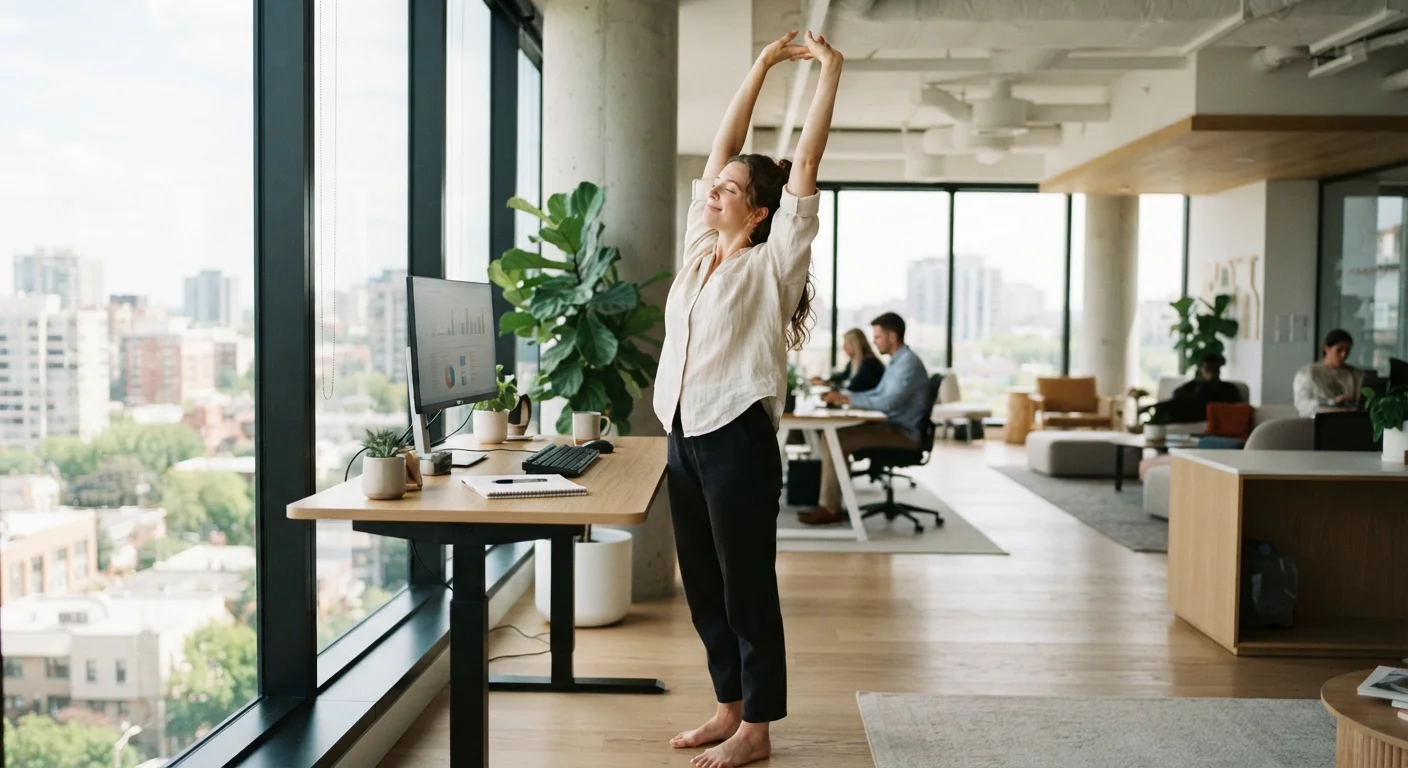
Photo: InDepthReads.com | Streamlining Learning For All editorial
Key Takeaways
- Prolonged sitting is linked to increased cardiovascular and metabolic health risks, independent of leisure-time exercise.
- Breaking up sedentary time with short movement bursts throughout the day offers measurable health benefits.
- Structured micro-breaks, walking meetings, and desk stretches are practical strategies any desk worker can adopt.
- Consistency matters more than intensity — regular, modest movement outperforms occasional intense efforts.
- Even small environmental changes at your workspace can meaningfully reduce daily sitting time.
Why Sitting All Day Is Its Own Health Risk
Many desk workers assume that hitting the gym after work cancels out eight hours of chair time. Research suggests that's not quite accurate. Epidemiological studies have found that prolonged, unbroken sitting is associated with elevated risks of cardiovascular disease, type 2 diabetes, and all-cause mortality — risks that persist even among people who meet weekly physical activity guidelines. Scientists sometimes call this the "active couch potato" effect.
The mechanism isn't mysterious. Extended stillness slows circulation, reduces muscle activation, and disrupts metabolic processes including glucose regulation. The good news is that frequent, brief movement interruptions — not just a lunchtime walk — appear to blunt many of these effects. The goal isn't to transform into an elite athlete during business hours. It's to reduce unbroken sedentary time throughout the day.
For desk workers looking to integrate movement more holistically, it helps to see physical activity as something layered into life rather than bolted on. Everyday activities that count as exercise explores how smaller, informal movement genuinely accumulates into health benefits.
Proven Movement Strategies for Desk Workers
The following practices are grounded in current occupational health and exercise science research. None require special equipment or a gym membership — they're designed to fit inside a real workday.
Take a two-minute movement break every hour without exception.
Replace seated meetings with walking meetings whenever possible.
Incorporate targeted desk stretches for the hip flexors, chest, and neck.
Use active commuting or a post-work walk as a consistent movement anchor.
Alternate between sitting and standing positions throughout the day.
Building a Movement-Friendly Workday
Individual habits matter, but your environment shapes behavior more than willpower alone. Simple workspace modifications can make movement the path of least resistance rather than a conscious effort.
Consider placing frequently used items — a printer, a water bottle refill station, or a colleague you speak with often — at a slight distance so that routine tasks require walking. Standing desks and adjustable-height converters allow position changes without interrupting work flow. Even setting a screen reminder every 45–60 minutes to stand and move for two minutes creates a measurable reduction in total sedentary time.
Movement at work also supports mental well-being. Short physical breaks are associated with improved focus, reduced stress hormone levels, and better mood — all of which feed back into workplace performance. These aren't soft benefits; they're documented physiological responses to brief activity.
Pair Movement With What Already Exists
If your schedule is packed, self-care routines that actually fit around a busy schedule offers practical frameworks for building healthy habits into already full days.
This article provides general health information for educational purposes only and is not a substitute for professional medical advice. Consult a qualified healthcare provider before making significant changes to your physical activity routine, especially if you have existing health conditions.
The content on this site is for informational purposes only and is not a substitute for professional advice. Always consult a qualified professional for guidance specific to your situation.