
Whole Foods vs. Processed Foods: What the Difference Really Means for Your Diet

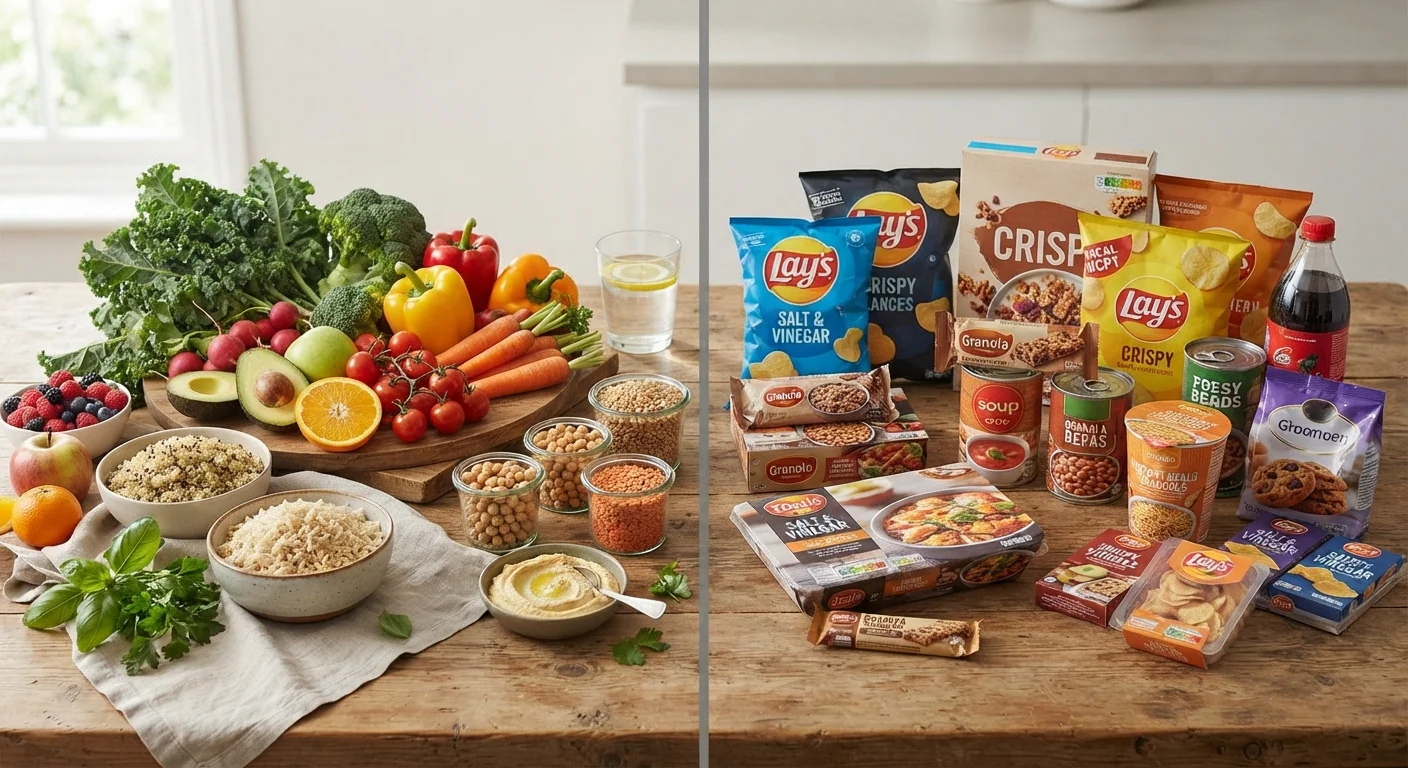
Photo: InDepthReads.com | Streamlining Learning For All editorial
Key Takeaways
- "Processed" is a spectrum — canned beans and packaged cookies are not nutritionally equivalent.
- Whole foods generally deliver more fiber, vitamins, and fewer additives per calorie.
- Ultra-processed foods are linked in research to poorer long-term health outcomes.
- Many minimally processed foods — like frozen vegetables and canned fish — retain strong nutritional value.
- Dietary patterns matter more than individual food choices in isolation.
- Consulting a registered dietitian is the most reliable path to personalized nutrition guidance.
What Do These Terms Actually Mean?
The terms "whole foods" and "processed foods" are used constantly in nutrition discussions, yet rarely defined with any precision. That vagueness creates confusion and, sometimes, unnecessary guilt about everyday eating.
Whole foods refers to foods that are eaten in — or very close to — their natural form, with little or no industrial alteration. Think fresh fruit, raw nuts, dry lentils, plain oats, and eggs. The defining characteristic is minimal intervention between field and plate.
Processed foods is a far broader term. By one widely cited framework, the NOVA classification system developed by researchers at the University of São Paulo, foods are grouped by the extent and purpose of processing — not just whether processing occurred. Under this model, most foods undergo some processing. The critical distinction lies between minimally processed foods (frozen spinach, canned tomatoes, plain yogurt) and ultra-processed foods (packaged snack cakes, flavored chips, reconstituted meat products), which are industrially formulated with additives, flavor enhancers, and preservatives largely absent from home kitchens.
Understanding this spectrum is the foundation of the debate. When nutrition researchers raise concerns about processed foods, they are predominantly referring to the ultra-processed end of that spectrum — not a can of chickpeas.
Not All Processing Is a Problem
Head-to-Head: Nutrition and Health Implications
Comparing whole foods and processed foods across specific dimensions helps clarify where the real differences lie — and where they don't.
| Criterion | Whole Foods | Processed Foods |
|---|---|---|
| Fiber content | Generally high; retained naturally | Often reduced; varies by processing degree |
| Added sugars | None or negligible | Frequently elevated in ultra-processed products |
| Sodium levels | Naturally low | Often high, especially in packaged foods |
| Micronutrient density | High; vitamins and minerals intact | Variable; some fortified, some depleted |
| Additives and preservatives | Absent | Common in ultra-processed products |
| Convenience | Lower; requires preparation | High; ready-to-eat options widely available |
| Cost | Variable; fresh produce can be expensive | Often lower cost per serving |
| Shelf life | Short for fresh items | Extended, especially in ultra-processed products |
Fiber is one of the starkest contrasts. Whole grains, legumes, fruits, and vegetables supply dietary fiber that supports digestive health, blood sugar regulation, and satiety. Refining grains — a common processing step — strips away much of this fiber, even when some is added back. For a deeper look at the fat dimension of this comparison, see how different fat types affect your health.
Sugar is another key variable. Ultra-processed foods are frequently high in added sugars, which nutrition guidelines treat differently from sugars naturally present in whole fruit or dairy. The distinction between added and natural sugar matters because the food matrix — fiber, water, and other compounds — slows how quickly naturally occurring sugars are absorbed.
57%
Share of U.S. calories from ultra-processed foods
Research published in BMJ Open estimated that ultra-processed foods account for roughly 57% of daily caloric intake among U.S. adults.
10%
Cancer risk increase per 10% rise in ultra-processed food share
A large cohort study in The BMJ found a 10% increase in ultra-processed food proportion was associated with a 12% higher overall cancer risk, though the relationship is associational.
28g
Daily fiber recommended for most adults
The U.S. Dietary Guidelines for Americans recommend approximately 28 grams of dietary fiber per day for a 2,000-calorie diet — a target most Americans fall short of.
Where the Research Stands
A substantial body of observational research links diets high in ultra-processed foods to elevated risks of cardiovascular disease, type 2 diabetes, obesity, and all-cause mortality. A frequently cited cohort study published in The BMJ found that a 10% increase in the proportion of ultra-processed foods in the diet was associated with a 12% higher risk of cancer overall. It is important to note that observational research establishes association, not causation — people who eat more ultra-processed foods may also differ in other health-relevant ways.
Conversely, whole-food dietary patterns — including the Mediterranean diet and DASH diet — are among the most consistently supported approaches in clinical nutrition research for reducing chronic disease risk. These are patterns built around vegetables, legumes, whole grains, lean proteins, and healthy fats, not isolated superfoods.
For protein specifically, the source matters too. Animal and plant protein sources differ in quality, digestibility, and associated nutrients — all of which are relevant when evaluating whole vs. processed protein foods.
This article is for general informational and educational purposes only and does not constitute medical or dietary advice. Consult a registered dietitian or qualified healthcare professional for guidance tailored to your individual health needs and circumstances.
The content on this site is for informational purposes only and is not a substitute for professional advice. Always consult a qualified professional for guidance specific to your situation.