
Reading Your Property Tax Bill

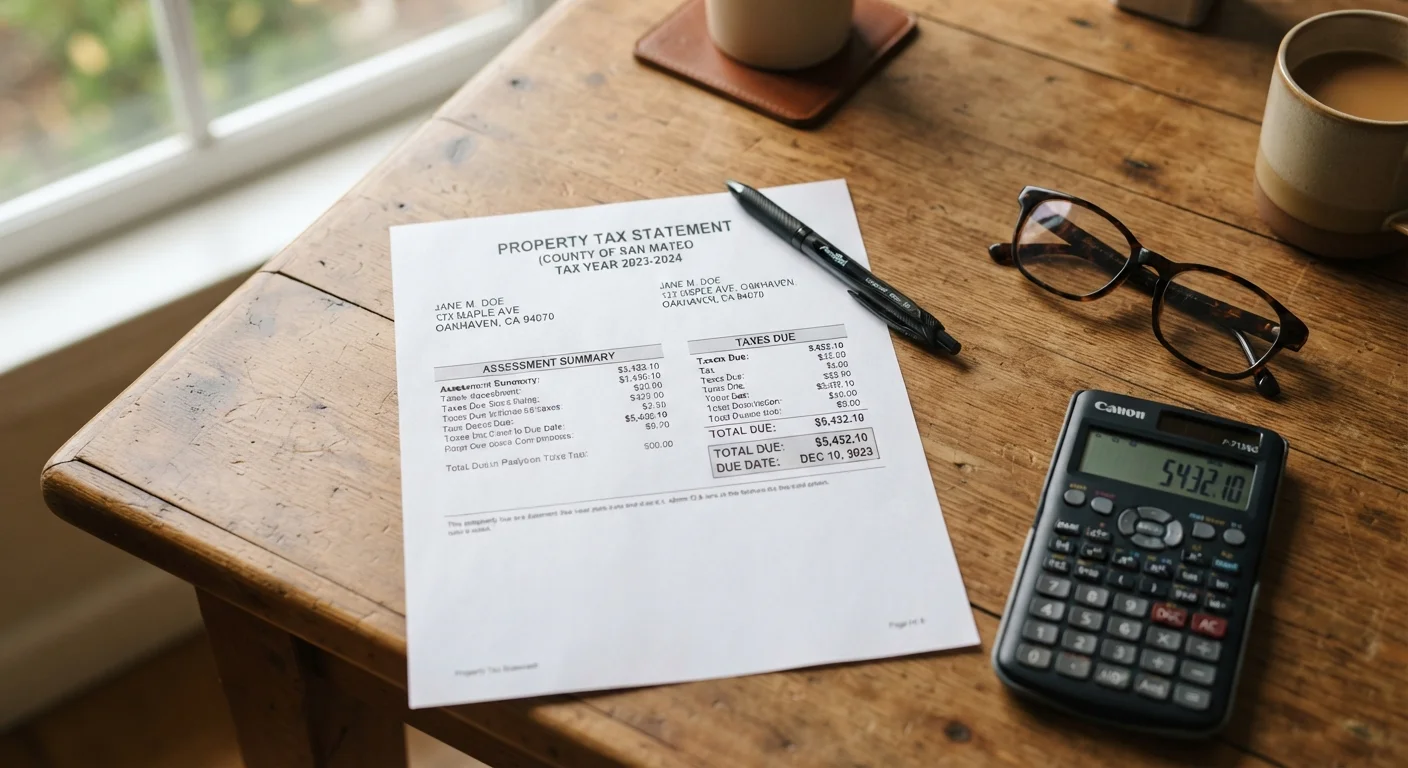
Photo: InDepthReads.com | Streamlining Learning For All editorial
Key Takeaways
- Your bill reflects assessed value, not market value — the two numbers are often different.
- Exemptions like the homestead exemption can meaningfully reduce what you owe.
- Millage rates are set by multiple taxing districts, and each line on your bill may fund a different entity.
- You have the right to appeal your assessment if you believe it is inaccurate.
- Escrow accounts held by mortgage servicers collect property taxes on most borrowers' behalf.
The Key Fields on Every Property Tax Statement
Property tax bills differ in layout from state to state, but nearly every statement contains the same core fields. Knowing where to look cuts through the confusion quickly.
- Parcel or account number: A unique identifier for your specific piece of property in the county's records. Always reference this number when contacting the tax office.
- Legal description: A formal description of the property's location derived from survey records — not the street address. It can look cryptic but simply identifies the parcel in official records.
- Assessed value: The dollar amount your local assessor has assigned to your property for tax purposes. This is not the same as market value — many jurisdictions assess at 80%, 50%, or some other percentage of estimated market value.
- Exemptions: Deductions subtracted from assessed value before tax is calculated. The homestead exemption is the most common, but senior, veteran, and disability exemptions exist in many states.
- Taxable value: What remains after exemptions are subtracted from the assessed value. Your tax rate is applied to this number, not the full assessed value.
- Millage rates by district: Your bill typically lists several taxing authorities — county, municipality, school district, and sometimes special districts for fire, libraries, or water management. Each has its own rate; they are summed to produce the total rate.
- Total tax due: The taxable value multiplied by the combined millage rate, sometimes broken into installments across the year.
- Due dates and discount periods: Many counties offer a small discount — often 1–4% — for early payment. The bill will list the discount deadline alongside the standard due date.
If your mortgage servicer handles payment through an escrow account, you may still receive the bill directly. Keep it — it is your record that the correct amount has been assessed. For a broader view of first-year financial responsibilities, see what new homeowners typically encounter.
$3,057
Median annual U.S. property tax payment
According to U.S. Census Bureau American Community Survey data, the national median real estate tax paid by owner-occupied households is approximately $3,000, with wide variation by state and county.
~30–60%
Assessment appeals that result in a reduction
Industry estimates and local government data consistently suggest that a significant share of formal property tax appeals — often between 30% and 60% — result in some reduction in assessed value.
1 in 3
Homeowners who have never reviewed their assessment
Surveys by real estate research organizations suggest a large proportion of homeowners have never reviewed their property's official assessment record for potential errors.
How Your Assessment Is Calculated — and Why It Can Be Wrong
Assessors use mass appraisal techniques to value thousands of properties simultaneously. Common methods include the sales comparison approach (comparing your home to recent nearby sales), the cost approach (estimating what it would cost to rebuild the structure), and the income approach (used more for rental and commercial properties). None of these is perfectly precise applied at scale.
Errors creep in for several reasons:
- The assessor's records may list the wrong square footage, bedroom count, or lot size — often from outdated permit data.
- The comparable sales used may not reflect your neighborhood's specific characteristics.
- Significant damage or depreciation to your property may not be captured.
- Improvements by a prior owner may have been recorded under the wrong parcel.
Request Your Property Record Card
Assessments are typically recalculated annually or on a fixed cycle. After a reassessment year, bills can change substantially. If your taxable value jumped noticeably, request the assessor's property record card — a public document — and check the underlying data for accuracy before deciding whether to appeal.
Property taxes are a recurring line item in household budgeting. For guidance on fitting them into a larger financial plan, the Budgeting Basics hub covers practical strategies for tracking regular and irregular expenses.
When and How to Challenge Your Bill
Appealing a property tax assessment is a legal right, not an aggressive act. Each jurisdiction publishes a deadline — often 30 to 90 days after assessment notices are mailed — and missing it typically forfeits your opportunity until the following year.
The most persuasive evidence in an appeal includes:
- Recent comparable sales: Sales of similar homes in your neighborhood within the past 12 months, showing your assessed value is higher than what comparable properties actually sold for.
- An independent appraisal: A licensed appraiser's report carries significant weight in formal hearings.
- Documentation of property defects: Photos, contractor estimates, or repair records showing issues the assessor's records do not reflect.
- Data errors in the public record: If your property card lists four bathrooms and you have two, that discrepancy alone can reduce your assessed value.
Most counties offer an informal review before a formal hearing. An informal conversation with the assessor's office — in person or by phone — resolves a large share of straightforward disputes without requiring a formal filing. If you do proceed to a formal hearing, bring organized documentation and be specific about the value you believe is correct.
Property taxes also intersect with mortgage costs. If you are still in the purchase phase, understanding how taxes are disclosed in financing documents is equally important — reading a Loan Estimate covers how taxes appear in lender disclosures.
This article provides general educational information about property taxes and is not legal or financial advice. Tax laws, assessment procedures, and appeal processes vary significantly by state and local jurisdiction. Consult a qualified tax professional, attorney, or your local assessor's office for guidance specific to your situation.
Frequently Asked Questions
The content on this site is for informational purposes only and is not a substitute for professional advice. Always consult a qualified professional for guidance specific to your situation.