
Short-Term vs. Long-Term Financial Goals: Understanding the Difference

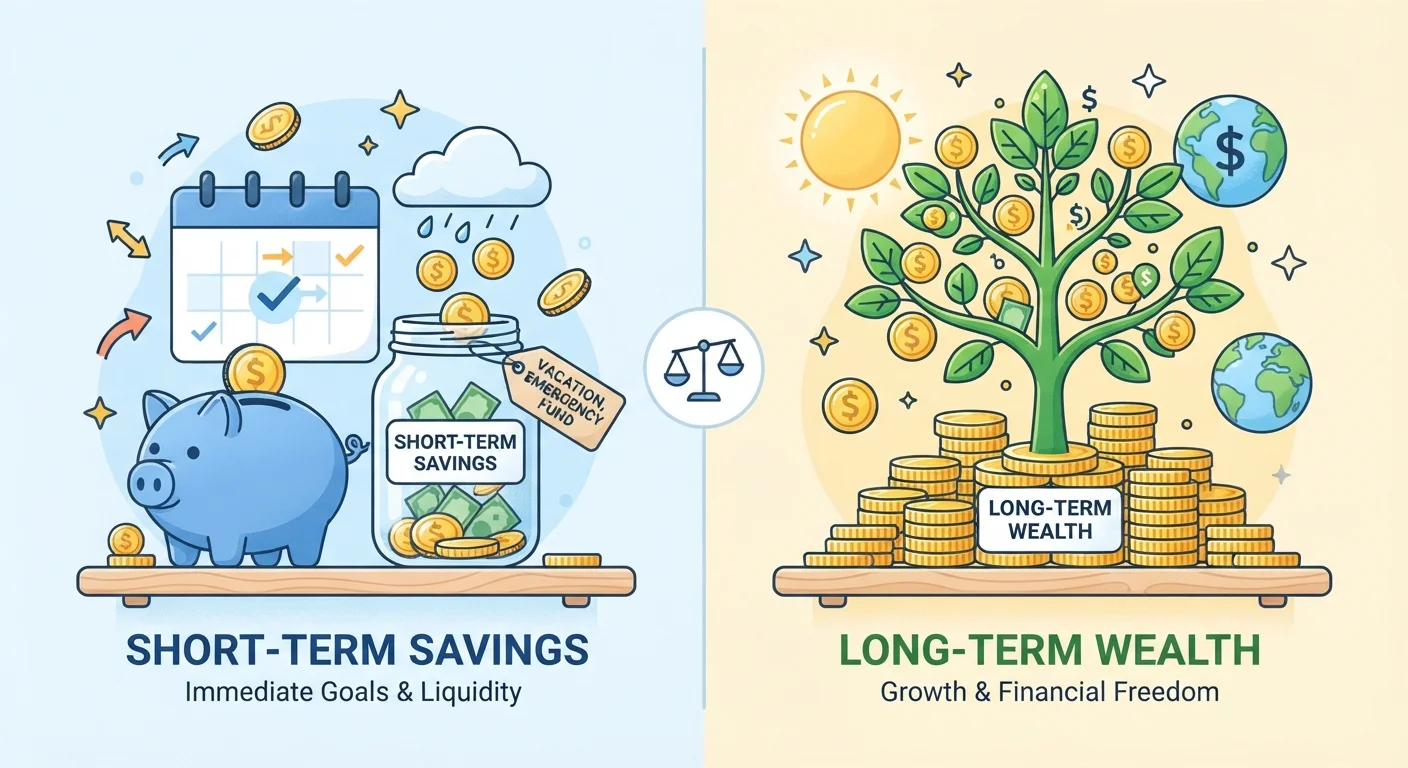
Photo: InDepthReads.com | Streamlining Learning For All editorial
Key Takeaways
- Short-term goals typically span one to three years; long-term goals extend five years or more.
- Both goal types serve distinct purposes and should coexist in any realistic money plan.
- Short-term goals build the financial foundation that makes long-term goals achievable.
- Different savings vehicles and strategies apply depending on your goal's time horizon.
- Balancing competing priorities requires a deliberate framework, not a one-size-fits-all approach.
What Separates Short-Term from Long-Term Goals
The most practical distinction between short- and long-term financial goals is time horizon — specifically, when you need the money and how you should store it in the meantime.
Short-term goals are typically achieved within one to three years. Common examples include building a three-to-six month emergency fund, paying off a credit card balance, saving for a vacation, or covering a car repair. Because the funds are needed soon, they should stay liquid and low-risk — a high-yield savings account or money market account is appropriate. Capital preservation matters more than growth at this range.
Long-term goals stretch five years or further into the future — often a decade or more. Retirement, buying a home, funding a child's education, or building generational wealth all fall here. With this extended runway, you can afford more market exposure, allowing compounding to do meaningful work over time. The trade-off is that you accept short-term volatility in exchange for higher expected long-term returns.
A third category, mid-term goals (roughly three to five years out), sits in between — think saving for a home down payment or funding a career transition. These require a balance between growth and stability, often landing in conservative investment accounts or certificates of deposit.
| Criterion | Short-Term Goals | Long-Term Goals |
|---|---|---|
| Time horizon | 1–3 years | 5+ years |
| Common examples | Emergency fund, debt payoff, vacation | Retirement, home purchase, education |
| Appropriate account types | High-yield savings, money market | 401(k), IRA, brokerage accounts |
| Risk tolerance | Low — preserve capital | Higher — accept volatility for growth |
| Role in financial plan | Stability and liquidity buffer | Wealth building and life milestones |
| Primary growth mechanism | Consistent saving | Compounding returns over time |
Understanding where each goal falls on this spectrum is the first step toward choosing the right tools and setting realistic timelines. For a structured process, see our step-by-step financial goals walkthrough.
Why You Need Both — and How They Work Together
Short- and long-term goals are not competing priorities — they are complementary layers of the same financial plan. Neglecting one category typically weakens the other.
Without short-term stability, long-term goals become fragile. If you lack an emergency fund and an unexpected expense hits, you may be forced to raid a retirement account, incurring taxes and penalties, or take on high-interest debt that sets you back further. Short-term goals act as shock absorbers for your broader financial plan.
Conversely, focusing only on the near term can leave you unprepared for retirement or major life transitions. The math of compounding is unforgiving in reverse — delaying retirement contributions by even five years can significantly reduce the balance available at retirement age, depending on your contribution rate and assumed returns.
56%
Americans without 3 months of emergency savings
According to Bankrate's 2024 Annual Emergency Savings Report, more than half of U.S. adults do not have enough savings to cover three months of expenses.
~33%
Working Americans with no retirement savings
Federal Reserve data has consistently shown that roughly one-third of non-retired adults have no retirement savings or pension whatsoever.
The practical approach most financial educators advocate is a tiered strategy: establish a baseline emergency fund first, address any high-cost debt, then direct incremental dollars toward both medium- and long-term goals simultaneously. You don't have to wait until every short-term goal is complete before starting to save for retirement — even small, consistent retirement contributions made early carry significant long-term value.
When you have multiple goals competing for the same dollars, structured frameworks for prioritizing financial goals can help you decide where to direct each dollar. And if life disrupts your timeline, our guide on keeping goals on track through uncertainty covers how to adjust without abandoning your plan entirely.
For foundational budgeting strategies that support both goal types, the Budgeting Basics hub and our Saving & Debt resources offer practical, step-by-step guidance.
Mid-Term Goals Deserve Attention Too
This article provides general financial education and is not personalized financial advice. Consult a licensed financial professional for guidance tailored to your individual circumstances.
The content on this site is for informational purposes only and is not a substitute for professional advice. Always consult a qualified professional for guidance specific to your situation.