
Reading Your Dog's Body Language: A Field Guide to Canine Signals

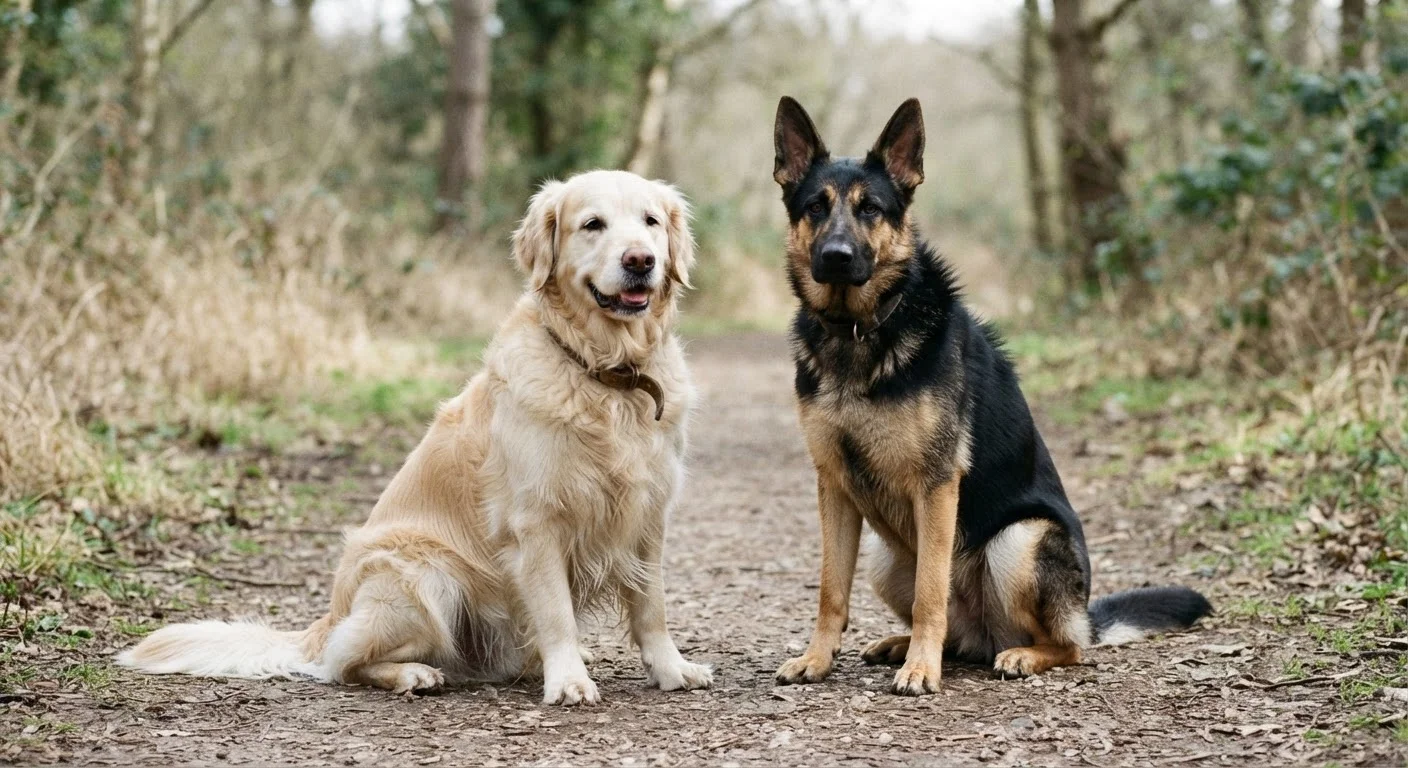
Photo: InDepthReads.com | Streamlining Learning For All editorial
Why Body Language Is Your Dog's Primary Language
Dogs are highly social animals whose communication system evolved long before domestication. While vocalization plays a role — see our guide on what different barks actually signal — the vast majority of canine communication is postural and gestural. Research in animal behavior consistently shows that dogs use a coordinated system of body signals to express emotional state, social intent, and comfort level.
Reading these signals accurately allows owners to intervene before stress escalates, build more effective training sessions, and respond appropriately to their dog's real-time needs. Understanding how dogs actually learn makes interpreting these signals even more actionable in everyday interactions.
Calming signals
A set of appeasement behaviors — such as yawning, lip licking, looking away, or slow blinking — that dogs use to reduce social tension and communicate non-threatening intent to other dogs or humans.
Piloerection
The involuntary raising of hairs along a dog's back and neck, commonly called 'raised hackles.' It indicates heightened arousal — which can mean fear, excitement, or aggression depending on accompanying signals.
Whale eye
A stress signal in which the whites of a dog's eyes (the sclera) become visible, usually when the dog turns its head but keeps its gaze fixed on a perceived threat or uncomfortable stimulus.
Play bow
A postural invitation to play in which a dog lowers its front end to the ground while keeping its hindquarters raised. It is widely recognized as one of the clearest friendly signals in canine communication.
Appeasement behavior
Actions a dog takes to signal submission or non-aggression to reduce conflict, including averting gaze, crouching, exposing the belly, or licking another individual's face.
Arousal
A state of heightened physiological and emotional activation. High arousal in dogs can manifest as a stiff body, intense focus, rapid movement, or vocalizing — and does not by itself indicate aggression or friendliness.
Tail, Ears, and Posture: The Core Signal Cluster
No single body part tells the whole story — skilled observers read clusters of signals together. That said, three areas provide the most reliable real-time information.
| Primary communication mode | Body language (postural and gestural) (Canine behavioral science consensus) |
| Most reliable friendly signal | Play bow (Applied animal behavior research) |
| Stress signals to monitor | Whale eye, lip licking, yawning (non-tired), trembling |
| Tail position key rule | Read tail height AND stiffness together, not wag alone |
| When to consult a professional | Persistent aggression, extreme fear, or sudden behavioral change (Veterinary and behaviorist guidance) |
Tail Signals
- High, stiff wag: Arousal or assertiveness — not necessarily friendly. A rigid, fast-wagging tail held above the spine often signals high social tension.
- Low, loose wag: Relaxed or submissive greeting. A tail carried at or below the spine with fluid movement typically indicates a calm, approachable dog.
- Tucked tail: Fear, anxiety, or submission. The tighter the tuck, the higher the stress.
- Helicopter wag (full circular): Strong, genuine excitement — most often directed toward familiar, trusted people.
Ear Position
- Forward and erect: Alertness or interest; can precede either playful or reactive behavior.
- Pinned flat against head: Fear, extreme submission, or appeasement.
- Slightly back and relaxed: Content and at ease.
Overall Posture
- Weight shifted forward, head raised: Confidence or mild challenge.
- Body low, weight shifted back: Uncertainty, deference, or fear.
- Play bow (front end down, rear up): Clear invitation to play — one of the most reliable friendly signals dogs use.
Facial Expressions and Stress Signals
Dogs produce a range of subtle facial cues that are easy to overlook but carry significant meaning.
Eye Signals
- Soft, slightly squinted eyes: Relaxation and contentment.
- Hard, unblinking stare: A challenge or warning — take this seriously in unfamiliar dogs.
- Whale eye (whites visible): Anxiety or conflict; the dog is uncomfortable and monitoring a perceived threat.
- Slow blinking or looking away: Appeasement — the dog is trying to reduce social tension.
Mouth and Lip Signals
- Relaxed, slightly open mouth: Calm and comfortable.
- Lips pulled back showing teeth (snarl): Warning — respect this signal immediately.
- Lip licking or yawning in non-tired context: These are calming signals, indicating mild stress or discomfort in the current situation.
Stress Indicators to Know
Raised hackles (piloerection along the spine), excessive panting without heat or exercise, repetitive yawning, paw lifting, and trembling are all stress indicators worth noting. Some of these overlap with signs your pet may be in pain, so context matters — consult a veterinarian if these signals appear persistently and without an obvious situational trigger.
Breed Differences Affect Signal Visibility
Reading the Full Picture
Context is everything. A wagging tail in a dog with stiff posture, hard eyes, and raised hackles is a very different communication than a wagging tail in a dog with a loose body and soft expression. Always read the whole dog — not just one feature — and factor in the environment, the trigger, and the dog's history.
Practicing regular observation during low-stakes moments (play, mealtimes, rest) builds your baseline for what your dog's normal looks like. Deviations from that baseline are where meaningful signals often appear. This attentiveness supports both behavioral understanding and your dog's overall health and care, since behavioral changes can sometimes reflect underlying physical issues.
This article provides general educational information about canine behavior. It is not a substitute for professional behavioral assessment or veterinary advice. If your dog is displaying persistent aggression, extreme fear, or sudden behavioral changes, consult a veterinarian or a certified applied animal behaviorist.
The content on this site is for informational purposes only and is not a substitute for professional advice. Always consult a qualified professional for guidance specific to your situation.