
The Beliefs About Cat Training That Most People Get Wrong

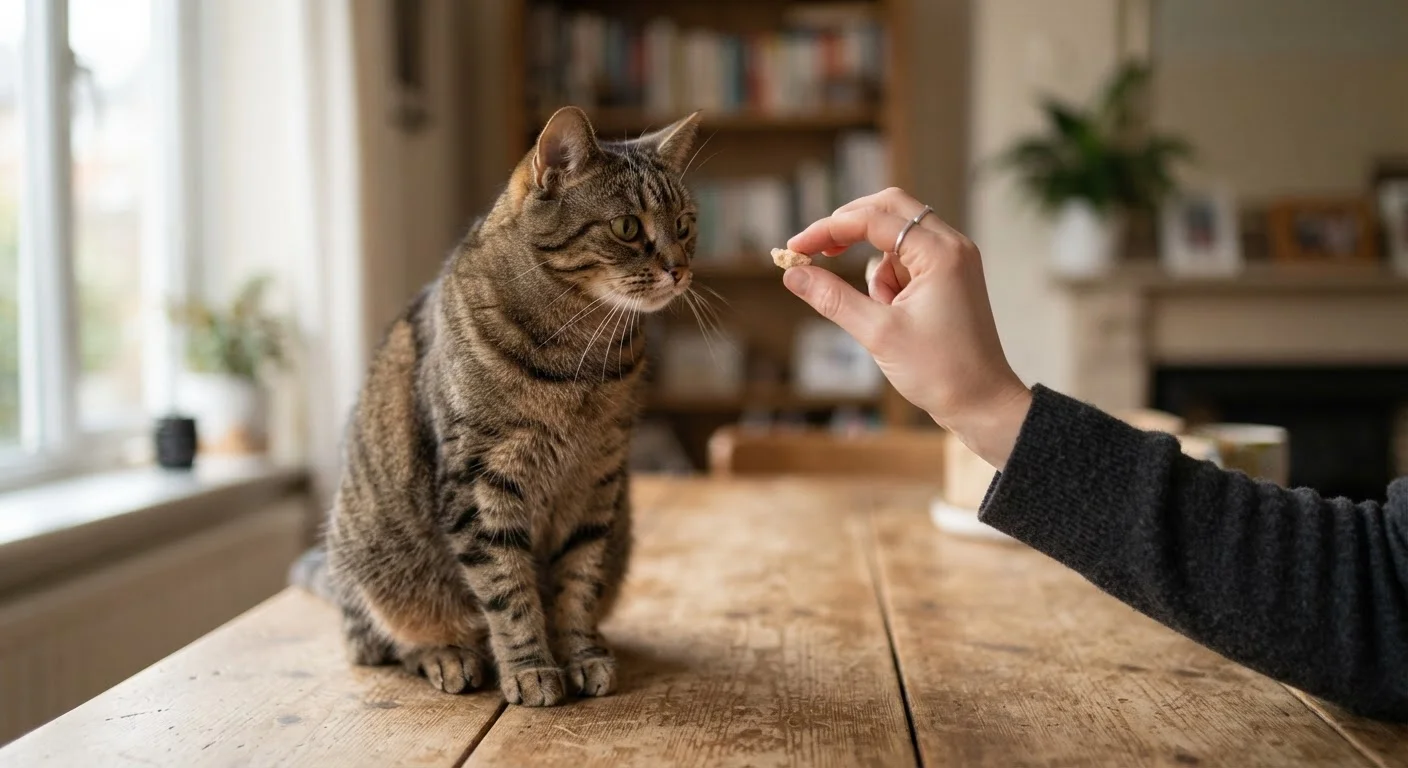
Photo: InDepthReads.com | Streamlining Learning For All editorial
Key Takeaways
- Cats are capable of learning behaviors through operant conditioning, just like dogs.
- Punishment-based methods can increase fear and aggression in cats rather than teach boundaries.
- Short, reward-focused training sessions align with feline attention spans and motivational patterns.
- A cat's independent nature reflects its evolutionary history, not an inability or unwillingness to learn.
- Treats aren't the only effective reward — play and affection also reinforce desired behaviors.
Why Cat Training Myths Are So Stubborn
Misconceptions about feline trainability don't come from nowhere. For centuries, cats occupied a different cultural role than dogs — less working partner, more semi-independent cohabitant. That history shaped popular beliefs about what cats are capable of, beliefs that have proven remarkably resistant to updating even as behavioral science has advanced. The result is that many cat owners never attempt training, or they try counterproductive methods and conclude that their cat is simply untrainable when the real issue was the technique.
Understanding where these myths come from is the first step toward replacing them with approaches that actually work. The same learning science that explains dog training applies to cats — the application just looks different.
Myth
Cats simply can't be trained — they're too independent to respond to instruction.
Fact
Cats learn through the same operant conditioning principles that work for dogs, dolphins, and many other species.
The belief that cats are untrainable is one of the most persistent in pet ownership. In reality, cats form associations between their own actions and outcomes very effectively. Studies in animal cognition have demonstrated that domestic cats can learn to respond to names, perform sequential tasks, and even navigate puzzle feeders — all through reinforcement-based learning. The confusion arises because cats weren't domesticated primarily as working partners the way dogs were, so they're less primed to seek human direction. That's a motivational difference, not a cognitive one.
Myth
You have to use food treats to train a cat — nothing else works.
Fact
Cats can be motivated by play, tactile affection, verbal praise, and access to preferred locations, depending on the individual animal.
While high-value food rewards are reliable for many cats, treating treats as the only option leads owners to give up when a cat shows low food motivation — which some cats do, particularly after meals or in low-stress environments. Behavioral research supports using whatever the individual animal finds reinforcing. For some cats, a favorite wand toy used as a reward after a successful sit is far more engaging than a treat. Identifying what your specific cat values is a foundational step. Be mindful, however, that treat quantity adds up — see how training treats can affect overall nutrition.
Myth
Punishment — like a spray bottle or loud noise — teaches cats where the boundaries are.
Fact
Aversive corrections suppress behavior temporarily but don't communicate what the cat should do instead, and they frequently cause stress and fear.
Punishment works only if it's perfectly timed, consistently applied, and understood by the animal — conditions almost never met in a household setting. More importantly, punishment-based methods don't replace the unwanted behavior with an acceptable one. A cat jumping on counters that's sprayed with water learns to jump on counters when you're not watching, not to stay off them. What the research shows is that reward-based methods produce more durable behavioral change with fewer negative side effects.
[important_callout]Myth
Training sessions need to be long and frequent to make any real progress.
Fact
Cats respond better to very short sessions — typically two to five minutes — repeated a few times daily.
A cat's attentional window during training is considerably shorter than a dog's. Pushing past the point of engagement leads to disinterest, avoidance, or redirected behavior. Behavioral specialists consistently recommend ending sessions while the cat is still engaged and succeeding — never at the point of frustration. Frequent, brief sessions also allow for better spacing of reinforcement, which strengthens learning. If you're finding that progress has plateaued, session length and timing are among the first variables to revisit.
Myth
An older cat can't learn new behaviors — training only works on kittens.
Fact
Adult and senior cats retain the capacity to learn new behaviors, though patience and adapted techniques may be needed.
The idea that learning windows close in early life is a significant oversimplification. While early socialization is important for temperament, operant learning — responding to consequences — continues throughout a cat's life. Senior cats may have sensory changes (reduced hearing or vision) that require adjusted cues, and long-established habits may take more repetitions to modify. But the neurological capacity for learning remains. Consistency and clear timing matter even more with older animals whose existing behavioral patterns are more deeply ingrained.
Building a Training Practice That Works for Your Cat
Correcting the myths above opens the door to a more effective approach. A few principles apply across most cats: keep sessions short, identify individual motivators, use timing precisely, and build behaviors in small steps rather than expecting an end result immediately. Consistency across all household members matters too — a behavior reinforced by one person and punished by another creates confusion, not learning.
Skipping Vet Checks Before Training
Behavioral change in cats is gradual. Owners who track small wins — a reliable sit, a calm carrier entry, reduced counter-jumping — are far better positioned to stay motivated than those waiting for dramatic transformation. If the process feels stuck, the variables worth examining first are reward value, session timing, and whether an environmental or health factor is interfering. The goal isn't a performing cat; it's a cat with clearer communication pathways to the people it lives with.
79%
Cat owners who believe cats are untrainable
Survey data from the American Pet Products Association has consistently found that a substantial majority of cat owners do not attempt structured training, often citing the belief that cats won't respond.
2–5 min
Recommended training session length for cats
Animal behavior consultants and certified cat behaviorists broadly recommend keeping individual training sessions to under five minutes to match feline attention and motivation patterns.
The content on this site is for informational purposes only and is not a substitute for professional advice. Always consult a qualified professional for guidance specific to your situation.