
Mindfulness vs. Meditation: Clearing Up the Confusion

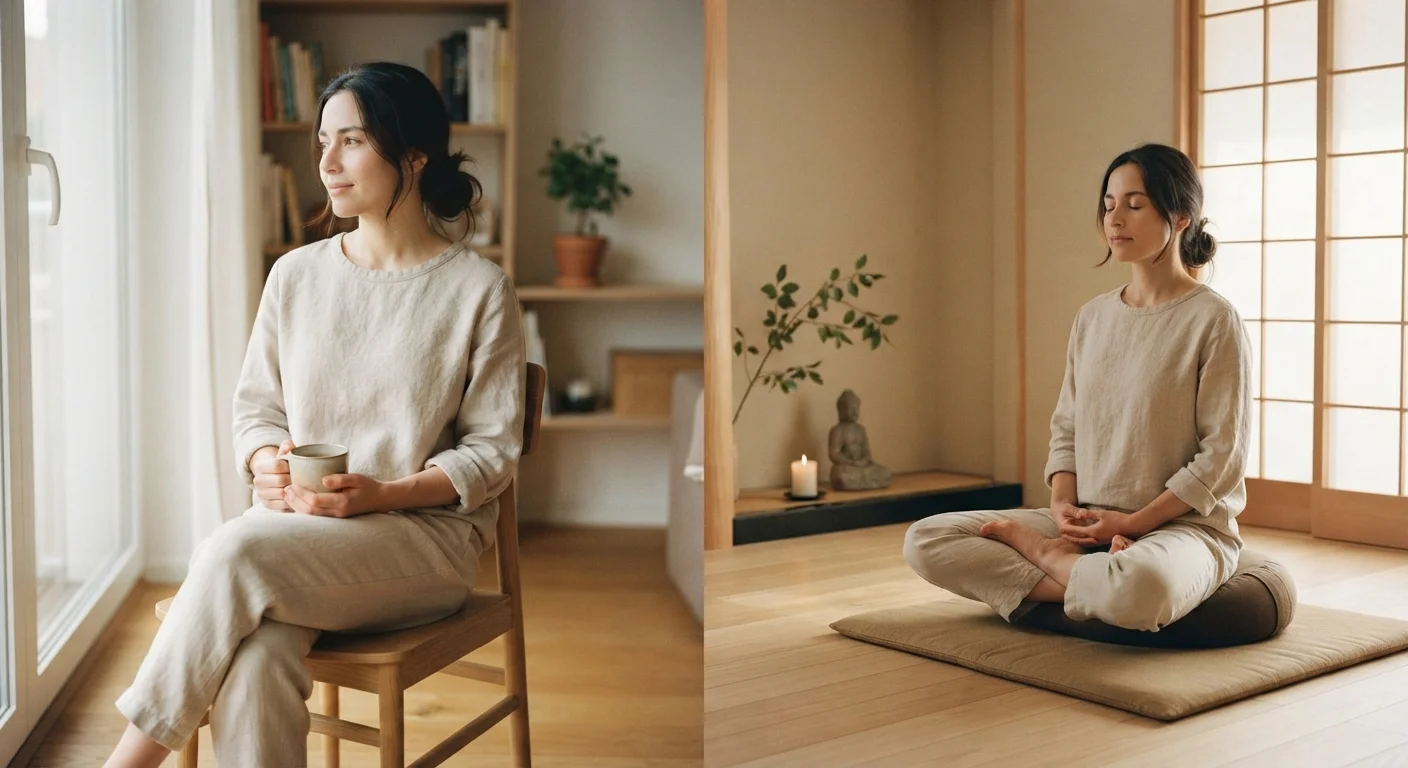
Photo: InDepthReads.com | Streamlining Learning For All editorial
Key Takeaways
- Mindfulness is a quality of attention; meditation is a formal practice used to develop it.
- You can practice mindfulness informally during everyday tasks without sitting down to meditate.
- Meditation typically requires dedicated time and a structured technique, such as breath focus or body scanning.
- Research supports both approaches for reducing stress and supporting emotional well-being.
- The two are complementary — regular meditation tends to strengthen informal mindfulness throughout the day.
What Each Term Actually Means
The words mindfulness and meditation appear together so often that many people assume they are interchangeable. They are related — but they describe different things.
Mindfulness is a mental quality: the capacity to pay deliberate, non-judgmental attention to what is happening in the present moment. It is something you can bring to virtually any activity — a conversation, a meal, a commute — without stopping what you're doing.
Meditation is a practice: a structured exercise, usually performed at a set time and in a particular way, designed to train attention and awareness. Many forms of meditation cultivate mindfulness as their primary goal, but meditation as a category also includes techniques aimed at visualization, loving-kindness, or deep relaxation.
A useful analogy: mindfulness is the fitness quality (cardiovascular endurance), while meditation is one type of training that builds it (running). You can improve endurance through other activities too, but dedicated training tends to accelerate results.
For a broader look at what mental wellness actually encompasses, see what mental well-being really means and why it differs from the absence of illness.
| Criterion | Mindfulness | Meditation |
|---|---|---|
| Definition | A quality of present-moment, non-judgmental attention | A structured practice to train attention and awareness |
| When practiced | During any everyday activity | During a dedicated, scheduled session |
| Time required | No extra time needed | Typically 5–45 minutes per session |
| Setting | Anywhere — kitchen, office, outdoors | Usually a quiet, consistent location |
| Learning curve | Accessible immediately; depth develops over time | Modest — technique guidance helps early on |
| Primary research base | Embedded in MBSR and CBT-derived studies | Broad; includes MBSR, MBCT, and standalone trials |
| Relationship to each other | The goal many meditation techniques cultivate | A method that builds and strengthens mindfulness |
What the Research Shows
Both mindfulness and formal meditation have been studied as tools for supporting mental and emotional health, though the evidence varies in strength and specificity.
~30%
Average stress reduction in MBSR participants
A meta-analysis published in JAMA Internal Medicine found mindfulness meditation programs produced moderate reductions in anxiety, depression, and stress.
8 weeks
Standard MBSR program length
The Mindfulness-Based Stress Reduction program developed at UMass Medical School has been the foundation for much of the controlled research in this field.
10 min/day
Common beginner meditation duration in studies
Several trials examining attentional benefits have used daily sessions of 10 minutes or less, suggesting modest time investment may still yield measurable effects.
Mindfulness-Based Stress Reduction (MBSR), an eight-week structured program developed at the University of Massachusetts Medical School, combines formal meditation with mindfulness principles and has been one of the most studied interventions in this space. Reviews of its outcomes generally show meaningful reductions in self-reported stress and anxiety, though effect sizes vary by population and study design.
Informal mindfulness — simply directing attention deliberately during ordinary tasks — has received less controlled-trial attention, partly because it is harder to measure. That said, the underlying mechanism (interrupting automatic, ruminative thinking) is well-supported in cognitive behavioral research.
It is worth noting that most studies measure short-term outcomes. Long-term effects, optimal session length, and which specific techniques work best for which individuals remain active areas of investigation. Neither practice is a substitute for professional mental health care when that is needed. If you're weighing broader support options, how clinicians think about treatment paths offers useful context.
How to Start — and Which Fits Your Life
Choosing where to begin largely depends on your schedule, temperament, and goal.
Starting with informal mindfulness requires no equipment, no app, and no blocked-off time. The practice is straightforward: choose a routine activity and commit to paying full attention to it — the sensory details, your physical state, whatever arises — without immediately judging or problem-solving. This is not about achieving a calm blank mind; it is about noticing experience as it is.
Starting with formal meditation usually means setting aside a consistent window — even five to ten minutes — sitting comfortably, and following a structured technique. Common entry points include breath-focused attention (returning your focus to the breath each time the mind wanders) and body scan practices (moving systematic attention through different parts of the body). Guided audio resources and digital tools can be helpful scaffolding, though they come with their own limitations worth understanding — see what digital mental health tools can and can't provide.
Many people find it useful to combine both: a short daily meditation session that primes attentiveness, paired with deliberate mindful moments woven through the day. When anxiety or overwhelm surfaces specifically, grounding techniques offer an immediately applicable complement to either practice.
This article is for general informational and educational purposes only and does not constitute medical or mental health advice. If you are experiencing significant mental health concerns, please consult a qualified healthcare professional.
The content on this site is for informational purposes only and is not a substitute for professional advice. Always consult a qualified professional for guidance specific to your situation.