
Reading a Nutrition Facts Label Without the Confusion

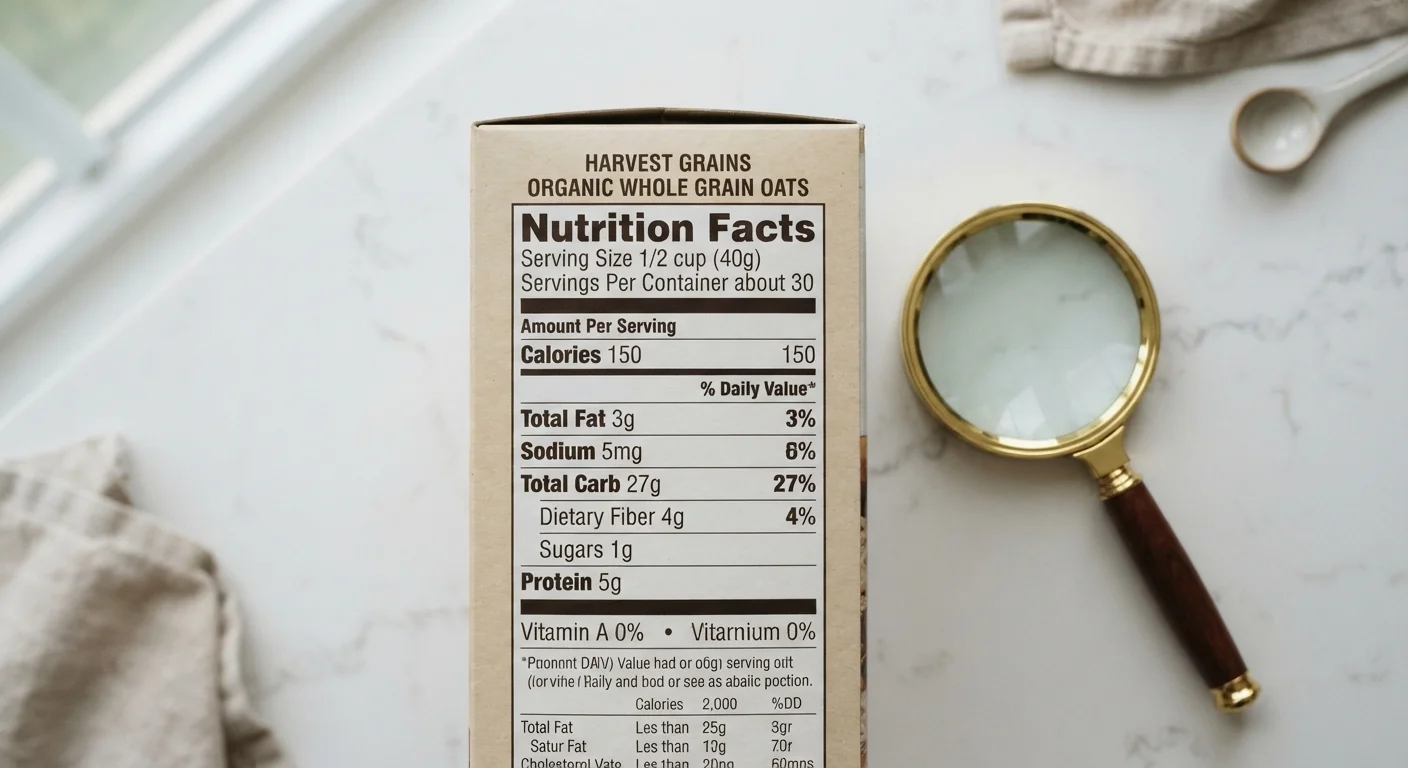
Photo: InDepthReads.com | Streamlining Learning For All editorial
Key Takeaways
- Serving size is the foundation of every number on the label — always check it first.
- Percent Daily Value (%DV) tells you how much a nutrient contributes to a standard 2,000-calorie diet.
- Aim for lower %DV in saturated fat, sodium, and added sugars; higher %DV in fiber, vitamins, and minerals.
- Ingredients are listed in descending order by weight — what comes first is most abundant.
- Nutrition labels are a tool for comparison, not a rigid rulebook for every meal.
Why the Nutrition Facts Label Exists
The U.S. Nutrition Facts label is a federally standardized disclosure required by the FDA on most packaged foods. Its purpose is straightforward: to give consumers consistent, comparable information about what they're eating. The format was first introduced in 1994 and underwent a significant redesign finalized around 2016, with updates including a larger calorie display, the addition of a separate line for added sugars, and updated daily reference values for several nutrients.
Reading the label well isn't about obsessing over every gram — it's about making informed comparisons and spotting patterns across your overall diet. When used as one tool among many, the label can help you gradually build habits aligned with your health goals. For a broader framework on eating well, our article on building a balanced plate is a useful companion.
What you will need
How to Read the Label Step by Step
The following steps walk you through each section of a standard U.S. Nutrition Facts label, from top to bottom, in the order you should logically evaluate them. Grab a food package to follow along.
Labels Reflect Serving Sizes, Not Package Sizes
Food package with a Nutrition Facts label
The primary item you'll practice reading and interpreting.
Smartphone calculator
Useful for multiplying nutrient values when a package contains multiple servings.
Find the Serving Size and Servings Per Container
At the very top of every U.S. Nutrition Facts label, you'll see serving size and servings per container. The serving size is expressed in both a common household measure (e.g., 1 cup) and grams. Every calorie count and nutrient value on the rest of the label applies to this one serving only — not the entire package.
Before anything else, compare the listed serving size to how much you actually plan to eat. This single step determines whether all the numbers below are relevant as printed or need to be adjusted.
Check the Calorie Count
Calories are displayed in large, bold text just below the serving information. This figure reflects total energy per serving from all sources — carbohydrates, fats, and protein combined. Calories aren't inherently good or bad, but understanding how a food fits into your overall daily intake is useful context.
Keep in mind that calorie needs vary widely between individuals based on age, body size, and physical activity. The label uses 2,000 calories as a general reference diet for %DV calculations.
Scan Nutrients to Limit
The label lists several nutrients that most Americans consume in excess. Pay attention to:
- Saturated fat — associated with cardiovascular health when consumed in high amounts
- Sodium — high intake is linked to elevated blood pressure in many individuals
- Added sugars — distinct from naturally occurring sugars; the label lists them as a sub-item under total sugars
For these nutrients, a lower %DV per serving is generally preferable. Our article on added sugar vs. natural sugar explains why the source of sugar matters beyond the raw gram count.
Look for Nutrients to Prioritize
Below the nutrients to limit, you'll find nutrients that many Americans fall short on and are worth actively seeking:
- Dietary fiber — supports digestive health and more; see our guide on why fiber matters
- Vitamin D, calcium, iron, and potassium — federally required to appear because deficiencies are common
Aim for higher %DV in these nutrients when comparing similar products.
Interpret the Percent Daily Value (%DV)
The % Daily Value column — running along the right side of the label — tells you what percentage of a nutrient's daily recommended amount one serving provides, based on a 2,000-calorie reference diet. It's one of the most practical tools on the label because it allows direct comparison between products without converting units.
Use %DV to answer a simple question: Does this food give me a little or a lot of this nutrient?
[tip_callout]Review the Ingredients List
Just below the Nutrition Facts panel, you'll find the ingredients list. By law, ingredients are listed in descending order by weight — the first ingredient is the most abundant. A long list isn't automatically a problem, but scanning the first three to five ingredients gives you a quick read on what a product is primarily made of.
Ingredients like whole grains, legumes, and vegetables near the top of the list signal a more nutrient-dense base. Understanding the ingredients list complements reading the label the same way understanding fat types complements understanding calorie counts — for a deeper dive, see our piece on dietary fats that support health.
Putting Label Reading Into Practice
Label reading becomes faster and more intuitive with repetition. Start by comparing two similar products side by side — for example, two breakfast cereals. Notice how %DV for added sugars, fiber, and sodium differ between them. Over time, you'll develop a mental benchmark for what a nutritious profile looks like within a food category.
Labels are also useful for understanding what micronutrients a product contributes. For a broader reference on key vitamins and minerals, see micronutrients every adult should know. And if you find yourself curious how food labeling compares across different product types, our piece on reading a pet food label illustrates how differently regulated industries approach consumer disclosure.
Nutrient Needs Vary by Individual
This article is for general informational purposes only and is not a substitute for personalized medical or nutritional advice. Consult a qualified healthcare provider or registered dietitian for guidance tailored to your individual needs.
The content on this site is for informational purposes only and is not a substitute for professional advice. Always consult a qualified professional for guidance specific to your situation.