
Reading a Pet Food Label Without Getting Lost in the Fine Print

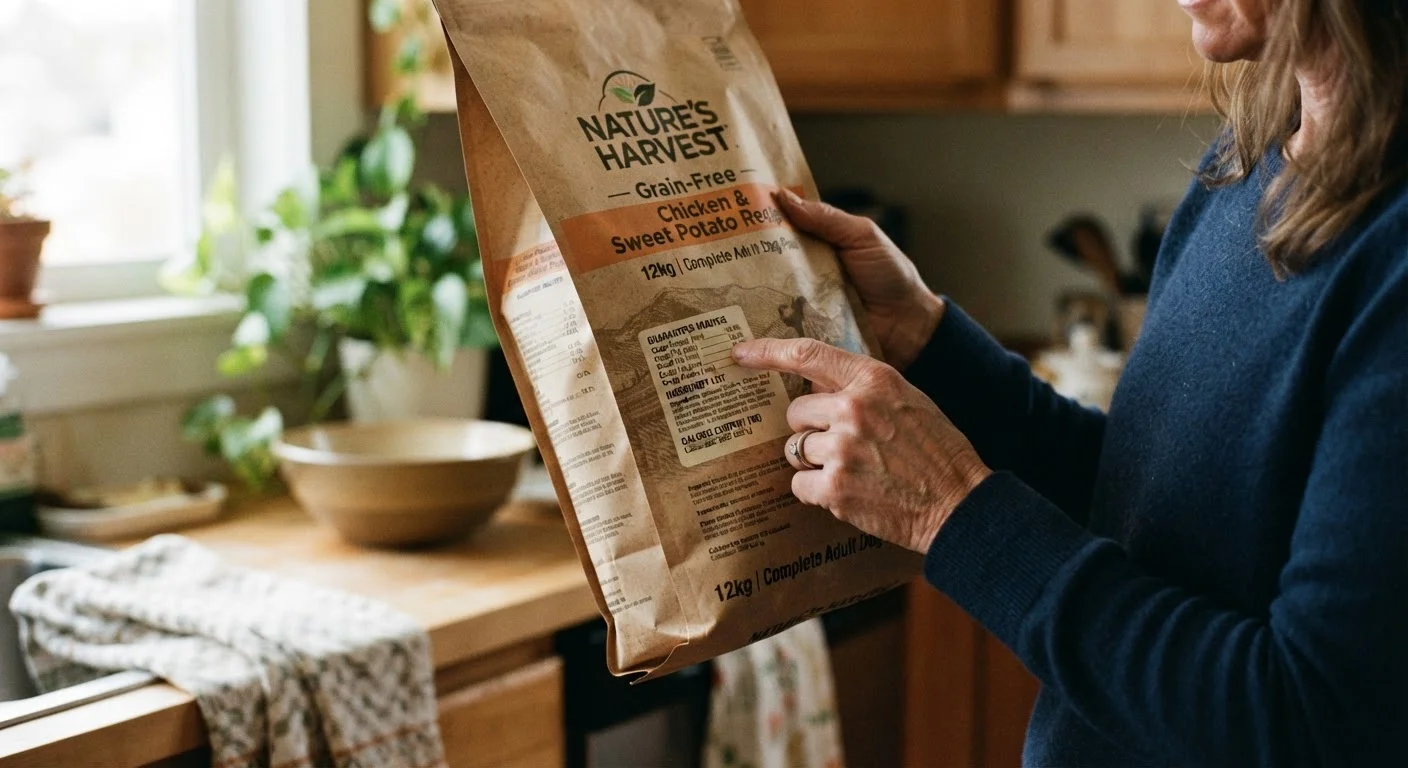
Photo: InDepthReads.com | Streamlining Learning For All editorial
Key Takeaways
- AAFCO nutritional adequacy statements tell you whether a food meets established minimum nutrient standards.
- Ingredients are listed by pre-cooking weight, so a named meat at the top doesn't automatically mean it dominates the final product.
- The guaranteed analysis provides minimum and maximum nutrient percentages, not exact amounts.
- Life-stage labeling (puppy, adult, senior) must match your pet's actual age and size to be meaningful.
- Marketing terms like 'premium' and 'natural' have limited or no regulatory definition — look past them.
- Moisture content differences between wet and dry food make direct nutrient comparisons unreliable without conversion.
Why Pet Food Labels Are Harder to Read Than They Look
A typical pet food bag packs in ingredient lists, guaranteed analysis panels, feeding guides, and a constellation of marketing claims — all competing for your attention. Knowing which sections carry regulatory weight and which are largely promotional is the first skill every pet owner needs. For a broader foundation on feeding fundamentals, see our guide to pet nutrition for new owners.
In the United States, pet food labeling is governed at the federal level by the Food and Drug Administration (FDA) and guided by model regulations developed by the Association of American Feed Control Officials (AAFCO). Individual states may adopt AAFCO's model language, which is why you'll see that acronym on nearly every commercial pet food. Understanding what AAFCO language actually signals — and what it doesn't — is where label literacy begins.
Start With the AAFCO Statement First
The Five Label Sections That Actually Matter
Once you know where to look, a pet food label organizes into five meaningful areas:
- Product name: AAFCO rules dictate how much of an ingredient must be present depending on naming conventions. A product called 'Salmon for Cats' must contain at least 95% salmon (excluding water). A label saying 'with Salmon' only requires 3%. 'Salmon Flavor' requires no minimum salmon content at all.
- Ingredient list: Ingredients are listed in descending order by pre-cooking weight. A named protein like chicken appearing first is a good sign, but moisture is included in that weight — which can inflate a fresh ingredient's apparent prominence. For a deeper look at what ingredient ordering reveals, see our ingredient list explainer.
- Guaranteed analysis: This panel lists minimum crude protein, minimum crude fat, maximum crude fiber, and maximum moisture. These are not precise nutrient values — they are thresholds. The word 'crude' refers to the measurement method, not quality.
- AAFCO nutritional adequacy statement: This is one of the most important lines on the label. It states whether the food is 'complete and balanced' for a specific life stage and whether that claim was established through feeding trials or by meeting a nutrient profile. 'Formulated to meet' means the recipe was calculated against a nutrient checklist; 'animal feeding tests' means it was actually fed to animals under AAFCO protocols — a higher bar.
- Feeding guidelines: These are general starting points based on average animals. Your specific pet's ideal intake depends on body condition, activity level, and health status — always verify with your veterinarian.
AAFCO Compliance Is a Floor, Not a Ceiling
Comparing Wet and Dry Foods Fairly
One of the most common labeling pitfalls is comparing nutrients across wet and dry foods at face value. A canned food listing 10% protein and a dry kibble listing 30% protein look very different — but the canned food may contain 78% moisture while kibble contains only 10%. To make a fair comparison, you need to convert both to a dry matter basis: divide the nutrient percentage by the percentage of dry matter (100 minus moisture) and multiply by 100.
For example, a wet food with 10% protein and 78% moisture has 22% dry matter. Dividing 10 by 22 and multiplying by 100 gives roughly 45% protein on a dry matter basis — substantially higher than it first appeared. This calculation matters most when evaluating whether a food delivers the protein your pet actually needs. Our comparison of wet food vs. dry food for cats walks through these differences in more detail.
Marketing Claims to Approach Skeptically
Terms like premium, gourmet, holistic, and human-grade have no standardized regulatory definitions in U.S. pet food labeling. Their presence tells you about positioning, not nutritional quality. Even natural has a limited AAFCO definition that doesn't preclude highly processed ingredients.
Grain-free is another label claim worth scrutinizing carefully. The FDA has investigated a possible association between grain-free diets and dilated cardiomyopathy (DCM) in dogs, though the research is ongoing and a definitive causal link has not been established. Until more is known, discuss grain-free choices with your veterinarian rather than selecting them on marketing merit alone. For a thorough review of what the evidence actually shows, see our article on common myths about grain-free pet diets.
Grain-Free Labels Deserve Extra Scrutiny
If your pet shows signs that their current diet may not be meeting their needs — such as dull coat, low energy, or digestive irregularity — consult your veterinarian. Our overview of signs your pet's diet may not be working can help you identify what to watch for.
This article is for general informational purposes only and is not a substitute for personalized veterinary nutritional advice. Always consult a qualified veterinarian for guidance specific to your pet's health and dietary needs.
The content on this site is for informational purposes only and is not a substitute for professional advice. Always consult a qualified professional for guidance specific to your situation.