
Wet Food vs. Dry Food for Cats: What the Science Says

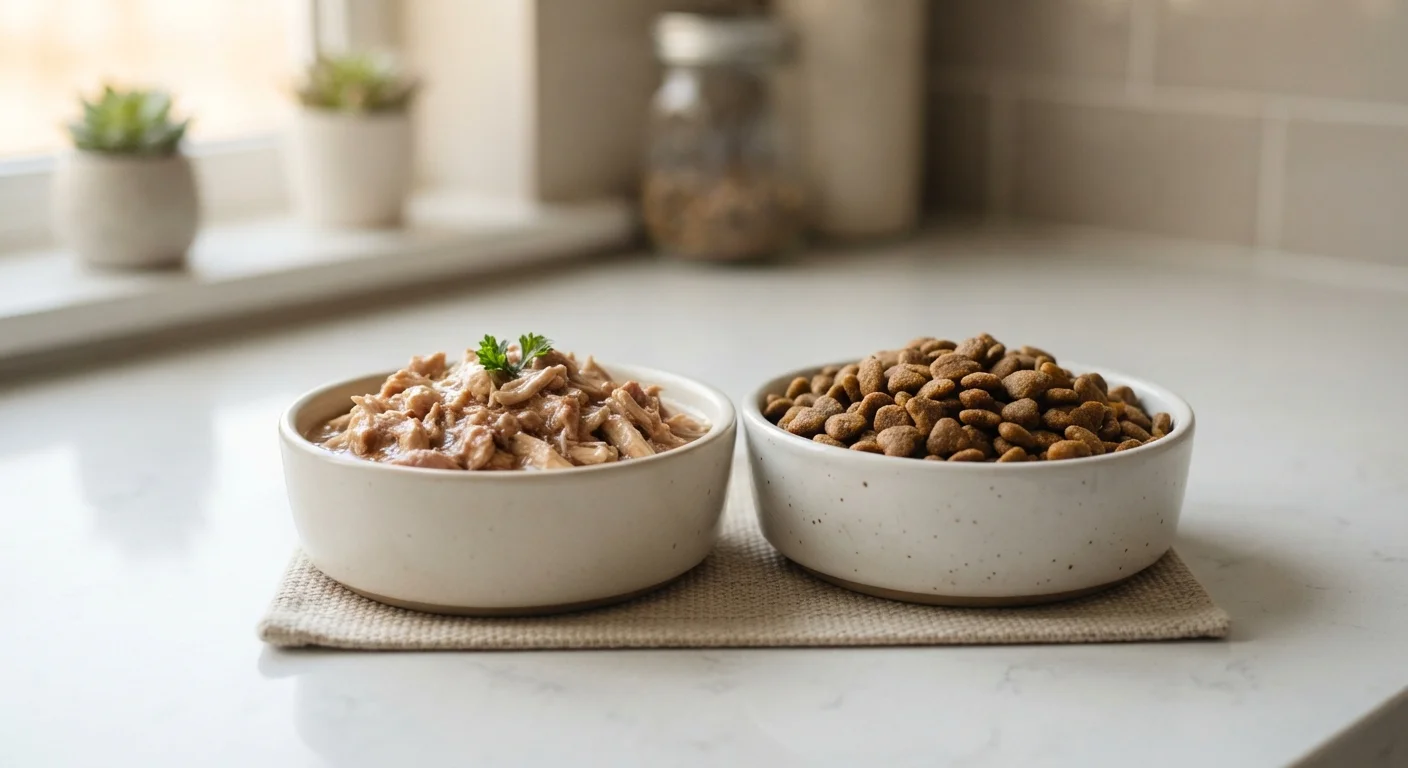
Photo: InDepthReads.com | Streamlining Learning For All editorial
Key Takeaways
- Wet food delivers significantly more moisture, supporting kidney and urinary tract health in cats.
- Dry kibble is calorie-dense and convenient, but cats must drink enough water separately to compensate.
- Neither format is universally superior — the right choice depends on your cat's health profile and lifestyle.
- High-quality protein content matters more than the format; always check the guaranteed analysis on any label.
- Many veterinarians recommend a mixed feeding approach to balance convenience with hydration benefits.
Why the Wet vs. Dry Debate Actually Matters
Cats are obligate carnivores — meaning their bodies are biologically wired to derive nutrients from animal tissue. Understanding what that means at mealtime is foundational to any feeding decision. Unlike dogs or humans, cats have a low thirst drive evolved from desert-dwelling ancestors who obtained most of their water from prey. This makes the moisture content of their diet a genuine health variable, not just a preference.
Both wet and dry foods can be nutritionally complete when formulated to meet AAFCO (Association of American Feed Control Officials) standards, but they differ meaningfully in hydration, caloric density, protein levels, and digestibility. Choosing between them — or combining them — requires understanding what those differences actually mean for your specific cat.
Hydration and Urinary Health
This is where wet food holds its clearest advantage. Canned cat food typically contains 70–80% moisture, closely mirroring the water content of whole prey. Dry kibble, by contrast, contains roughly 8–10% moisture. Because cats have a blunted thirst response, many do not compensate fully by drinking more water when fed exclusively dry food.
Research consistently links low urine volume — a consequence of insufficient water intake — with a higher risk of feline lower urinary tract disease (FLUTD) and calcium oxalate crystal formation. Cats fed wet diets tend to produce more dilute urine, which reduces the concentration of minerals that contribute to these conditions. For cats already managing kidney disease or recurrent urinary issues, the hydration benefit of wet food is clinically meaningful.
70–80%
Moisture in typical wet cat food
Compared to roughly 8–10% in dry kibble, according to published feline nutrition research.
~50%
Cats with FLUTD risk tied to low urine volume
Veterinary literature identifies concentrated urine as a leading environmental risk factor for feline lower urinary tract disease.
2–3×
Greater daily water intake from wet food
Cats eating wet food have been shown to consume roughly two to three times more total water daily than dry-fed cats, per comparative feeding studies.
That said, dry-fed cats who drink freely from water fountains or multiple water bowls can maintain adequate hydration. Providing fresh water consistently is non-negotiable regardless of diet format.
Protein, Carbohydrates, and Digestibility
On a dry-matter basis (adjusting for water content to allow a fair comparison), many high-quality wet foods deliver a higher protein percentage than most kibbles. Dry food often requires more starchy carbohydrates — such as corn, wheat, or potato — to hold the kibble together during processing. While cats can metabolize carbohydrates to some degree, their digestive systems are not optimized for high-carb diets.
Protein digestibility is another factor worth noting. Studies on feline nutrition suggest that the high-heat extrusion process used to manufacture kibble can reduce the bioavailability of some amino acids compared to minimally processed wet food. Taurine — an amino acid cats cannot synthesize adequately on their own — must be present in sufficient quantities in any complete feline diet. Reputable commercial foods in both formats supplement taurine, but it's worth confirming on the label. See our guide on reading a pet food label for help evaluating guaranteed analysis panels.
| Criterion | Wet (Canned) Food | Dry (Kibble) Food |
|---|---|---|
| Moisture content | 70–80% | 8–10% |
| Protein (dry-matter basis) | Generally higher | Often lower |
| Carbohydrate content | Typically lower | Typically higher |
| Urinary health support | Strong (dilutes urine) | Weaker without extra water |
| Dental benefit | Minimal | Minimal (standard kibble) |
| Caloric density | Lower per gram | Higher per gram |
| Shelf life (opened) | Hours (refrigerate) | Weeks (sealed container) |
| Cost per calorie | Generally higher | Generally lower |
Dental Health, Weight, and Practical Realities
A common claim is that dry food cleans cats' teeth through mechanical abrasion. The evidence here is mixed. Most cats swallow kibble without significant chewing, limiting any abrasive benefit. Veterinary dental organizations note that dedicated dental diets — not standard kibble — are what the research supports for plaque reduction. Regular tooth brushing or veterinary dental cleanings remain the most effective interventions for feline oral health.
Weight management is another area where format matters. Wet food's water content means fewer calories per gram, which can help cats feel fuller on a lower caloric intake. Dry food is calorie-dense and easy to overpour, making portion discipline more important. Cats prone to obesity may benefit from measured wet food meals over ad libitum kibble access.
Practically speaking, wet food requires refrigeration after opening and spoils within hours at room temperature. Kibble offers convenience — particularly for owners who travel or use automatic feeders. Cost is also a real consideration: wet food typically costs more per calorie than dry.
For owners weighing alternatives beyond commercial formats, our comparison of homemade pet food vs. commercial diets walks through the nutritional risks involved in home cooking.
The Case for Mixed Feeding
This article is for general informational purposes only and does not constitute veterinary advice. Always consult a licensed veterinarian before making significant changes to your cat's diet, especially if your cat has an existing health condition.
The content on this site is for informational purposes only and is not a substitute for professional advice. Always consult a qualified professional for guidance specific to your situation.