
Why Cats Are Obligate Carnivores — and What That Means at Mealtime

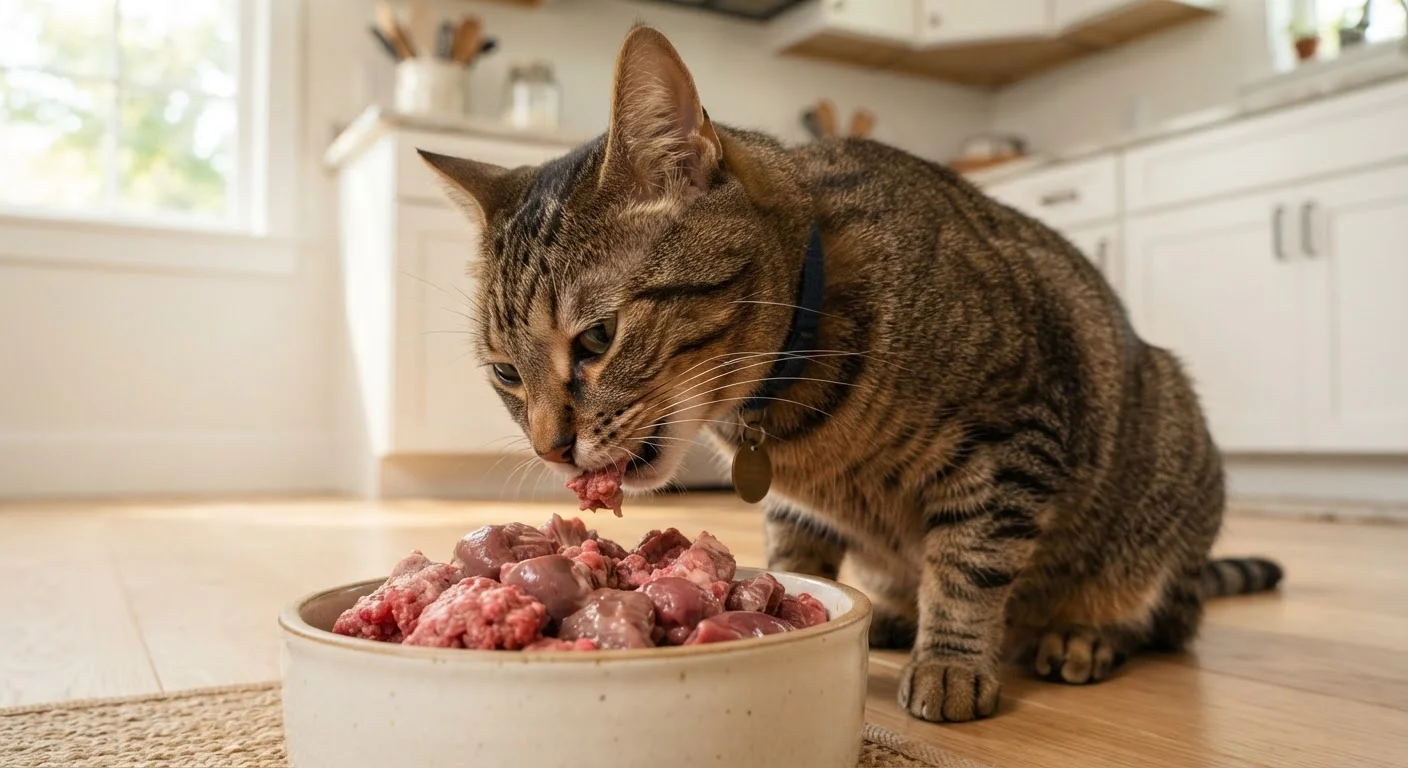
Photo: InDepthReads.com | Streamlining Learning For All editorial
Key Takeaways
- Cats cannot produce essential nutrients like taurine and arachidonic acid on their own — they must come from meat.
- Unlike dogs and humans, cats have limited ability to convert plant-based precursors into usable nutrients.
- A protein-deficient or plant-heavy diet can cause serious, sometimes irreversible, health problems in cats.
- Commercial cat foods are formulated around these biological constraints — but label reading still matters.
- Consulting a veterinarian before changing your cat's diet is always the recommended course of action.
The Biology That Sets Cats Apart
Cats evolved as solitary hunters in arid environments, subsisting almost entirely on small prey. Over millions of years, this dietary consistency led to a fundamental shift: cats lost the metabolic need — and eventually the metabolic ability — to derive essential nutrients from plant matter.
Several specific biological gaps define feline obligate carnivory:
- Taurine: Most mammals can synthesize taurine from the amino acids methionine and cysteine. Cats have severely downregulated this pathway and must obtain taurine directly from animal tissue. Taurine is critical for heart function, vision, and reproduction.
- Vitamin A: Dogs and humans convert beta-carotene from plants into active vitamin A. Cats lack the intestinal enzyme needed for this conversion and must consume preformed vitamin A from animal sources such as liver.
- Arachidonic acid: This omega-6 fatty acid is found almost exclusively in animal fats. Cats cannot efficiently convert the plant-based precursor linoleic acid into arachidonic acid, making dietary intake essential.
- Niacin: While many animals synthesize niacin from tryptophan, cats rapidly degrade tryptophan through a different metabolic pathway, making dietary niacin from meat a requirement.
These aren't minor nutritional nuances — they represent fundamental physiological constraints shaped by evolution.
Cats Are Not Small Dogs
What This Means at the Food Bowl
Understanding obligate carnivory reframes how you should evaluate your cat's food. The primary measure of a cat food's adequacy isn't calorie count or even crude protein percentage — it's whether the protein is animal-sourced and nutritionally complete for feline biology.
A few practical implications:
- Protein quality over quantity: Animal proteins contain the full amino acid profile cats need. Plant proteins — even high-protein ones like soy — are incomplete in the context of feline metabolism.
- Taurine must be present: Look for foods that list taurine as an added ingredient, particularly in processed foods where cooking can degrade naturally occurring taurine levels.
- Moisture matters: In the wild, cats obtain most of their water through prey. Cats fed exclusively dry kibble may have chronically low water intake, which is associated with urinary tract problems. Wet food or a combination approach is worth discussing with your vet.
For guidance on reading the fine print on commercial cat food packaging, see our guide to decoding pet food labels. If you notice your cat showing signs like dull coat, lethargy, or digestive changes, those can signal nutritional shortfalls — see signs your pet's diet may not be working for what to watch.
Ask Your Vet About Taurine Levels
Common Feeding Mistakes to Avoid
Even well-intentioned owners can make feeding choices that quietly conflict with feline biology. Some of the most frequent missteps include:
- Feeding dog food long-term: Dog food is formulated for omnivores and does not contain adequate taurine or preformed vitamin A for cats. Regular consumption can lead to deficiency diseases.
- Over-relying on plant-forward or grain-heavy foods: Some commercial foods use plant proteins as primary ingredients to reduce cost. While these may meet minimum regulatory standards, they aren't optimally aligned with a cat's carnivorous needs.
- Homemade diets without veterinary guidance: Raw or homemade diets can in principle align with feline biology, but achieving nutritional completeness — particularly for micronutrients — is genuinely difficult without professional formulation.
- Treating carbohydrates as neutral: Excess carbohydrates in feline diets have been associated with obesity and may contribute to diabetes in predisposed cats. Carbs aren't toxic, but they shouldn't be the dietary foundation.
For a broader look at habits that can affect your pet's health over time, our article on feeding mistakes that can quietly harm your pet's health covers the terrain in depth.
~40
Essential nutrients cats require from diet
Feline nutritional science identifies approximately 40 essential nutrients cats cannot synthesize adequately and must consume through food, according to established veterinary nutritional guidelines.
0%
Beta-carotene converted to vitamin A by cats
Research in feline metabolism has confirmed that cats lack the intestinal enzyme needed to convert plant-derived beta-carotene into active vitamin A, requiring direct dietary intake from animal sources.
~70%
Moisture content in natural feline prey
Small mammals and birds — the natural prey of wild cats — contain approximately 70% water by weight, highlighting the hydration gap when cats are fed primarily dry kibble.
This article is for general informational purposes only and is not a substitute for professional veterinary advice. Always consult a licensed veterinarian before making significant changes to your cat's diet.
Frequently Asked Questions
The content on this site is for informational purposes only and is not a substitute for professional advice. Always consult a qualified professional for guidance specific to your situation.