
Grooming at Home vs. Professional Grooming: What Each Approach Covers

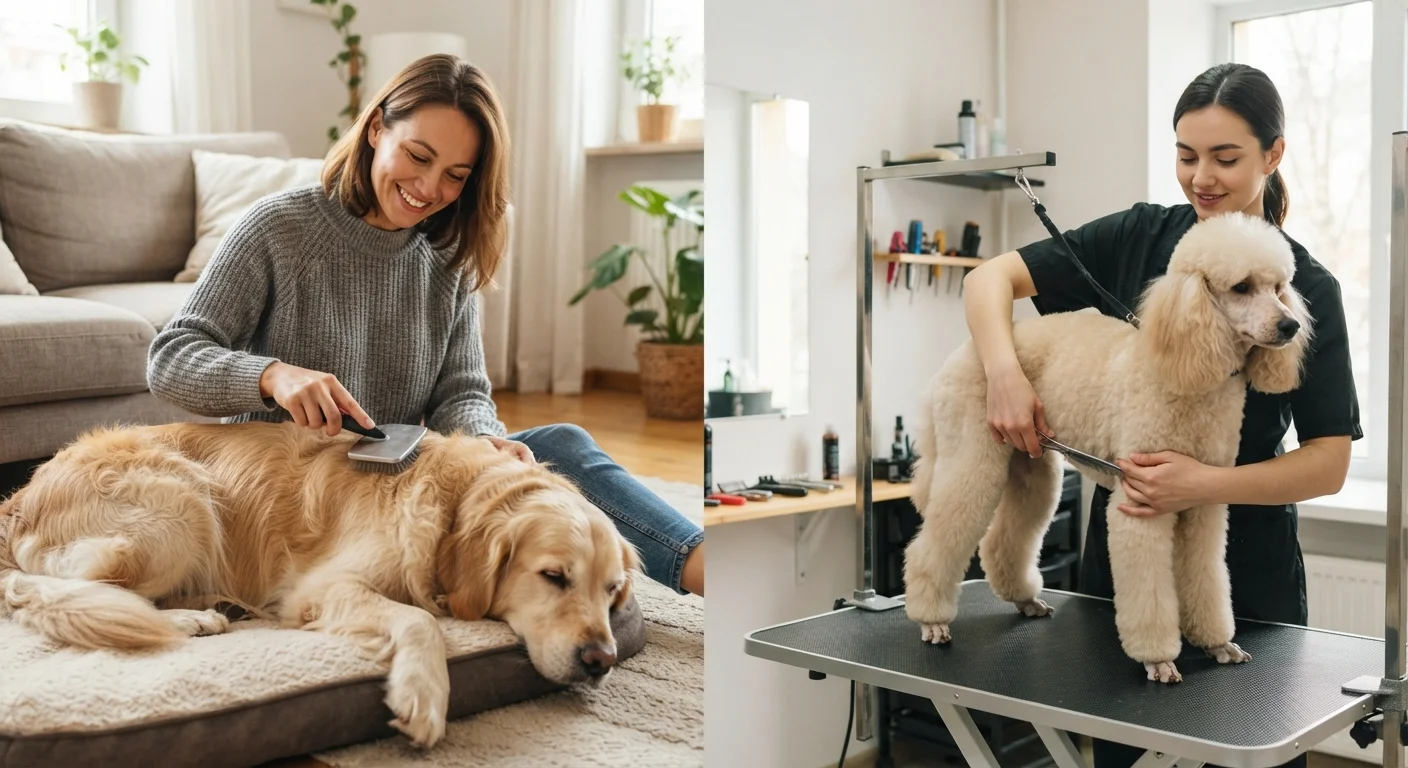
Photo: InDepthReads.com | Streamlining Learning For All editorial
Key Takeaways
- Routine brushing, ear checks, and basic nail maintenance are realistic tasks most owners can handle at home.
- Professional groomers bring specialized tools, coat-specific training, and the ability to spot early skin or health issues.
- Coat type is the single biggest factor in determining how often a professional appointment is necessary.
- A blended approach — regular home upkeep between professional sessions — is optimal for most dogs and cats.
- Some tasks, like expressing anal glands or managing severely matted coats, should always be left to a trained professional.
What Home Grooming Realistically Covers
For most pet owners, home grooming is less about achieving salon-quality results and more about maintaining baseline hygiene between professional appointments. Done consistently, it makes a meaningful difference in coat health, comfort, and early problem detection.
The tasks most owners can reliably handle include:
- Brushing and combing: Daily or weekly brushing prevents minor tangles from becoming mats, distributes natural oils, and removes loose fur. The right tool varies by coat — a slicker brush works well for medium to long coats, while a rubber curry brush suits short-haired dogs and cats.
- Wipe-downs and spot cleaning: Between baths, damp cloths or pet-safe wipes can address muddy paws, facial folds, and minor debris.
- Basic nail trims: With a proper guillotine or scissor-style clipper and knowledge of where the quick is located, many owners manage routine nail maintenance confidently. Starting slowly and rewarding the pet reduces resistance over time.
- Ear checks: Routine inspection of the outer ear for redness, odor, or discharge helps catch infections early. Light cleaning of the outer canal with a vet-approved solution is generally safe; deep cleaning is not.
- Toothbrushing: Dental disease is among the most common preventable conditions in pets. Daily brushing with a pet-formulated toothpaste is something owners can — and should — do at home.
Use Grooming Time as a Health Check
Home grooming also creates an opportunity to feel for lumps, skin changes, or tender areas that might otherwise go unnoticed between veterinary visits.
Where Professional Groomers Add Genuine Value
Professional groomers bring a combination of technical training, breed-specific knowledge, and purpose-built equipment that genuinely exceeds what most home setups can replicate. Their value is not simply cosmetic.
Coat-specific cutting and styling: Breed-standard trims — such as the structured clip of a Poodle or the hand-stripping required for a Wire Fox Terrier — require tools and techniques that take years to develop. Improper cutting can alter coat texture permanently in some double-coated breeds.
De-matting and coat restoration: Mats that are close to the skin can cause pain, restrict circulation, and harbor moisture that leads to skin infections. Attempting to remove severe mats at home risks cutting the skin. Professionals can assess whether a mat can be worked out or whether a close shave is the safer option.
Anal gland expression: When dogs scoot or show discomfort around their rear, impacted anal glands are a frequent cause. While some groomers handle external expression, veterinarians and veterinary technicians are the appropriate providers when internal expression is needed or the glands are inflamed.
Breed-appropriate bathing and drying: High-velocity dryers used by professionals remove water from dense undercoats far more effectively than home blow-dryers, reducing the risk of hot spots caused by trapped moisture — particularly relevant for double-coated breeds like Huskies, Golden Retrievers, and German Shepherds.
Early detection of skin and health issues: Experienced groomers often notice skin lesions, unusual growths, ear infections, or parasite activity that owners miss. A good groomer will flag these findings for veterinary follow-up rather than attempt to treat them.
How Coat Type Should Drive Your Decision
| Home Grooming | Professional Grooming | |
|---|---|---|
| Cost | Low ongoing cost; tool investment upfront | Higher per-session cost; varies by coat and region |
| Coat types best suited | Short, smooth, low-maintenance coats | Long, curly, double, or wire coats |
| Equipment required | Basic brushes, nail clippers, toothbrush | High-velocity dryers, professional clippers, tables |
| Skill level needed | Moderate; learnable by most owners | Trained and experienced; breed-specific knowledge |
| Frequency | Daily to weekly depending on coat type | Every 4–12 weeks depending on breed |
| Health monitoring | Basic checks; owner may miss subtle signs | Experienced eye for skin, ear, and coat issues |
| Mat and tangle management | Minor tangles only; not severe mats | Can safely address moderate to severe matting |
Coat type is the most practical lens for deciding how to divide grooming responsibilities. A smooth-coated Beagle and a Bichon Frisé have almost nothing in common in terms of upkeep demands, even if they weigh the same.
- Short, smooth coats (Labrador Retrievers, Boxers, domestic shorthair cats): These pets shed but rarely mat. Weekly brushing, occasional baths, and nail trims are manageable at home. Professional grooming is optional and typically done for nail grinding or deshedding treatments.
- Medium double coats (Corgis, Australian Shepherds, Maine Coons): Seasonal shedding can be heavy. Professional deshedding baths two to four times per year significantly reduce coat volume and manage undercoat health. Home brushing is still essential between sessions.
- Long, single-layer coats (Yorkshire Terriers, Maltese, Persians): These coats grow continuously, tangle easily, and require regular trims to stay functional. Most owners find professional grooming every six to eight weeks necessary, with daily brushing at home.
- Curly or wavy coats (Poodles, Labradoodles, Portuguese Water Dogs): Non-shedding curly coats are among the highest maintenance. Without regular professional trimming, the coat will mat at the skin level within weeks. Home brushing must happen several times per week.
- Wire or harsh coats (Schnauzers, Border Terriers): These coats benefit from hand-stripping rather than clipping to preserve correct texture. This is a specialized professional skill that most owners are not equipped to replicate.
Building a Practical Blended Routine
The most effective grooming plan for most pets combines structured home maintenance with periodic professional sessions timed to the coat's needs. Treating these as complementary rather than competing keeps costs manageable and pets comfortable year-round.
A practical framework to consider:
- Establish a home brushing schedule appropriate to coat type — daily for long and curly coats, two to three times per week for medium coats, and weekly for short coats.
- Schedule professional appointments proactively, rather than waiting until the coat becomes unmanageable. For high-maintenance coats, this often means every four to eight weeks. For low-maintenance coats, two to four times per year may be sufficient.
- Use home sessions to inspect the skin, ears, paws, and teeth — noting any changes to mention at the next veterinary or grooming visit.
- Ask your groomer to demonstrate specific techniques for your pet's coat. Many are willing to show owners how to brush properly or manage early tangles between appointments.
If your pet resists grooming — whether at home or in a professional setting — it is worth addressing the behavioral component separately. Structured training support can help desensitize pets to handling and make grooming less stressful for everyone involved.
Never Force Through Severe Matting at Home
This article is for general informational purposes only and is not a substitute for professional veterinary advice. Always consult a licensed veterinarian for guidance specific to your pet's health needs.
The content on this site is for informational purposes only and is not a substitute for professional advice. Always consult a qualified professional for guidance specific to your situation.