
Separation Anxiety in Dogs: What's Really Happening and How to Help

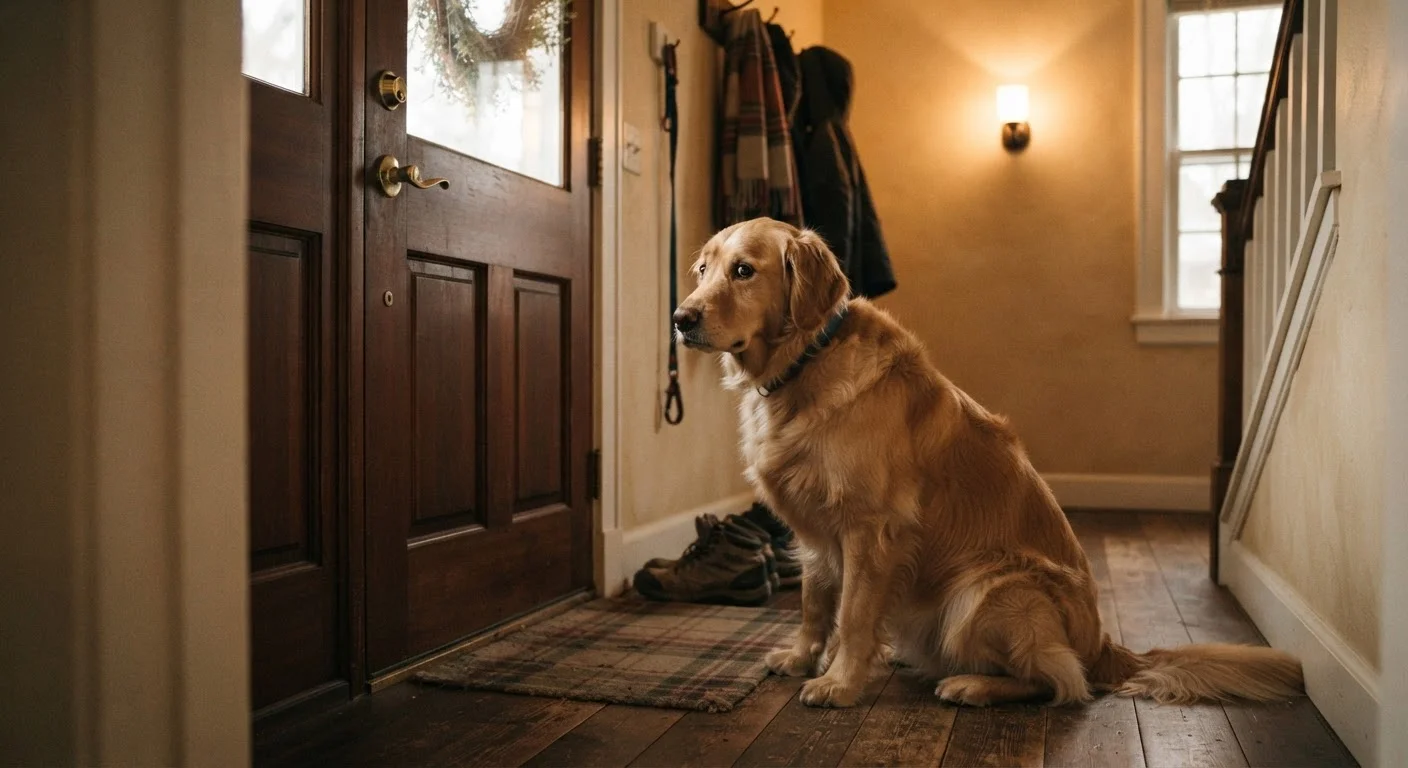
Photo: InDepthReads.com | Streamlining Learning For All editorial
Key Takeaways
- True separation anxiety is a panic response, not disobedience or boredom.
- Video monitoring at home is the most reliable way to confirm what your dog is actually doing.
- Gradual desensitization — building tolerance to departures in tiny increments — is the gold standard treatment.
- Some dogs require veterinary-prescribed medication alongside behavioral modification for meaningful progress.
- Punishment worsens anxiety and is never an appropriate response to separation-related behavior.
What Separation Anxiety Actually Is
Separation anxiety is a genuine anxiety disorder in which a dog experiences significant distress when left alone or separated from a specific person. It is not stubbornness, spite, or a training failure — it is closer in nature to a panic attack. The dog's nervous system triggers a fear response, and the destructive or disruptive behavior that follows is a symptom of that internal state, not a choice.
Behaviorally, the distress typically begins within minutes of an owner's departure and can include destructive chewing, house soiling, excessive vocalization, self-injury from escape attempts, and refusal to eat. Understanding that foundation is critical, because it shapes every effective intervention. For broader context on how dogs process and respond to emotional experiences, see our article on the science behind how dogs actually learn.
Punishment Makes Separation Anxiety Worse
Anxiety vs. Boredom vs. Mischief: Telling Them Apart
Many owners assume their dog has separation anxiety, when the behavior may have a different root cause. Accurate identification matters because the interventions differ significantly.
- Separation anxiety typically starts immediately upon departure, is highly distressing (the dog may pant, drool, or injure itself), and often involves behaviors specifically linked to exits — like following the owner room to room or reacting to pre-departure cues like picking up keys.
- Boredom usually sets in after a delay. A bored dog often chews or digs selectively, generally appears relaxed on arrival video footage, and responds well to increased exercise and enrichment.
- Incomplete training can look like mischief — a dog that hasn't learned what is and isn't acceptable when unsupervised simply does what comes naturally.
Setting up a camera and recording your dog's first 30–60 minutes alone is the single most diagnostic step you can take. The footage will reveal whether distress begins immediately or after a settled period. It can also help you distinguish anxiety vocalization from alert or demand barking — a distinction explained in detail in our guide on what each type of bark actually signals.
~17%
Dogs estimated to show separation anxiety
Research published in peer-reviewed veterinary behavioral journals estimates that roughly 14–20% of dogs presented to veterinary clinics show signs consistent with separation anxiety.
< 30 min
Typical onset window after departure
In most documented cases, peak distress behaviors occur within the first 30 minutes of the owner leaving, according to behavioral assessments using in-home video monitoring.
Why Some Dogs Are More Vulnerable
Separation anxiety is not evenly distributed across the dog population. Research and clinical observation point to several contributing factors:
- History of rehoming or shelter experience — dogs that have experienced multiple placements may have heightened hyperattachment.
- Genetics and breed temperament — breeds selectively developed to work closely with humans can be predisposed, though any dog can develop the condition.
- Abrupt changes in routine — a sudden shift in the owner's schedule (returning to work after an extended period at home) is a common trigger.
- Insufficient early socialization — puppies that never learned to be comfortable alone are at greater risk as adults.
- Underlying medical conditions — pain, cognitive dysfunction in older dogs, or hormonal imbalances can produce or amplify anxiety-like behavior. A veterinary exam should be part of any initial assessment.
If your dog's behavior changed suddenly rather than gradually, consider whether a physical cause may be involved before attributing it entirely to behavioral anxiety. Our companion article on when a behavior change is a medical warning sign covers what to track and report to your veterinarian.
Gradual Desensitization: The Evidence-Based Approach
Systematic desensitization — pairing low-intensity versions of the feared stimulus with a calm, positive experience, then incrementally increasing intensity — is the behavioral method with the strongest scientific support for separation anxiety in dogs.
In practice, this means practicing departures in steps so small they fall below the threshold that triggers panic:
- Practice pre-departure cues (picking up keys, putting on shoes) without leaving, until the dog no longer reacts.
- Exit for one to three seconds, return, and remain calm. Gradually extend absences to five seconds, ten seconds, thirty seconds, and so on — only moving forward when the dog is relaxed at the current duration.
- Vary re-entry behavior so that return does not become a high-arousal event. Greet calmly and briefly.
Progress is rarely linear. A dog that tolerates five minutes may regress after a stressful event. Each session should end before the dog reaches distress — keeping every repetition as a success is the foundation of effective conditioning. Understanding the underlying learning mechanisms behind this process is covered in depth in our article on how dogs actually learn.
Keep a departure journal logging the exact duration of each practice exit alongside your dog's behavior before, during (from video), and after. Patterns in this data will show you precisely where your dog's tolerance threshold sits so you never exceed it accidentally.
Vary your pre-departure routine rather than following a fixed sequence — put on your coat but then sit back down, pick up your keys and set them on the counter. This prevents the dog from learning a departure 'script' that triggers anticipatory anxiety before you even leave.
Supporting Tools and Management Strategies
Desensitization takes weeks to months for moderate-to-severe cases. In the interim, management reduces suffering and prevents the anxiety from deepening.
- Avoid triggering full panic: If possible, arrange for a dog walker, daycare, or trusted friend during training so the dog is not left alone for durations beyond its current tolerance.
- Enrichment before departures: A mentally tired dog is somewhat calmer. Puzzle feeders, sniff walks, or a food-stuffed chew given just before leaving can ease the transition.
- Crate use — with caution: A crate can provide security for some dogs, but for others it intensifies panic and becomes a confinement trap. Introduce it gradually and observe whether it genuinely reduces distress. See our guide on humane crate training for a structured approach.
- Calming aids: Pheromone diffusers and certain nutritional supplements are discussed in the veterinary literature, though evidence for their standalone effectiveness is mixed. They may be a useful adjunct, not a replacement for behavioral work.
- Medication: For moderate to severe cases, veterinary-prescribed medication — including FDA-approved options specifically for canine separation anxiety — can reduce the anxiety baseline enough to make behavioral training effective. This is a conversation to have with your veterinarian or a board-certified veterinary behaviorist.
Set Up a Camera Before Starting Any Protocol
When to Seek Professional Help
Many mild cases respond to owner-led desensitization with patience and consistency. However, several signs indicate that professional guidance is warranted:
- Self-injury during departures (broken teeth, bleeding paws from escape attempts)
- No measurable improvement after four to six weeks of consistent work
- Extreme distress that prevents even a ten-second absence
- Owner exhaustion or inability to manage the management requirements
A certified applied animal behaviorist (CAAB) or a board-certified veterinary behaviorist (Dip ACVB) can conduct a full functional assessment and design a protocol tailored to the individual dog. General trainers without specific anxiety credentials may not have the training to address clinical-level cases safely. Our guide on when to involve a professional behaviorist outlines what to look for when selecting qualified help.
Separation anxiety is genuinely treatable. With an accurate diagnosis, a systematic plan, and realistic expectations about timelines, most dogs achieve meaningful improvement. The investment in early, consistent intervention pays dividends in quality of life — for both the dog and the people who love them.
This article is for general educational purposes only and is not a substitute for professional veterinary or behavioral advice. If your dog is experiencing significant distress, consult a licensed veterinarian or certified animal behaviorist for guidance tailored to your pet's specific needs.
The content on this site is for informational purposes only and is not a substitute for professional advice. Always consult a qualified professional for guidance specific to your situation.