
Dark Patterns: The Design Tricks Retailers Use to Nudge Your Decisions

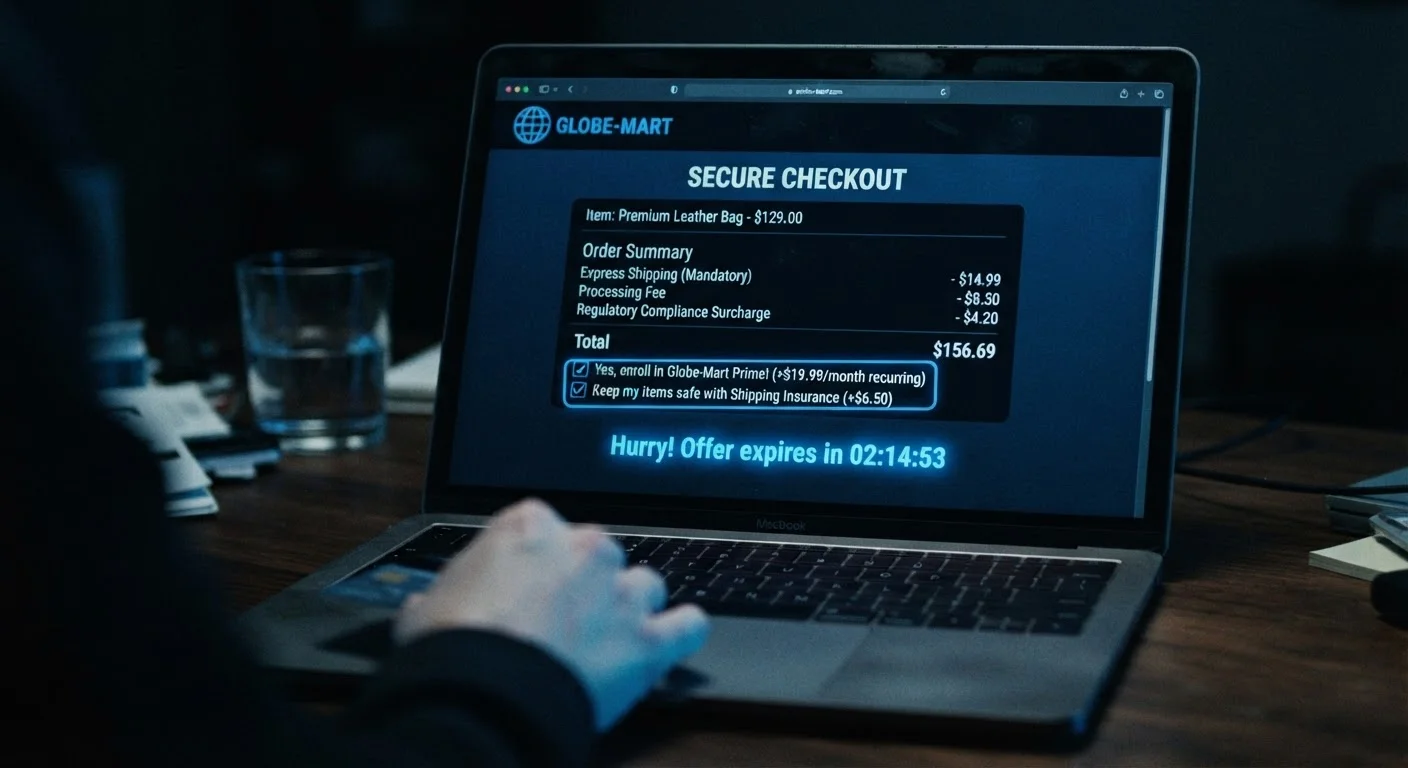
Photo: InDepthReads.com | Streamlining Learning For All editorial
Key Takeaways
- Dark patterns are intentional design choices, not accidents or oversights.
- Pre-checked boxes, hidden fees, and fake urgency timers are among the most common tactics.
- Slowing down at checkout is one of the most effective ways to avoid being nudged.
- Regulatory bodies like the FTC have begun treating certain dark patterns as deceptive practices.
- Recognizing these tactics is the first step to making purchases that reflect your actual intentions.
What Dark Patterns Actually Look Like
The phrase "dark pattern" can sound abstract, but the tactics themselves are ones most shoppers have encountered. Here are the most documented categories:
- Pre-checked opt-ins: A box is already ticked to add purchase protection, a newsletter subscription, or a recurring membership. You have to notice it and actively uncheck it to avoid the charge.
- Hidden fees ("drip pricing"): The advertised price is low, but service fees, processing charges, or mandatory add-ons are revealed only at the final checkout step — after you've invested time and intent in the purchase.
- Confirm-shaming: The opt-out button is written to make declining feel foolish or guilty, such as "No thanks, I don't want to save money."
- Fake countdown timers: A clock ticking toward zero implies scarcity or a deadline, but the timer resets if you refresh the page or return the next day.
- Roach motel: Signing up for a service is fast and easy, but canceling requires navigating multiple screens, phone calls, or waiting periods — by design.
Understanding these categories gives you a vocabulary for what you're seeing and a reason to pause before clicking through.
Not Every Confusing Interface Is a Dark Pattern
Why These Tactics Work
Dark patterns are effective because they exploit predictable cognitive shortcuts. When people shop, they rely on mental defaults: if a box is checked, they assume it's the standard or recommended option. If a timer is counting down, urgency triggers a fear of missing out that can override deliberate thinking.
Retailers and platform designers often employ behavioral scientists and conduct large-scale A/B tests to identify which interface choices produce the most conversions. This means the checkout experience you're navigating has frequently been optimized — sometimes through thousands of iterations — to increase the chance you'll spend more than you planned.
“Dark patterns are tricks used in websites and apps that make you do things that you didn't mean to — like buying or signing up for something.”
— Harry Brignull, UX designer and researcher who coined the term 'dark patterns' in 2010
This is also why understanding impulse buying psychology matters: dark patterns don't create desires from nothing, they exploit the low-attention, high-trust mental state that shopping often produces. The anchoring and urgency tactics used in sale pricing operate through the same psychological mechanisms.
How to Defend Against Them
No single trick defeats every dark pattern, but a few consistent habits dramatically reduce their effectiveness:
- Read the checkout flow before submitting. Scroll the entire page. Look at the itemized total, not just the headline price. Anything that changed between the product page and checkout deserves scrutiny.
- Uncheck everything by default. Treat every pre-checked box as something you have not consciously chosen. Then decide deliberately whether you want it.
- Test urgency claims. If a timer is pushing you to buy, close the tab and return in ten minutes. If the offer is still valid — and it usually is — the urgency was manufactured.
- Read cancellation terms before subscribing. If you can't find a clear cancellation path before you sign up, that's diagnostic information about the experience you'll have later.
- Compare final totals, not advertised prices. Retail pricing tactics frequently rely on a gap between what's advertised and what you actually pay.
Before committing to a purchase, it's also worth reviewing the return policy — dark patterns sometimes extend to how returns are structured, with fine print that makes getting your money back harder than expected.
Use a Dedicated Email for Signups
The Regulatory Picture
Dark patterns have drawn formal attention from the FTC, which published a report in 2022 detailing how these tactics harm consumers and can constitute unfair or deceptive acts under Section 5 of the FTC Act. The report identified subscription traps, hidden costs, and interface tricks that impede cancellation as priority concerns.
Several states have also enacted or proposed more specific protections. California's Automatic Renewal Law, for example, requires that subscription terms be clearly disclosed and that cancellation be as simple as sign-up. These protections are worth knowing: if you've been charged for a subscription you didn't knowingly agree to, a formal complaint is a legitimate recourse.
Awareness of these patterns also connects to broader financial decision-making. The spending decisions that seem savvy but often backfire frequently involve being nudged by exactly these kinds of environmental cues — which is why building general consumer literacy matters for your finances over time. For a broader look at shopping strategy, the deal hunting resources hub covers how to identify genuine value versus manufactured urgency.
Frequently Asked Questions
The content on this site is for informational purposes only and is not a substitute for professional advice. Always consult a qualified professional for guidance specific to your situation.