
Anchoring, Urgency, and the Psychology Behind Sale Prices

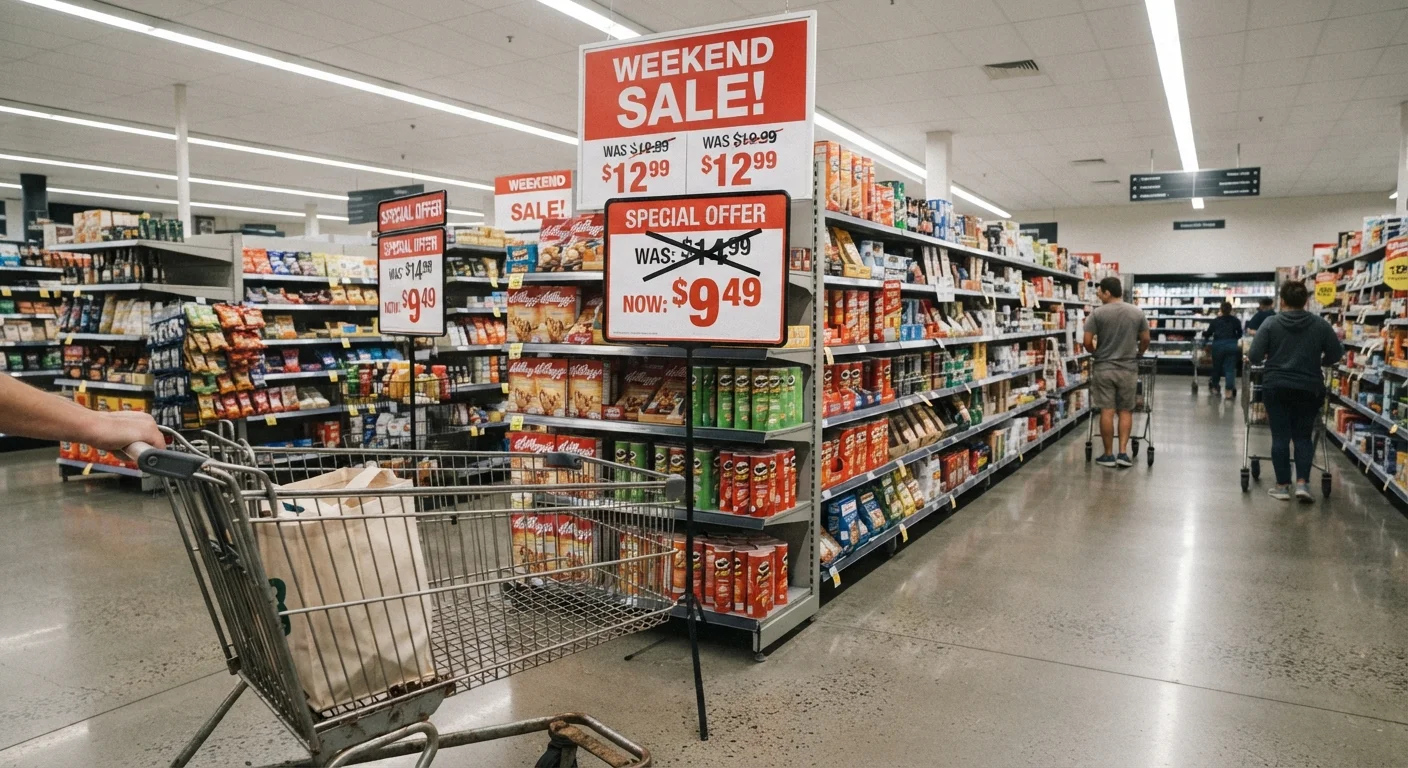
Photo: InDepthReads.com | Streamlining Learning For All editorial
Key Takeaways
- The "original" price on a sale tag is often inflated, rarely transacted, or held only briefly before the markdown.
- Urgency signals like countdown timers and "only 3 left" notices are frequently artificial or misleading.
- Your brain anchors to the first number it sees, making any lower number feel like a win regardless of real value.
- Checking the item's price history using free tools can reveal whether a discount is genuine.
- Asking "would I buy this at full price?" is a reliable filter for anchor-driven impulse purchases.
- Real markdowns tend to follow predictable inventory cycles, not random flash sales.
How Anchoring Works Against You
Walk into any retailer during a sale event and you'll see the same pattern: a number crossed out in red, a lower number beneath it. That crossed-out figure is doing psychological heavy lifting. It sets an anchor — a mental reference point your brain uses to judge everything that follows.
The problem is that the anchor doesn't need to be accurate to be effective. Research in behavioral economics consistently shows that people adjust insufficiently from an anchor even when they know the number is arbitrary. In a retail setting, this means a jacket tagged at "Was $200, Now $120" feels like a bargain whether or not the $200 price was ever a realistic market value for that item.
Retailers know this. Some set artificially elevated "original" prices — sometimes called reference prices or compare at prices — specifically to make their standard selling price look generous. The FTC has guidance requiring that reference prices reflect prices at which goods were actually sold, but enforcement is uneven and shoppers bear most of the burden of scrutiny.
Reference Prices and the FTC
See the full breakdown of how these reference-price tactics fit into broader retail strategy in our look at retail pricing tactics every shopper should recognize.
Urgency Signals: Scarcity, Timers, and "Limited" Claims
Anchoring alone moves product, but pair it with urgency and the effect compounds. Urgency tactics exploit a separate bias: loss aversion. People feel the pain of missing out more acutely than they feel the pleasure of gaining something of equivalent value. Retailers engineer this feeling deliberately.
Common urgency formats include:
- Countdown timers — Some reset automatically or are purely decorative, creating a false sense that a window is closing.
- Low-stock warnings — "Only 4 left!" notices sometimes appear regardless of actual inventory levels.
- Flash sale framing — Labeling a price as "today only" when the same promotion recurs weekly.
These signals short-circuit deliberate thinking. The more rushed you feel, the less likely you are to ask basic questions: Is this price actually lower than usual? Do I need this item? Could I find it elsewhere for less?
Add Friction Before You Click 'Buy'
For a deeper look at how urgency overlaps with impulsive spending patterns, see how impulse buying works and the friction techniques that slow it down.
Practical Ways to See Through the Markup
The most reliable defense against anchoring is to evaluate the sale price in isolation — strip the crossed-out number from your consideration entirely and ask whether the current price represents fair value on its own terms. If the answer is uncertain, that's your signal to pause.
A few concrete tactics:
- Check price history. Free browser extensions and retailer-specific price tracking tools show how a product's price has moved over time. If the "sale" price has been the default price for months, the anchor is inflated.
- Research category-specific discount cycles. Certain product categories discount at predictable times of year — knowing those windows helps you distinguish a real clearance event from a manufactured one.
- Understand real markdown cycles. Genuine markdowns follow inventory and seasonal patterns. The lifecycle of a retail discount explains when price drops are driven by actual supply pressure rather than marketing.
- Apply a waiting period. For non-essential purchases, adding 24–48 hours of friction is one of the most effective ways to let urgency signals dissipate and let your actual preferences guide the decision.
~60%
Shoppers who feel urgency during online sales
Consumer behavior surveys consistently find that a majority of online shoppers report feeling time pressure during promotional events, even when deadlines are artificial.
4x
Greater weight given to losses vs. equivalent gains
Tversky and Kahneman's foundational research on loss aversion found that losses are weighted roughly twice as heavily as equivalent gains, a ratio that scarcity messaging directly exploits.
37%
Of holiday "deals" that are cheaper before or after the sale
Price tracking analyses of major retail events have found that a substantial share of promoted items reach lower prices in the weeks surrounding the event period.
Understanding these mechanics is part of broader consumer literacy habits that compound over time into meaningfully better purchasing decisions.
This article is for informational and educational purposes only and does not constitute financial advice. Readers should evaluate their own financial situations and consult a qualified professional when appropriate.
Frequently Asked Questions
The content on this site is for informational purposes only and is not a substitute for professional advice. Always consult a qualified professional for guidance specific to your situation.