
The Lifecycle of a Retail Discount: When Markdowns Are Real

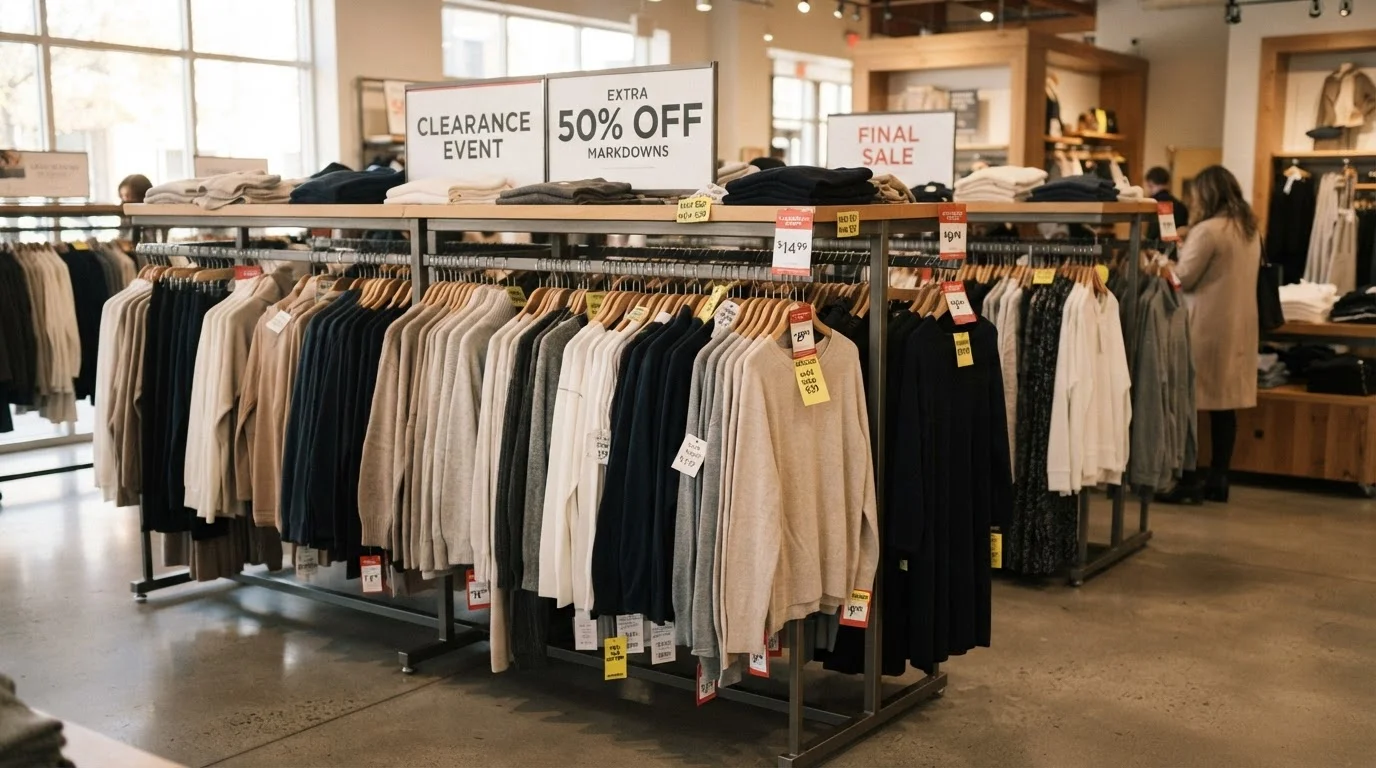
Photo: InDepthReads.com | Streamlining Learning For All editorial
Key Takeaways
- Genuine markdowns are inventory-driven, not calendar-driven marketing events.
- Most retailers cycle through predictable markdown stages: initial price, promotional reduction, first markdown, final clearance.
- A product's position in the store — endcap, clearance rack, seasonal aisle — signals which stage it's in.
- Comparing a sale price to the item's price history, not just the crossed-out tag, reveals real savings.
- Artificial reference prices (inflated 'original' prices) are a documented retail practice shoppers should watch for.
How the Markdown Lifecycle Actually Works
Every product on a retail shelf moves through a pricing lifecycle that mirrors its inventory status. Understanding these stages is the foundation for distinguishing a real deal from a promotional illusion.
The typical lifecycle runs through four stages:
- Initial selling price: The product launches at full margin. This is the price retailers genuinely expect to receive on early, full-demand sales.
- Promotional reduction: If sell-through is slower than projected, a temporary promotional price is applied — often funded by co-op dollars from the manufacturer. This is not yet a markdown; the price can revert.
- First permanent markdown: When inventory exceeds targets or a new season approaches, the retailer records an official markdown — typically 20–40% off the initial price. This reduction is structural, not temporary.
- Final clearance: Items that still haven't sold reach the clearance phase, often discounted 50–75% or more. At this stage the retailer prioritizes shelf space over margin.
Shoppers who recognize where an item sits in this cycle can make better-informed decisions rather than reacting to a sale sign alone.
Promotional vs. Permanent Price Reductions
What Triggers a Real Markdown
Markdowns aren't arbitrary — they're driven by specific operational pressures retailers manage on a rolling basis.
- Seasonal transitions: Apparel, outdoor goods, and seasonal décor are marked down as the relevant season ends. Retailers need floor space for incoming inventory.
- Slow sell-through rates: When weekly sales velocity falls below a retailer's target, systems flag the product for a price reduction to accelerate movement.
- Model-year or version changes: Electronics, appliances, and vehicles see markdowns when a newer model ships. The prior version must clear.
- Excess purchasing: If a buyer over-ordered, the surplus triggers markdowns regardless of season.
These triggers are inventory and financial decisions — not marketing calendars. That distinction matters: a markdown driven by operational need is more likely to represent a genuine reduction than a promotional event timed to a holiday.
For a broader look at how retailers use pricing psychology to frame these events, see how anchoring and urgency tactics shape sale perceptions.
Use Price History Before You Buy
How to Read a Price Tag for Real Savings
A crossed-out number on a tag tells you what the retailer wants you to believe you're saving — not necessarily what you're actually saving. Here's how to interpret price information more critically.
Check price history, not just the tag. Free browser extensions track historical pricing on major retail websites. If the 'original' price was only charged for a brief period before the discount, the markdown is less meaningful.
Look at where the item is positioned in the store. Products on endcaps or in featured sale displays are often under promotional pricing. Items moved to a dedicated clearance section have more likely received a structural markdown.
Understand 'compare at' vs. 'was' pricing. 'Compare at' typically means the item is being compared to another retailer's price or the manufacturer's suggested retail price (MSRP) — not the store's own prior price. 'Was' or 'originally' pricing should reflect the store's actual prior selling price.
This connects directly to the broader category of retail pricing tactics shoppers should recognize, including artificial reference pricing.
~40%
Average clearance markdown depth in apparel
Industry analyses of U.S. apparel retailing consistently find end-of-season markdowns in the 40–60% range as retailers clear seasonal inventory.
6–10 weeks
Typical time to first seasonal markdown in clothing
Retail buying and markdown cadence data suggest most fashion retailers take their first permanent markdown 6–10 weeks after a seasonal introduction.
Up to 30%
Consumers who recognize artificial reference prices
Consumer behavior research suggests a minority of shoppers actively compare sale prices against historical data or cross-retailer benchmarks before purchasing.
Timing Your Purchase Within the Lifecycle
Knowing the markdown lifecycle gives you a practical framework for timing purchases — though it involves a tradeoff between price and availability.
Buying early in the lifecycle means full selection and availability at the cost of a higher price. Waiting for the first markdown — typically 6–10 weeks after a seasonal introduction for apparel — captures meaningful savings with reasonable inventory still available. Waiting for clearance maximizes the discount but risks the specific size, color, or configuration being sold out.
For category-specific windows when markdowns predictably occur, seasonal shopping windows by product category provides a practical reference.
One final check before counting a discount as real: factor in any hidden costs that may offset the savings. Shipping fees and return penalties can quietly eliminate a headline markdown.
This article provides general consumer education about retail pricing practices. It does not constitute financial or purchasing advice tailored to your individual circumstances.
Frequently Asked Questions
The content on this site is for informational purposes only and is not a substitute for professional advice. Always consult a qualified professional for guidance specific to your situation.