
Common Deal-Hunting Myths That Cost Shoppers Money

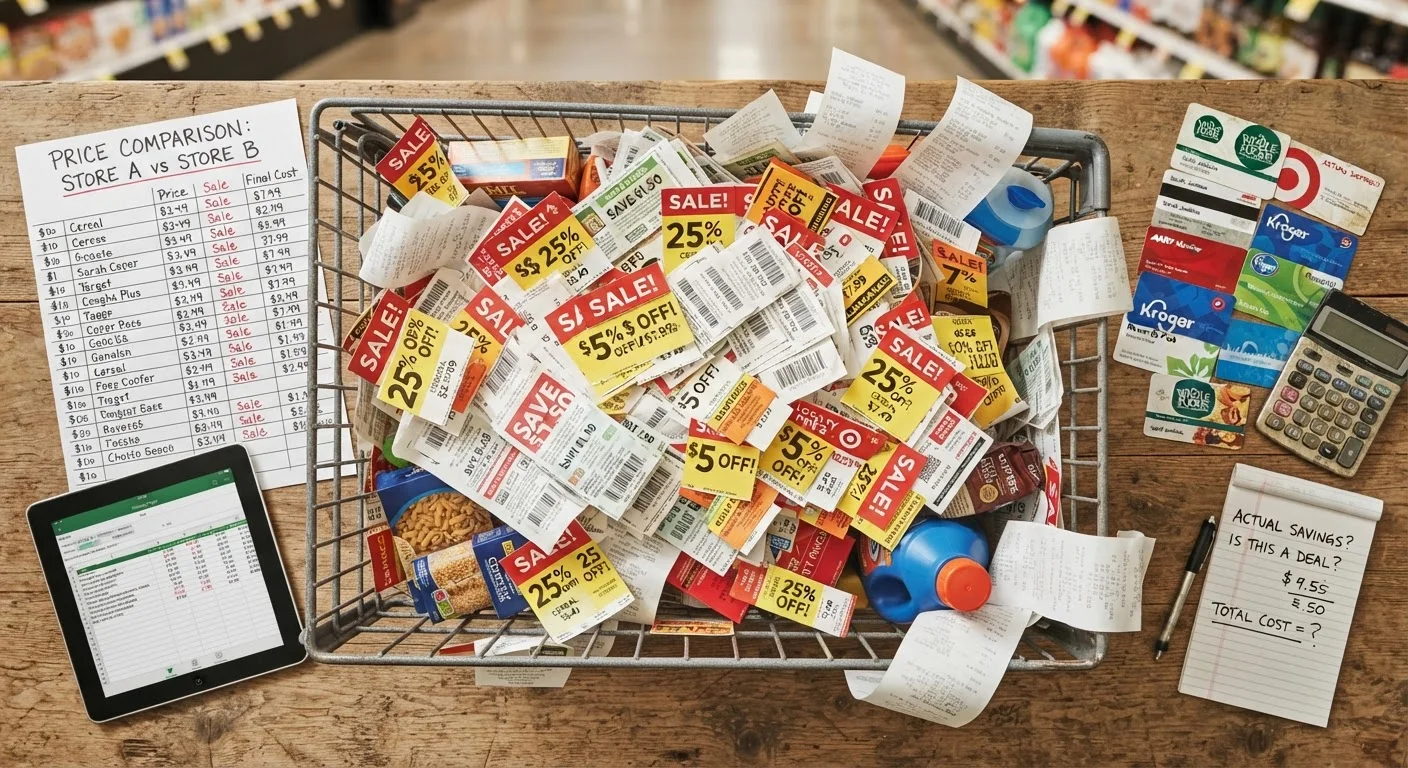
Photo: InDepthReads.com | Streamlining Learning For All editorial
Key Takeaways
- Buying in bulk only saves money if you use every unit before it expires or goes to waste.
- Loyalty points often lose value through expiration, devaluations, and restricted redemption windows.
- A percentage-off tag does not confirm the discounted price is lower than competitors' regular prices.
- Free shipping thresholds can push you to spend more than you would have otherwise.
- Clearance pricing does not guarantee an item is at its lowest possible price.
Why Deal-Hunting Myths Persist
Retailers invest heavily in shaping how shoppers perceive value. Phrases like "members save more" or "limited quantities" are engineered to trigger spending behavior — not necessarily to reflect genuine savings. The result is a set of widely believed shopping assumptions that feel rational but frequently work against the buyer's actual financial interest.
This article examines the most common deal-hunting myths, what the evidence actually shows, and how to recalibrate your approach. For a broader look at how sale mechanics are structured to favor sellers, see why sale prices don't always mean savings.
Myth
Buying in bulk always saves money.
Fact
Bulk buying only saves money when you consume the entire quantity before it spoils, expires, or becomes obsolete — and when the per-unit cost is genuinely lower.
Bulk packages frequently carry a lower unit price, but that advantage evaporates if portions go unused. Perishable goods that expire before you finish them, duplicate items you already own, or products you later stop using all convert apparent savings into real losses. Unit pricing labels are the right tool for comparison — but only after you've honestly assessed how much you'll actually use.
Myth
Loyalty points are essentially the same as cash.
Fact
Points have significant limitations that cash does not: they can expire, be devalued by program rule changes, and carry redemption restrictions that reduce their practical worth.
Loyalty programs are designed to increase visit frequency and spending — not primarily to reward customers. Points are subject to unilateral devaluation, blackout periods, and category restrictions. Earning points may also require sharing purchase data and behavioral information with the retailer. For a realistic look at what these programs actually deliver versus what they ask for, see loyalty programs: what you actually get and what you give up.
Myth
A higher percentage off means a better deal.
Fact
The discount percentage is only meaningful if the reference price — the "original" price — accurately reflects what the item actually sold for at that price, for a meaningful period.
Retailers sometimes inflate reference prices before a sale, making a modest reduction look dramatic. A 40% discount off an inflated anchor price may result in a final price higher than a competitor's everyday price. Comparing the actual dollar amount against other current listings, rather than trusting the posted original price, gives a more accurate picture. This practice — known as reference price manipulation or price anchoring — is documented in consumer research and addressed in some regional advertising standards, though enforcement varies.
Myth
Free shipping thresholds always work in the shopper's favor.
Fact
Free shipping minimums frequently prompt shoppers to add items they wouldn't have bought, spending more overall to avoid a shipping fee that would have been less than the extra purchase.
If a shipping fee is $6 and you add a $20 item to qualify for free shipping, you've spent $14 more than the fee would have cost. The math only favors the buyer when the additional item is something already on your list and priced competitively. Treating a shipping threshold as a neutral convenience feature — rather than a spending prompt — requires deliberate awareness each time it appears.
Myth
Clearance items are always at their rock-bottom price.
Fact
Clearance pricing reflects a retailer's inventory management goals, not necessarily the lowest available price for that item across the market.
A clearance tag signals the retailer wants to move stock — it does not confirm the item can't be found elsewhere for less. Checking competitor prices and reviewing price-history data (available through browser extensions and price-tracking tools) before purchasing a clearance item provides more reliable context than assuming the markdown is the market floor. Spending decisions that seem savvy but often backfire covers related traps including over-reliance on clearance and rebate chasing.
What Actually Constitutes a Real Deal
A genuine deal has two properties: the price is lower than you would pay elsewhere for an equivalent item, and you would have purchased the item regardless of the promotion. Both conditions matter. Spending money to capture a discount you wouldn't have sought otherwise is not saving — it's spending prompted by marketing.
~$1,500
Estimated annual household food waste cost
The USDA has estimated that American households waste a significant share of purchased food, with some analyses placing the per-household cost in this range annually — a figure that bulk overbuying can worsen.
30%+
Loyalty points that go unredeemed
Industry research from loyalty analytics firms has consistently found that a substantial share of earned loyalty points expire before redemption, diminishing their stated value to consumers.
Hidden fees are another common eraser of headline savings. Shipping charges, handling fees, restocking penalties, and mandatory memberships can quietly offset a posted discount. Before counting a deal as real, account for the full out-of-pocket cost. Our guide on hidden costs that quietly erase a discount breaks down which fees to watch for.
Consistent savers tend to share a set of practical habits — comparing unit prices, tracking baseline costs, and resisting urgency framing. If you want to build those instincts, habits that separate consistent savers from impulse buyers is a useful starting point.
Stacking Discounts Has Rules Too
If you're newer to deal hunting and want to understand the fundamentals before tackling more advanced tactics, deal hunting for beginners provides a grounded overview without the hype.
The content on this site is for informational purposes only and is not a substitute for professional advice. Always consult a qualified professional for guidance specific to your situation.