
Why Sale Prices Don't Always Mean Savings

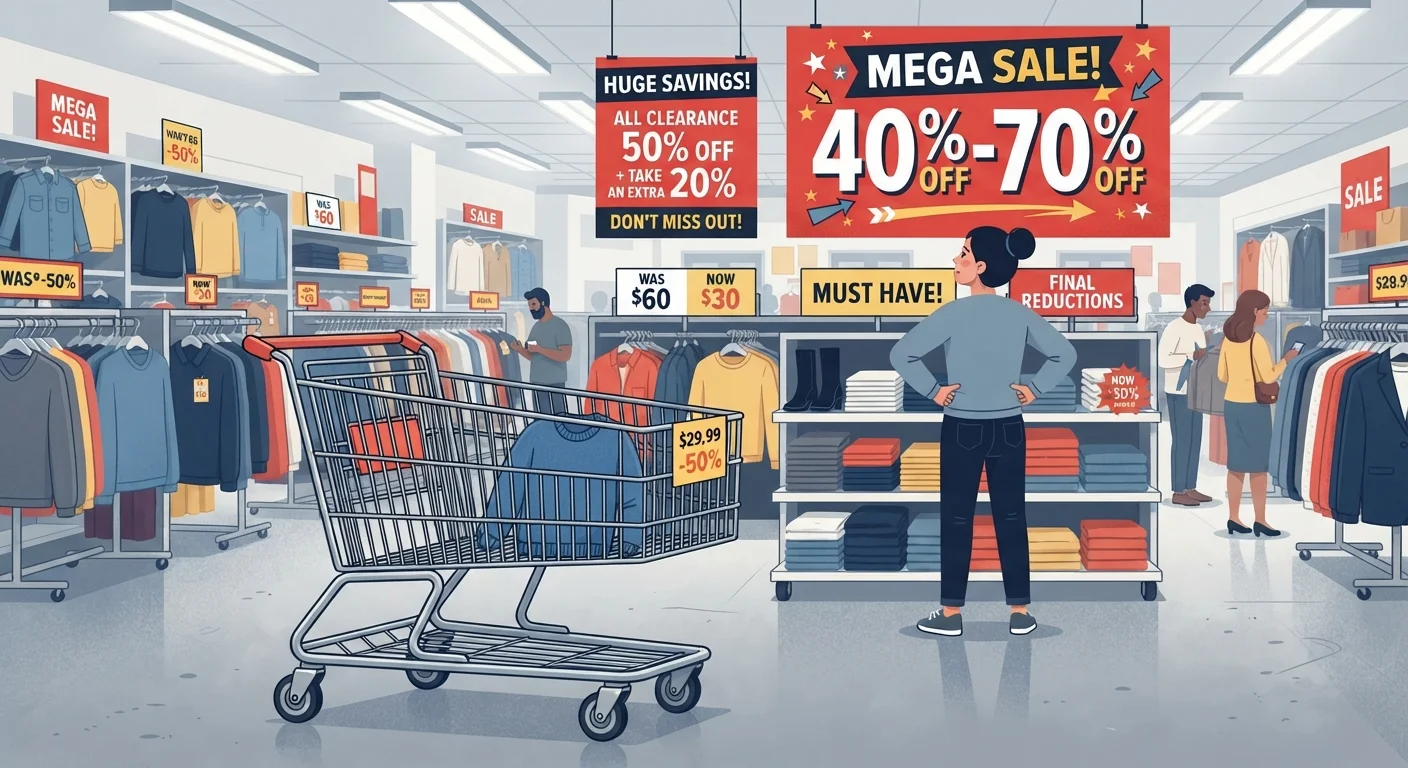
Photo: InDepthReads.com | Streamlining Learning For All editorial
Key Takeaways
- Reference prices on sale tags are often inflated or rarely charged, making discounts look larger than they are.
- Manufactured urgency tactics like countdown timers push spending decisions before shoppers can compare prices.
- A lower sticker price doesn't account for hidden costs like shipping fees or required memberships.
- Price history tools can verify whether a 'sale' price is genuinely below the item's typical selling price.
The Problem With Taking Sale Prices at Face Value
A tag reading "Was $120 — Now $60" feels like a win. But that feeling is engineered. The gap between a reference price and a sale price is one of the most reliable levers retailers use to influence purchasing behavior, and the reference price itself is often the weakest link in the equation.
Consumer protection agencies, including the U.S. Federal Trade Commission (FTC), have long maintained guidelines around advertised reference prices, requiring that a "former price" be one at which the item was actually offered for a reasonable period. In practice, enforcement is uneven, and shoppers regularly encounter "compare at" figures that were charged briefly, rarely, or in limited markets — if at all. Understanding how these mechanics work is the foundation of genuine savings literacy. See our guide to decoding sale tags for a closer look at what fine print on retail tags is actually communicating.
Myth
If the tag shows a higher 'original price,' that's what the item normally costs.
Fact
Reference prices are often inflated, briefly used, or based on a suggested retail figure that few retailers ever actually charge.
The FTC's Guides Against Deceptive Pricing state that a "former price" should reflect a price at which meaningful sales were made. However, "suggested retail price" or "compare at" labels are not always held to the same standard, and they frequently overstate what the item typically sells for. Before treating a reference price as meaningful, check whether competing retailers sell the item at or near the supposed "sale" price on a regular basis.
Myth
A bigger percentage off always means a better deal.
Fact
Percentage discounts only measure the gap between two prices — and if the reference price is inflated, a 50% discount can still leave you overpaying.
Discount percentage is a relative figure. A 60% discount from an artificially elevated price may result in a final price that is higher than what a competing retailer charges without any sale framing at all. The number that matters is the actual amount you pay compared to the going market rate — not the gap between the sale price and a reference figure you cannot independently verify.
Myth
Limited-time offers and countdown timers mean supply or pricing is genuinely scarce.
Fact
Many countdown timers reset automatically, and "limited stock" notices are often deployed as standard marketing practice rather than accurate inventory reports.
Research into e-commerce urgency design has found that some countdown timers restart when the clock reaches zero, and that low-stock warnings are sometimes shown regardless of actual inventory levels. The FTC and state attorneys general have taken action against retailers using false scarcity claims. If a deal reappears the next day, the urgency was manufactured — and a decision made under artificial pressure is rarely one made in your best interest.
Myth
Sales are the best time to buy regardless of what you're purchasing.
Fact
Seasonal sale timing varies widely by category, and buying during a publicized sale event doesn't guarantee you're at a category price low.
Major sale events — including holiday weekends and annual clearance periods — are not universally the lowest-price moments for every product category. Electronics, for instance, often see their lowest prices tied to model-year transitions rather than calendar promotions. Apparel clearance tends to be deepest late in a season, not at its start. Matching your purchase timing to category-specific price cycles, rather than retailer-driven sale events, is more likely to yield a genuine low price. The deal-hunting hub covers category-specific timing strategies in more depth.
Myth
The sale price is the full cost of the purchase.
Fact
Shipping, handling, required memberships, and restocking fees can significantly raise the real cost above the advertised price.
A sale price is the number a retailer leads with — it is rarely the number that appears on your bank statement. Shipping costs, expedited delivery fees, mandatory loyalty-program enrollment, installation charges, and return penalties all add to the effective price. When comparing deals across retailers, calculate the total landed cost — what you actually pay to have the item in hand and keep it — before concluding one offer is cheaper than another.
What the Data and Patterns Actually Show
Price tracking research consistently finds that many items marketed as discounted are sold at or near their "sale" price for the majority of the year. The headline percentage off is real only if the reference price was genuinely the standard price — and that standard is harder to verify than most shoppers assume.
87%
Of tracked items sold at 'sale' price most of the year
An analysis of price history data by consumer advocacy researchers found that the majority of items on major retail platforms were offered at their nominal 'sale' price for most of the calendar year, making the 'original' price largely theoretical.
3 in 10
Shoppers who verify price history before buying
Consumer survey data suggests that fewer than a third of online shoppers check historical price data before completing a purchase, leaving most reliant on the retailer's own framing of the discount.
Urgency cues compound the problem. Countdown timers, "only 3 left" notices, and flash-sale framing all compress the time a shopper has to compare alternatives. Anchoring and urgency tactics are well-documented in behavioral economics research; the subjective pressure they create is real even when the underlying scarcity is not. Separately, a nominally lower price can be erased entirely by add-on costs. Shipping fees, membership requirements, and restocking penalties are among the most common ways headline savings disappear before checkout.
Urgency Language Is a Sales Technique, Not a Service
The antidote is simple but requires a small habit change: check price history before buying. Price tracking tools can show whether a current "sale" price is genuinely below an item's typical selling price, or whether it's simply the price the item always sells for. For a broader look at mistaken assumptions that affect real spending, common deal-hunting myths covers several overlapping traps worth knowing.
The content on this site is for informational purposes only and is not a substitute for professional advice. Always consult a qualified professional for guidance specific to your situation.