
Reading a Sale Tag: What the Fine Print Is Actually Telling You

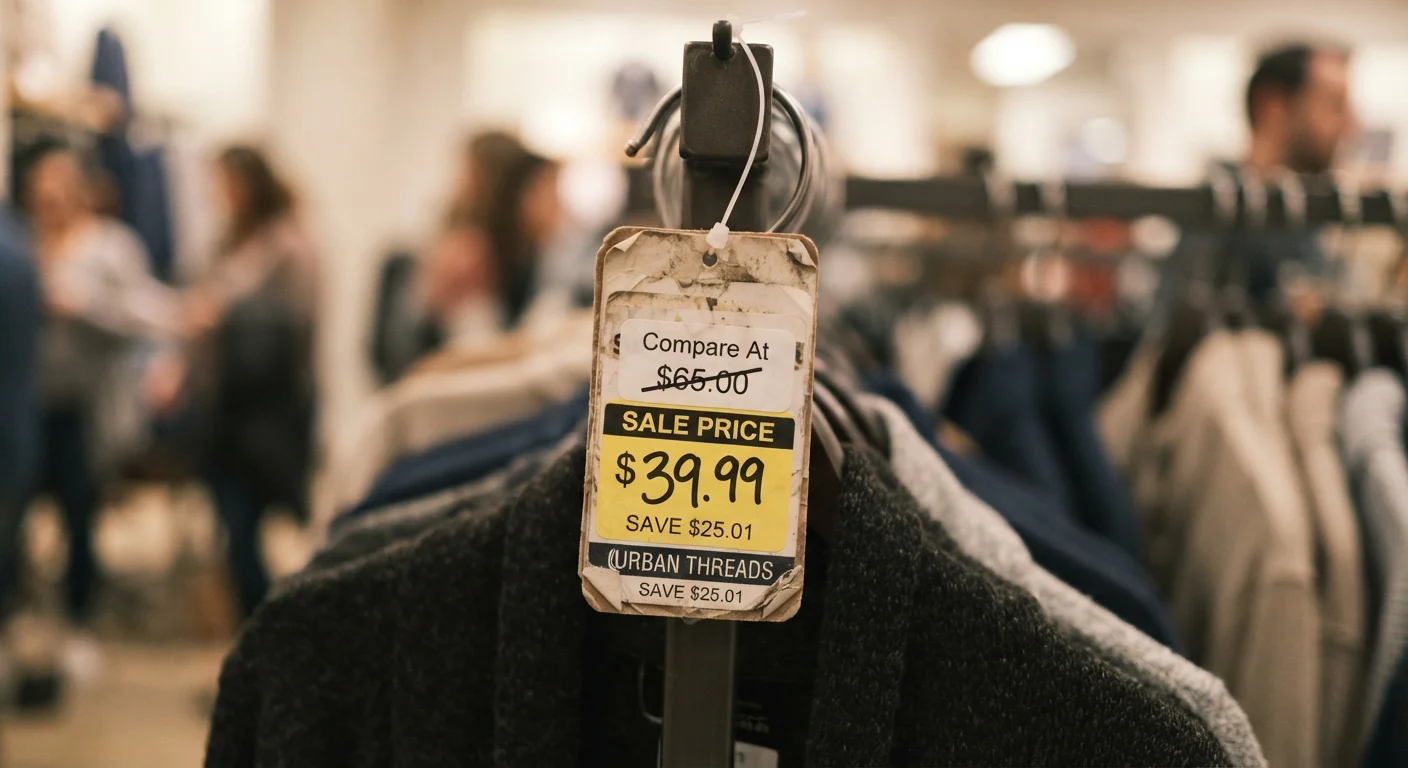
Photo: InDepthReads.com | Streamlining Learning For All editorial
Key Takeaways
- 'Compare At' prices may reference competitors, the manufacturer's suggested price, or a former in-store price — not a universal standard.
- Retailers are not required to have sold an item at the 'original price' for any minimum period before marking it down.
- A discount percentage on a tag is only meaningful if the reference price was a real price shoppers could have paid.
- Some items are manufactured specifically for outlet or discount channels and may never have sold at the listed 'original' price.
- Verifying a price independently — using price history tools or checking other retailers — gives a more accurate picture of real value.
Why Sale Tag Language Isn't Standardized
Walk through any major retailer and you'll see a mix of labels: 'Compare At,' 'Original Price,' 'Was/Now,' 'MSRP,' and sometimes just a crossed-out number with a lower price next to it. None of these phrases are defined by a single federal standard that applies to all retailers equally. Each store sets its own internal policies for what these labels mean — and how loosely they apply them.
The Federal Trade Commission (FTC) publishes guidance discouraging deceptive reference prices, but enforcement is complaint-driven rather than routine. The result is a retail landscape where two tags using the same language can mean very different things depending on where you're shopping.
For a broader look at how fine print works across consumer contracts and purchases, see our guide to reading the fine print.
State Laws Can Add Protections
Decoding the Most Common Sale Tag Terms
Here's what each common label typically signals — and where the ambiguity lives:
- Compare At: This usually means the retailer is pointing to a price found elsewhere — a competitor's price, the manufacturer's suggested retail price (MSRP), or a former in-store price. The problem is that shoppers can't always verify which of these it reflects. MSRP is a starting point, not a reliable benchmark, and competitor prices vary.
- Original Price / Regular Price: Implies the item sold at that price in the same store before the markdown. However, some retailers cycle items through promotional pricing so often that the 'regular' price is rarely what most customers paid.
- Was/Now: Similar to Original Price — it implies a direct before/after comparison at the same retailer. In practice, the 'was' price may have been active for only a short window.
- MSRP: The manufacturer's suggested retail price is a widely used reference point, but it's a suggestion, not a historical transaction price. Many items routinely sell below MSRP.
~40%
Outlet merchandise made specifically for outlet stores
Industry analysts and consumer advocacy organizations have estimated that a substantial share of outlet store inventory is produced exclusively for discount channels, not transferred from full-price retail.
Varies by state
Legal minimum for a 'former price' to be legitimate
The FTC recommends a former price be genuine and offered for a reasonably substantial period, but specific time requirements differ across states with their own pricing regulations.
The Outlet and Off-Price Trap
Outlet stores and off-price retailers present a particularly common scenario where sale tag language can mislead. A significant portion of merchandise sold in outlet channels is made specifically for those stores — not overstock from full-price retail. The tag may still show an 'original price' or 'compare at' figure, but that price may never have existed in a real transaction.
This practice is legal and widely used by major apparel and home goods brands. The item might be made from different materials or at a lower quality level than the full-price equivalent. The 'savings' displayed on the tag describes a comparison to a price that was never actually offered to the general public.
Understanding what sale prices don't always mean savings explains the psychology behind how reference prices work on consumers — it's worth reading alongside this guide.
Ask About the Item's Origin Before Buying
How to Verify Whether a Sale Is Real
The most reliable way to evaluate a sale tag is to look beyond the tag itself. A few practical steps:
- Check a price history tool. Services that track pricing over time can show you whether the 'sale' price is genuinely lower than the item's typical selling price, or whether it's near its normal range. Our article on what price tracking tools can and can't tell you covers their real limitations.
- Search the same item at other retailers. If the item is sold under the same product name or model number elsewhere, a quick search will tell you whether the 'compare at' figure is competitive or inflated.
- Compare unit pricing where applicable. For consumables, unit pricing reveals the actual cost per ounce or count regardless of what the sale tag claims.
- Factor in return policy limitations. A sale price matters less if restocking fees or shortened return windows apply to clearance or sale items.
Also consider any costs that can quietly offset the discount — hidden costs like shipping fees and membership requirements can reduce or eliminate what a tag suggests you're saving.
Anchoring your judgment on the actual sale price — what you will pay — rather than the percentage claimed on the tag is the most straightforward defense against misleading reference pricing.
Frequently Asked Questions
The content on this site is for informational purposes only and is not a substitute for professional advice. Always consult a qualified professional for guidance specific to your situation.