
Unit Pricing: The Grocery Shelf Number Most Shoppers Ignore

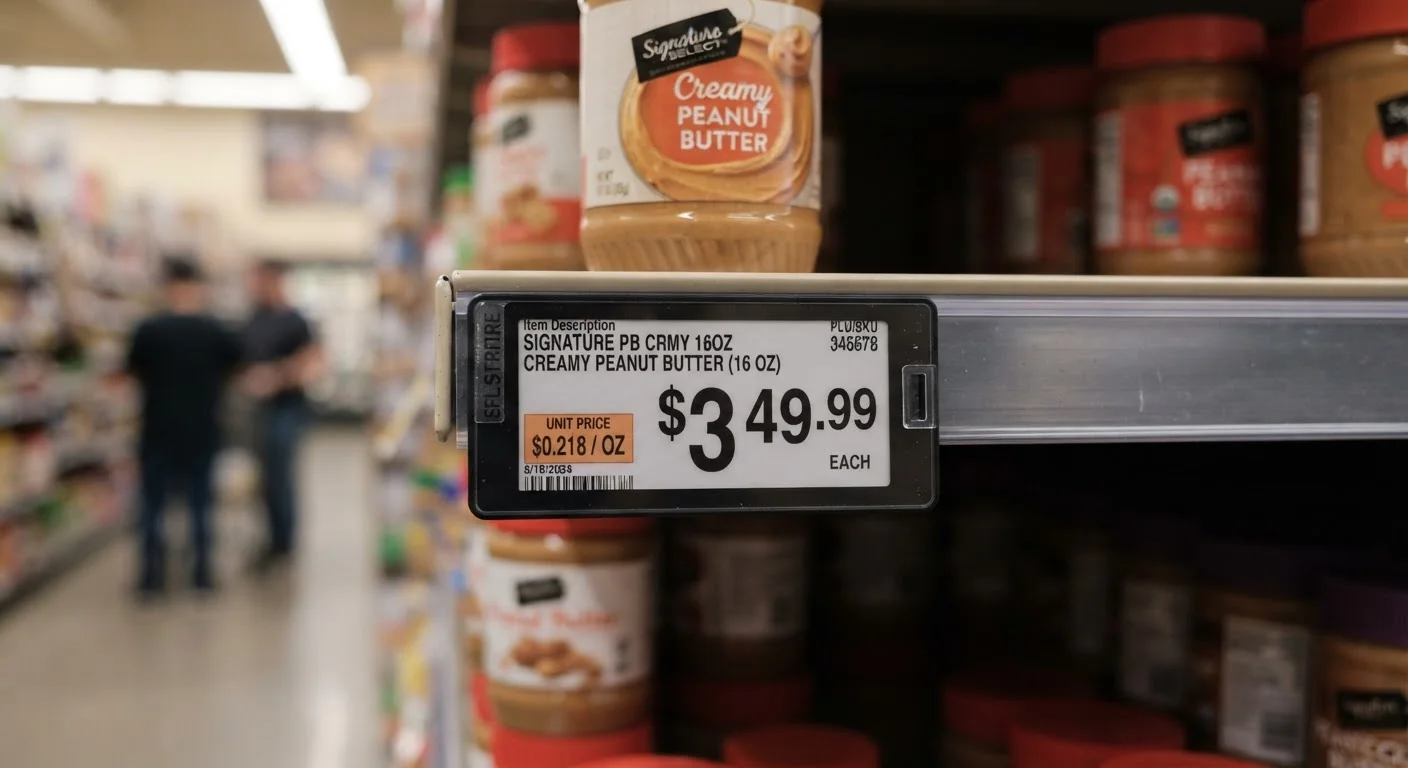
Photo: InDepthReads.com | Streamlining Learning For All editorial
Key Takeaways
- Unit price shows cost per standardized measure, not per package — making true comparisons possible.
- Larger packages don't always have a lower unit price; promotions can flip the math.
- Unit pricing laws vary by state, so label availability isn't guaranteed everywhere.
- Store brands often show a lower unit price, but bulk sizes of name brands can close the gap.
- Comparing unit prices is one of the most reliable ways to avoid overpaying on routine purchases.
What Unit Pricing Actually Shows You
The sticker price on a product tells you what you'll hand over at the register. The unit price tells you something more useful: what you're actually paying for what's inside. By converting the package price into a cost per standard measure — ounces, pounds, sheets, count — unit pricing puts every option in the aisle on the same scale.
Without it, comparing a 12-oz jar of peanut butter at $3.49 to a 28-oz jar at $7.19 requires arithmetic most people skip. With unit prices displayed, you see immediately that the smaller jar runs roughly $0.29/oz versus $0.26/oz for the larger one — a clear, actionable difference.
This is the core purpose of unit pricing: to strip away the packaging variable and show cost in a format that's actually comparable. It's not a sale indicator or a quality signal. It's a standardized ratio that lets you make an apples-to-apples comparison regardless of how a product is packaged or marketed.
Unit Pricing Laws Vary by State
Why Shoppers Overlook It — and Why That Matters
Unit price labels are usually printed in a font roughly half the size of the sale price. They're easy to miss, and most retail shelf design doesn't encourage you to study them. Larger, bolder numbers draw the eye. The unit price, by contrast, requires deliberate attention.
This isn't accidental. Retailers know that shoppers often equate a lower sticker price with a better deal, even when the unit economics tell a different story. A smaller package at $2.99 can look more appealing than a larger one at $6.49, even if the larger size costs significantly less per ounce. Understanding this dynamic is part of building general consumer literacy — and it's directly connected to retail pricing tactics that shape how products are displayed and positioned.
The habit of checking unit prices is especially valuable during sales. Promotional pricing on a smaller size can sometimes undercut the unit price of a bulk format — meaning the "economy" size isn't always the economy choice. This directly challenges one of the most persistent myths in deal-hunting: that bigger always means cheaper. For more on that, see common deal-hunting myths that cost shoppers money.
Check the Unit Before You Compare
Reading the Label Correctly
Unit prices are only comparable when the unit of measure is the same. If one laundry detergent lists price per load and another lists price per fluid ounce, you're looking at different metrics. Before drawing a conclusion, confirm the labels use identical units.
Also watch for the measurement type. Paper products are often priced per sheet or per square foot — not per roll. Produce may be priced per pound. Packaged items are typically per ounce or per gram. The unit printed on the tag is the denominator; make sure you're comparing the right one.
Unit pricing also interacts with other shelf information. A sale tag may show a reduced sticker price without updating the unit price — or vice versa. If a product is on promotion, calculate the unit price yourself using the sale price divided by the total quantity. This is especially relevant when evaluating whether a deal is real, as explored in reading a sale tag.
~30+
U.S. states with some form of unit pricing regulation
Requirements vary widely in scope and enforcement, with some states covering only large grocery chains and others exempting certain product categories.
Up to 30%
Potential cost difference between similar products in the same aisle
Consumer research has repeatedly found that unit price differences between comparable grocery products can range from negligible to substantial within a single store category.
Applying Unit Pricing Across Common Shopping Decisions
Unit pricing is most powerful when applied consistently to the products you buy repeatedly. Household staples — cleaning supplies, paper goods, dry goods, canned items — are where small per-unit differences compound into meaningful annual savings over dozens of shopping trips.
It's also a useful tool when evaluating store brands. A private-label product often carries a lower sticker price, but the unit price confirms whether the savings are proportional or marginal. For a deeper look at how that plays out, store brands vs. name brands breaks down where private-label savings are most significant.
One practical caution: a lower unit price only saves money if you actually use what you buy. Perishable goods bought in bulk at a lower unit price aren't a savings if a portion goes to waste. Factor your household's real consumption rate into any quantity decision. Similarly, storage constraints matter — a lower unit price on a 48-roll pack of paper towels isn't useful if you have nowhere to put them. And before counting any deal as final, be aware that hidden costs like membership fees or storage requirements can quietly offset what the unit price appears to save.
“Unit pricing is one of the simplest tools we have for making markets more transparent. When consumers can compare on a per-unit basis, they gain a meaningful check on packaging-driven confusion.”
— Edgar Cahn, Consumer policy researcher and advocate
Frequently Asked Questions
The content on this site is for informational purposes only and is not a substitute for professional advice. Always consult a qualified professional for guidance specific to your situation.