
Store Brands vs. Name Brands: What the Label Difference Really Costs You

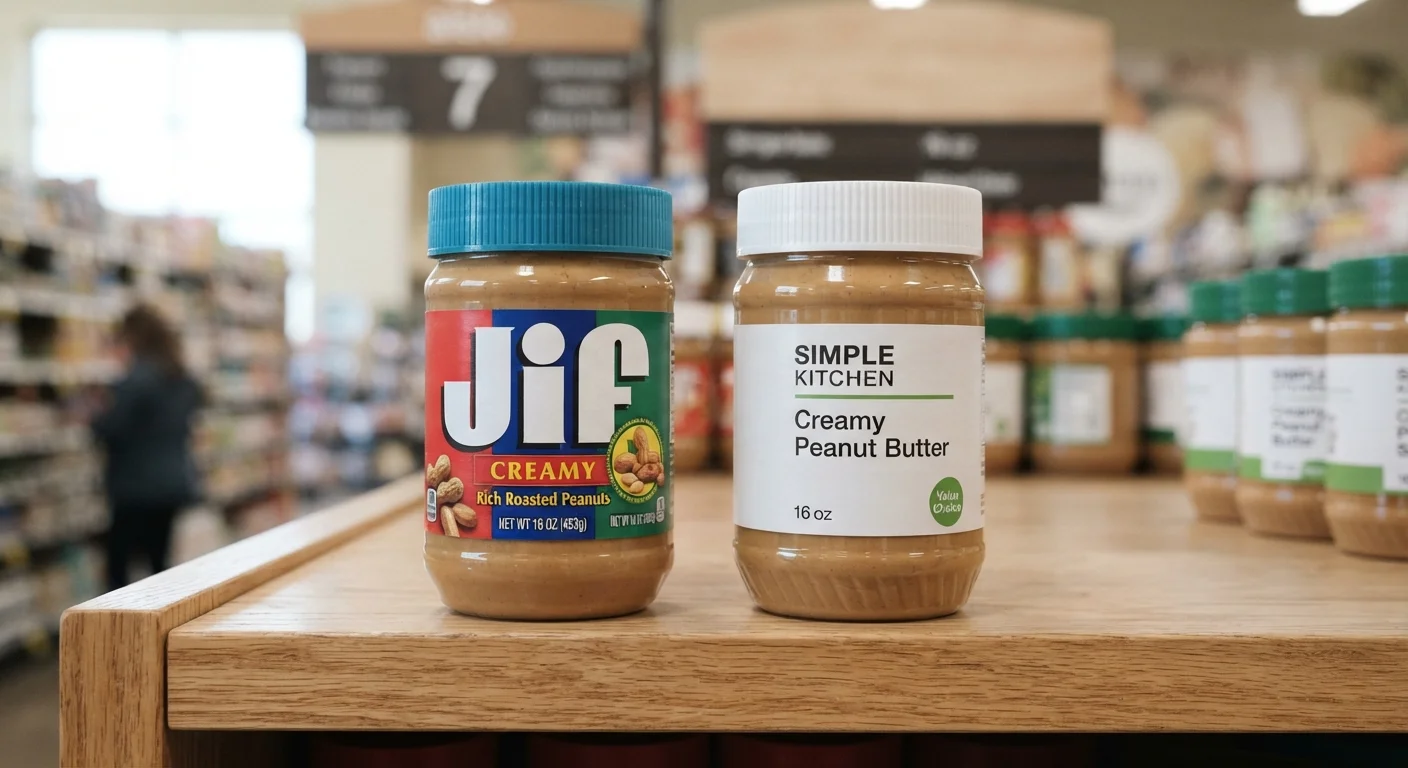
Photo: InDepthReads.com | Streamlining Learning For All editorial
Key Takeaways
- Store brands are manufactured by national brand producers in many product categories, including over-the-counter medications and pantry staples.
- Private-label products typically cost 20–30% less than name brands, though the gap varies significantly by category.
- Quality differences are real in some categories — notably flavor-sensitive foods, complex electronics accessories, and certain personal care items.
- Unit pricing is a more reliable comparison tool than sticker price when evaluating store vs. name brand value.
- Retailer return policies apply equally to store brands, so switching carries little financial risk in most cases.
Where Store Brands Actually Come From
A persistent myth holds that store-brand products are inferior versions made in lower-quality facilities. The reality is more nuanced. Many major retailers contract directly with the same manufacturers that produce national brands, then apply a different label to the output. This practice is common in food production, over-the-counter pharmaceuticals, and household goods.
The U.S. Food and Drug Administration requires that generic over-the-counter medications contain the same active ingredient at the same dosage as their name-brand equivalents — meaning a store-brand ibuprofen is chemically required to match its branded counterpart. In food categories, the identical-factory situation is harder to verify publicly, but industry reporting and retailer disclosures have documented the practice across pantry staples from canned tomatoes to cooking oil.
What the premium label actually pays for, in many cases, is marketing spend, branded packaging, and shelf positioning negotiated with the retailer — costs that don't change the product in the box.
Check the Ingredient List First
Where the Price Gap Is Real — and Where It Isn't
Consumer research and grocery industry data consistently show store brands priced 20–30% below name brands on average, though that figure masks wide variation by category. Understanding where the gap is meaningful helps you prioritize switching decisions.
| Category | Store Brand Value | Name Brand Edge | |
|---|---|---|---|
| OTC Medications | Same active ingredients required by law | Brand recognition only; no functional difference | |
| Pantry Staples (flour, sugar, oil) | Frequently identical source, strong savings | Minimal; largely marketing | |
| Household Cleaners | Comparable active ingredients, lower cost | Some proprietary formulas may perform differently | |
| Carbonated Beverages | Significant price savings | Proprietary flavor formulas are harder to replicate | |
| Personal Care (skincare, shampoo) | Savings vary; inactive ingredients may differ | Complex formulations and clinical testing may justify premium | |
| Frozen & Canned Vegetables | Often same supplier, strong value | Minimal quality gap in most cases |
For straightforward items — flour, sugar, bleach, acetaminophen — the case for the store brand is strong. The ingredient list is often identical, and the savings compound quickly across a weekly shop. The unit price label on the shelf edge is your fastest tool for confirming which option delivers more per ounce or per count, regardless of brand.
Categories where name brands are harder to replicate include carbonated beverages (proprietary flavor formulas), fermented or cultured dairy products, and certain personal care items where the inactive ingredients, texture, or scent genuinely differ. These are worth testing before committing to a full switch.
The Hidden Costs Built Into the Name-Brand Premium
When you pay more for a name brand, you're funding a specific set of business activities that have nothing to do with the product's functional performance. National advertising campaigns, celebrity partnerships, slotting fees paid to retailers for prime shelf space, and loyalty program infrastructure all flow through the product margin.
None of those expenditures improve the acetaminophen's pain-relieving efficacy or the pasta's nutritional profile. Recognizing this doesn't mean name brands are never worth the price — it means the premium deserves scrutiny rather than assumption. The same skepticism that applies to sale prices applies here: the price difference needs a functional justification, not just a familiar logo.
It's also worth noting that retailers earn higher margins on their own store brands, which creates an incentive for stocking quality private-label lines. A store with a strong reputation for its house-brand products has a competitive reason to maintain that quality — which is a meaningful consumer protection mechanism.
How to Switch Strategically Without Regret
Wholesale brand replacement isn't necessary or always wise. A targeted approach — switching where evidence supports it, keeping name brands where preference or performance genuinely matters — produces the best outcome.
Start with categories that have objective, regulated standards: OTC medications, basic pantry dry goods, and cleaning supplies. These offer the highest certainty that the store brand performs equivalently. Move outward from there into categories like frozen vegetables, dairy basics, and paper products.
Reserve the cost-benefit analysis for categories with subjective performance factors: coffee, condiments, and skincare products where formulation complexity is real. Buy the smallest available size to test first. Most major retailers apply the same return policy to store brands as to name brands — if something genuinely doesn't meet expectations, returning it carries no extra friction.
For a fuller picture of how apparent savings can be offset by other costs, see hidden costs that quietly erase a discount — the same analytical discipline applies when evaluating brand premiums.
Don't Assume All Store Brands Are Equal
The content on this site is for informational purposes only and is not a substitute for professional advice. Always consult a qualified professional for guidance specific to your situation.