
Restocking Fees, Return Windows, and Fine Print: Reading a Return Policy Before It Matters

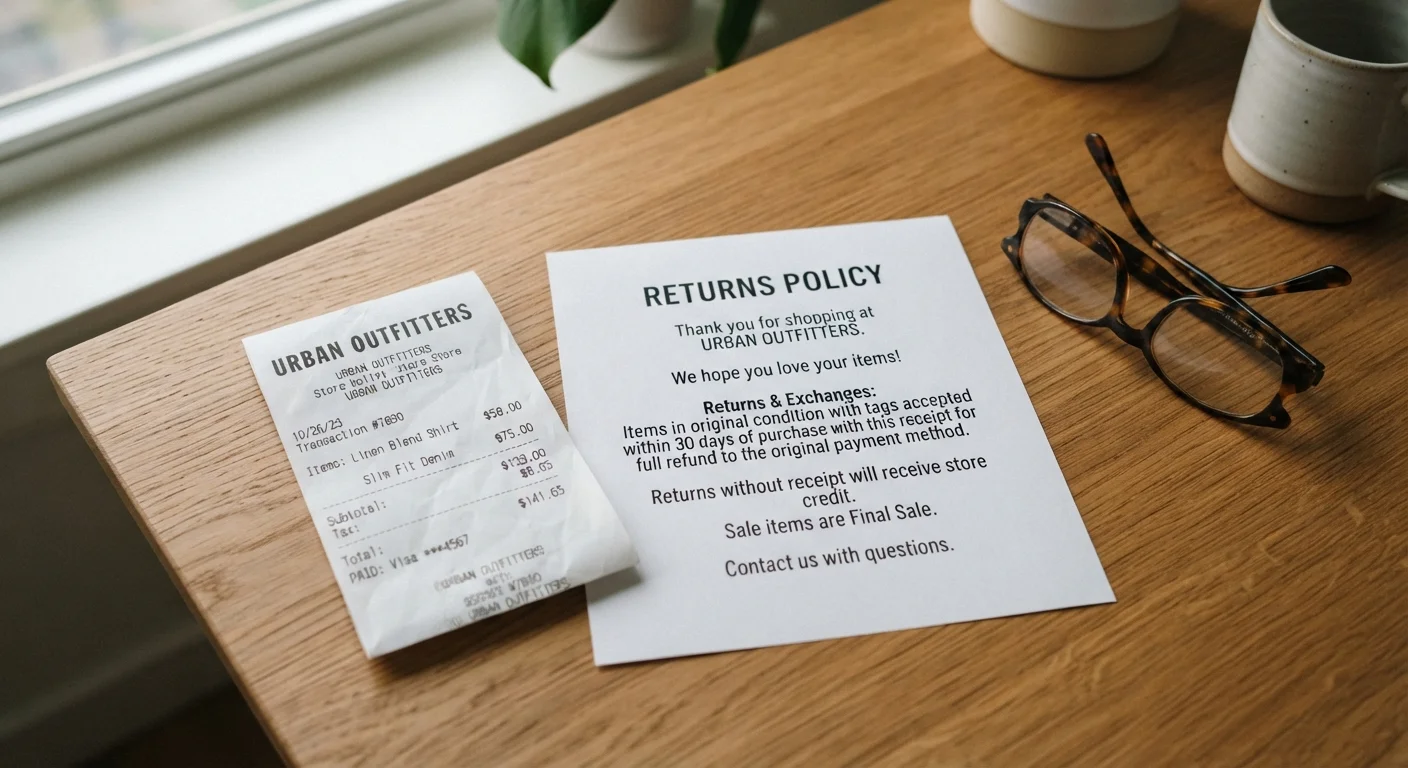
Photo: InDepthReads.com | Streamlining Learning For All editorial
Why Return Policies Deserve Attention Before the Purchase
Most shoppers glance at a return policy only after something goes wrong — and by then, it's often too late to avoid fees, expired windows, or a store-credit-only outcome. Return policies are contracts set entirely at the retailer's discretion in most U.S. states. There is no federal law requiring a store to accept returns at all, which means the terms vary dramatically from one retailer to the next.
Understanding a return policy before you buy is one of the more underrated consumer skills. The clauses that cost shoppers money are rarely buried — they're just written in dense paragraph form that most people skip. This reference guide breaks down the components worth checking, line by line.
| Federal law requiring returns | None — retailers set their own policies (U.S. Federal Trade Commission) |
| Typical return window | 30 to 90 days at most general-merchandise retailers |
| Common restocking fee range | 10%–25% of purchase price |
| Categories most likely to carry restocking fees | Electronics, appliances, mattresses, furniture |
| Where to find a retailer's return policy | Website footer, receipt, or posted at the point of sale |
| State disclosure requirements | Many states require return policies to be posted if they deviate from a standard refund (State consumer protection laws vary) |
The Key Terms You Need to Identify
Every return policy contains at least a few of the following elements. Some are shopper-friendly; others are significant traps if overlooked.
Restocking fee
A charge deducted from your refund when you return an eligible item, typically expressed as a percentage of the purchase price. It compensates the retailer for reprocessing and repackaging costs.
Return window
The time period during which a retailer will accept a return. Windows vary by retailer and product category, and the clock may start at purchase, shipment, or delivery depending on policy language.
Final sale
A designation indicating the retailer will not accept a return or exchange for that item under any circumstances, regardless of condition. Common on clearance, seasonal, and customized merchandise.
Store credit
A non-cash refund issued as a credit redeemable only at the retailer that issued it. Many policies default to store credit rather than a cash or card refund, particularly for returns without a receipt.
Proof of purchase
Documentation required to process a return, which may include an original receipt, gift receipt, packing slip, or the retailer's own order lookup system. Requirements vary by store.
Exchange-only policy
A return policy that permits swapping a product for a different item of equal or lesser value but does not provide a monetary refund. Common for certain product categories or during sale periods.
Beyond these definitions, pay attention to condition requirements. Policies routinely specify that items must be returned unused, in original packaging, with all accessories, and with tags attached. Missing any one of these conditions can void your return entirely or downgrade a refund to store credit.
Also check whether the policy distinguishes between online and in-store purchases. Some retailers apply different windows or fees depending on where the sale originated — a detail that catches many shoppers off guard. See how those differences play out in practice in our piece on online vs. in-store returns.
Restocking Fees: What They Are and When They Apply
A restocking fee is a percentage of the purchase price deducted from your refund when you return an item — even if nothing is wrong with it. These fees are most common in categories like consumer electronics, large appliances, mattresses, and furniture. Fees typically range from 10% to 25% of the original purchase price, though some specialty retailers charge more.
10–25%
Typical restocking fee range on returned goods
Industry-standard restocking fees in electronics and appliance categories commonly fall within this range, though individual retailer policies vary.
14 days
Minimum return window common for electronics
Many consumer electronics retailers apply category-specific windows shorter than their standard store-wide policy.
~10%
Share of all retail purchases that are returned
According to the National Retail Federation's 2023 Return Report, total merchandise returns represented approximately 14.5% of total retail sales.
Restocking fees are generally disclosed in writing, but they're easy to overlook in a policy's fine print. When evaluating a purchase, check whether the policy:
- States a flat percentage or a tiered rate based on item category
- Applies only to opened items or to all returns
- Waives the fee for exchanges versus refunds
- Changes if the item is returned after a certain number of days
Restocking fees are one of several charges that can quietly reduce the value of what seemed like a good deal — a pattern discussed in detail in our article on hidden costs that quietly erase a discount.
Return Windows and Final-Sale Clauses
Standard return windows at major general-merchandise retailers typically run 30, 60, or 90 days. But category-specific windows can be significantly shorter — sometimes as few as 14 days for electronics or opened software. Gift items, clearance merchandise, and items marked "final sale" are frequently excluded from return programs altogether.
Key questions to answer for any significant purchase:
- When does the clock start? Some retailers count from the purchase date; others start the window when the item ships or when it is delivered.
- Does the category have a shorter window? Check for a policy table that lists item-specific exceptions.
- Is "final sale" clearly marked? If so, "all sales final" isn't always absolute — defective goods may still carry legal remedies — but don't count on discretionary returns.
- What proof of purchase is required? Original receipt, order confirmation email, or account lookup? Knowing this in advance prevents problems later, including situations covered in our guide to returning a gift without a receipt.
State Laws May Add Protections
For a broader look at how fine print works across retail contracts and subscriptions, our guide on reading the fine print covers the same analytical approach applied to other purchase types.
The content on this site is for informational purposes only and is not a substitute for professional advice. Always consult a qualified professional for guidance specific to your situation.