
Online vs. In-Store Returns: How the Rules and Friction Differ

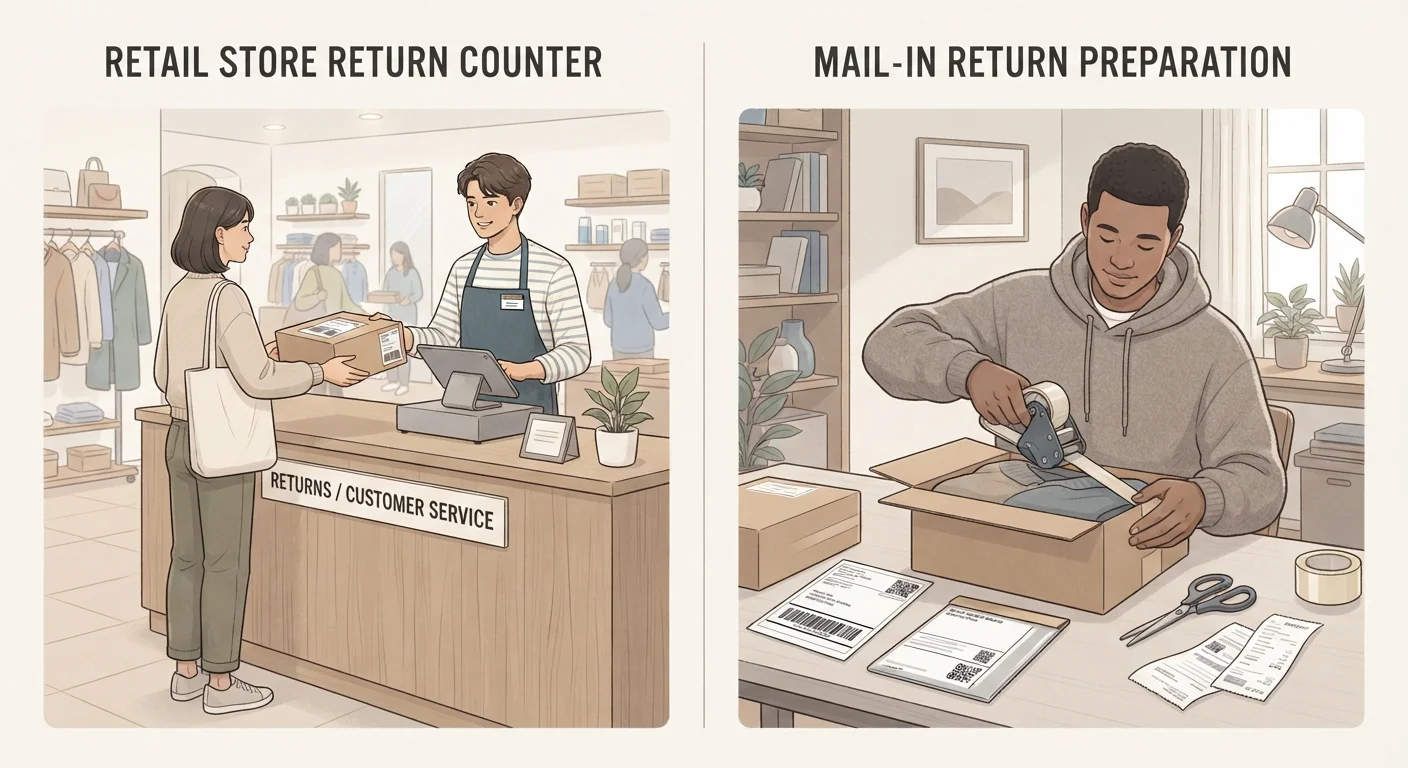
Photo: InDepthReads.com | Streamlining Learning For All editorial
Key Takeaways
- In-store returns are typically faster, but online purchases sometimes carry different return windows or restocking fees.
- No federal law requires retailers to accept returns; policies are largely set by the retailer, with some state-level exceptions.
- Online returns often involve shipping costs and longer refund timelines compared to in-store drop-offs.
- Some retailers allow online purchases to be returned in-store, but this is a policy choice, not a legal requirement.
- Documenting your return — with photos, tracking numbers, and email confirmations — protects you if a dispute arises.
The Legal Baseline: What Retailers Are Actually Required to Do
There is no federal law in the United States requiring retailers to accept returns or offer refunds on non-defective merchandise. Return policies are largely voluntary — retailers set their own rules, and consumers agree to those rules at the point of sale. A handful of states have disclosure requirements (meaning a store must post its policy clearly if it doesn't accept returns), but even those laws don't mandate that a policy be consumer-friendly.
The practical implication: the channel you used to buy — online or in-store — often determines which return policy applies to you. Some retailers operate two separate return frameworks, one for e-commerce orders and one for physical locations. Before assuming a policy applies, verify it for the specific purchase type. See our breakdown of what retailers are legally required to disclose for the disclosure rules that do exist.
In-Store Returns: Speed and Simplicity With Caveats
Walking a product back to a physical location has clear advantages. Refunds are typically processed at the register and credited to your original payment method within a few business days — often the same day. You can verify condition disputes on the spot, speak with a manager if there's a disagreement, and leave with a receipt confirming the return was accepted.
The friction points, however, are real. You need to transport the item, sometimes in its original packaging. Store associates may assess condition differently than an online return center would. And if you purchased online, an in-store return is only possible if the retailer explicitly permits cross-channel returns — which many do, but as a policy courtesy, not a legal obligation.
Always Get a Return Confirmation
For high-value items, always ask for a printed or emailed return confirmation at the register. A refund posted to your account days later with no documentation can be difficult to dispute if the amount is wrong.
Online Returns: More Steps, Longer Timelines, Hidden Costs
Returning an item by mail introduces a longer chain of events. You initiate the return through the retailer's portal, receive a prepaid label (if the retailer provides one — not all do), package the item, ship it, wait for the warehouse to receive and inspect it, and then wait for the refund to process. That sequence can take anywhere from a few days to several weeks depending on carrier speed and retailer processing time.
Costs are a significant variable. Some retailers absorb return shipping; others deduct the postage from your refund or require you to pay it outright. Restocking fees — charges for returning opened or used items — are more common in e-commerce than at physical registers. Always check whether these apply before initiating. Our guide on decoding a return policy before you buy covers what to look for in the fine print.
| In-Store Returns | Online (Mail) Returns | |
|---|---|---|
| Refund speed | Same day to a few business days | One to several weeks |
| Return shipping cost | None (you transport it) | Varies — free, deducted, or paid upfront |
| Restocking fees | Less common | More common; check policy |
| Condition dispute resolution | On the spot with staff present | Remote; requires photographic proof |
| Documentation trail | Single printed or emailed receipt | Email chain, tracking number, portal record |
| Cross-channel availability | Policy-dependent for online purchases | Available regardless of where item was bought |
Protecting Yourself Regardless of Channel
The single most important consumer habit is documentation. Before shipping anything back, photograph the item's condition and the packaging. Keep the tracking number and every confirmation email. For in-store returns, retain your return receipt. These records are your evidence if a retailer claims an item arrived damaged or was never received.
If a return is refused and you believe the refusal is inconsistent with the posted policy, you have options: dispute the charge with your credit card issuer (citing the return policy you were shown at purchase), file a complaint with your state attorney general's consumer protection office, or escalate through the Better Business Bureau. None of these are guaranteed remedies, but they create a formal record.
Understanding the assumptions that trap consumers is equally important — many shoppers lose money because they misread or overlook the policy entirely. Our article on common return assumptions that hurt shoppers covers the most costly misconceptions in detail.
This article provides general consumer information only and does not constitute legal or financial advice. For questions about a specific dispute, consult a consumer protection attorney or your state's consumer protection agency.
The content on this site is for informational purposes only and is not a substitute for professional advice. Always consult a qualified professional for guidance specific to your situation.