
Oils, Butters, and Creams: When to Use Each in a Hair Routine

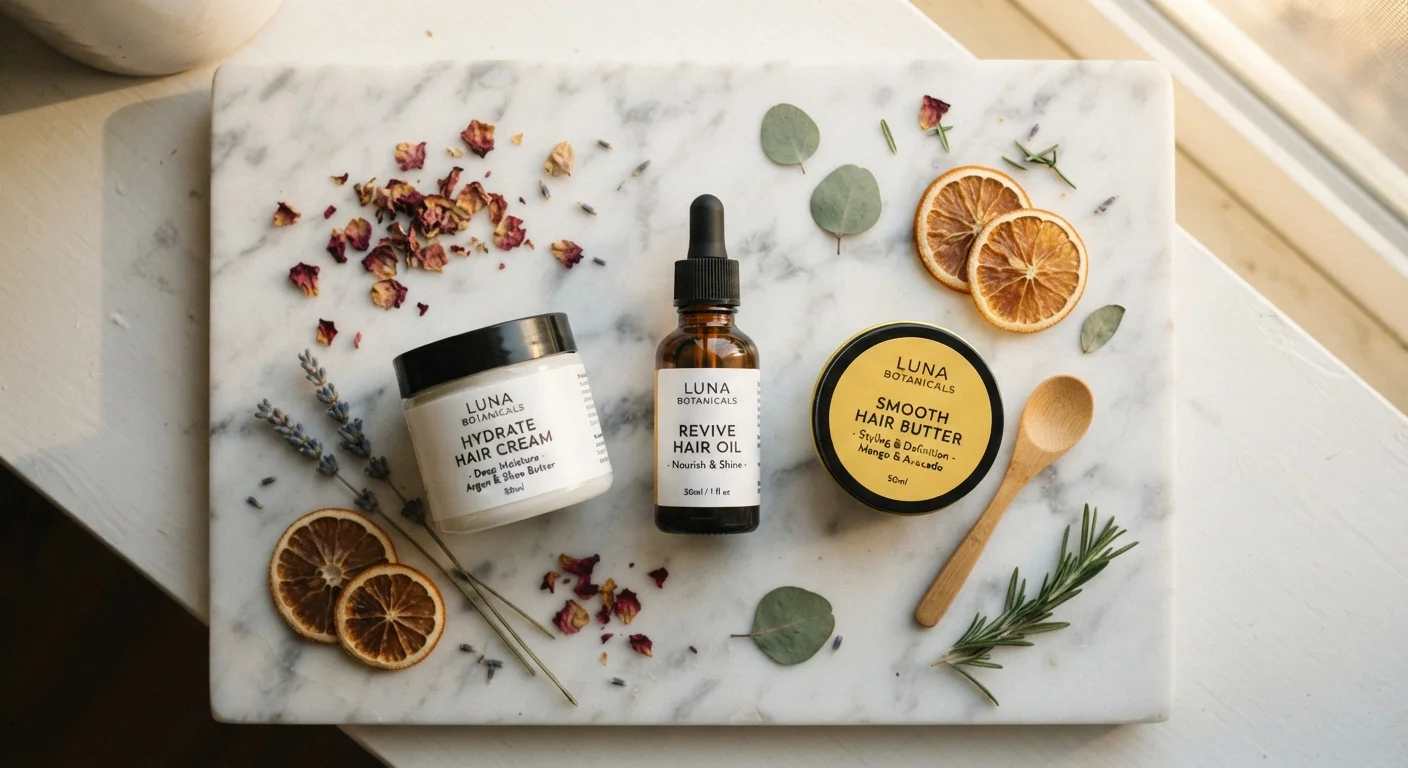
Photo: InDepthReads.com | Streamlining Learning For All editorial
Key Takeaways
- Creams deliver moisture; butters seal and soften; oils finish and protect — each plays a different role.
- Layering order matters: apply products from most water-based to most occlusive for best absorption.
- Hair porosity and texture should guide which formats you reach for and how much you use.
- Oils used alone without a moisturizing base rarely solve dryness — they trap what's already there.
- Heavy butters can cause buildup on fine or low-porosity hair; lighter formats often work better.
Why Format Matters as Much as Ingredients
When a hair product stops working, most people switch ingredients. But often, the real issue is format — whether you're using an oil, a butter, or a cream, and in what order. These three categories behave very differently on the hair shaft, and understanding the distinction is the shortcut to a routine that actually delivers on moisture, definition, or smoothness.
Before diving in, it helps to know your hair's porosity — that is, how easily your hair absorbs and retains moisture. Porosity, density, and texture shape nearly every product decision you'll make. High-porosity hair (often color-treated or heat-styled) absorbs quickly but loses moisture fast. Low-porosity hair resists absorption but holds what it gets. That difference changes which formats, and how much of them, actually serve your strands.
Creams: Your Primary Moisture Delivery System
Leave-in conditioners and styling creams are typically water-based or water-forward, which means they're your main vehicle for actual hydration. Water is the only true moisturizer for hair — oils and butters on their own cannot hydrate a dry strand, they can only influence how moisture behaves once it's there.
Use a cream or leave-in on damp hair (after washing) as your foundation step. For coily and curly hair types, a generous, even application while hair is soaking wet tends to give the best absorption and definition. For straighter textures, a lightweight leave-in applied to towel-dried hair before styling is usually sufficient.
Best for: All hair types as a base step; especially valuable for high-porosity or dry hair that needs consistent moisture replenishment.
Water-based creams are your only true moisture source — oils seal; they don't hydrate.
Oils: Sealing, Smoothing, and Protecting
Hair oils work primarily as sealants and emollients. Applied over a moisturized strand, they help slow moisture evaporation — which is exactly why reaching for an oil on dry, unmoistened hair often leads to disappointment. You end up sealing in dryness instead of locking in hydration.
Lighter oils (such as those with smaller molecular structures, sometimes described as "penetrating" oils) may interact more with the hair shaft itself, while heavier oils tend to coat the surface. As a general rule, finer or low-porosity hair does better with lighter oils used sparingly; thicker or high-porosity hair can generally handle richer options.
Oils also shine — literally — as a finishing step or as a heat protectant layer. If you use heat tools regularly, applying a light oil before styling can add a buffer. See more on heat styling practices that protect hair.
Best for: Sealing in moisture after a cream step; smoothing frizz; adding shine; light heat protection support.
Oils seal moisture in — applied to dry hair, they lock dryness in instead.
Butters: Rich Sealants for Dry or Thick Textures
Plant-based butters are the densest format of the three. They're excellent at sealing the cuticle, softening coarse strands, and providing a longer-lasting barrier against moisture loss — which makes them a staple in many routines for thick, coily, or very dry hair.
That density is also their main limitation: butters can weigh down fine hair, cause buildup on low-porosity strands, and lead to limp, heavy results if over-applied. If your hair tends to feel greasy or product-coated after using butters, you may be applying too much, using them on the wrong hair type, or skipping clarifying sessions.
A small amount — often described as a pea- to dime-sized portion, depending on length and density — goes a long way. Warm it between your palms before applying to help it distribute more evenly.
Best for: Coarse, thick, or very dry hair needing a long-lasting seal; protective styles; the ends of hair, which are typically the oldest and driest section.
Butters offer the richest seal, but a little goes a long way — especially on fine hair.
Layering Order: How to Stack Them Correctly
The logic behind layering hair products mirrors the logic of skincare: go from lightest to heaviest, and from most water-based to most occlusive. Applying a thick butter before a water-based cream means the cream can't penetrate — the butter is sitting on top, acting as a barrier.
- Step 1 — Moisture base: Damp hair or a liquid/water-based leave-in cream
- Step 2 — Seal with oil or butter: Apply a light oil or a small amount of butter over the moisturized sections
- Step 3 — Style or finish: Add a styling cream, gel, or additional light oil on top if needed
Some routines swap the oil and cream in steps two and three (the LCO method vs. LOC). Experiment with both — the one that leaves your hair feeling softer and less stiff is the right one for your texture.
If you're experiencing persistent dryness despite this approach, it may be a porosity issue rather than a product issue. Why your hair feels dry even after conditioning explores that pattern in more detail.
Always layer lightest to heaviest — cream before oil before butter, not the other way around.
Adjusting for Your Specific Hair Type
There's no universal product stack that works for everyone, and the best routines are the ones flexible enough to shift with your hair's needs. Here are some general adjustments based on texture and porosity:
- Fine or low-porosity hair: Opt for lightweight leave-ins, skip heavy butters, and use oils sparingly at the ends only. Buildup accumulates faster, so regular clarifying helps.
- Medium-density or normal-porosity hair: Most formats work well in moderate amounts. Focus on finding the right layering order rather than avoiding whole categories.
- Thick, coily, or high-porosity hair: This is where richer butters and heavier oils typically earn their place. Higher porosity means moisture exits faster, so a stronger seal is genuinely useful.
- Color-treated or heat-damaged hair: Treat porosity as high regardless of texture. Prioritize creams for moisture and oils for sealing, and consider protein-containing products if your hair feels mushy or loses elasticity.
For those building a curl-focused routine from scratch, building a curly hair routine walks through the foundational steps by hair type.
No single stack works for everyone — porosity and texture should drive your format choices.
Putting It All Together
The most effective routines treat these three formats as a team rather than a rotation. For many hair types — especially coily, curly, or dry textures — the LOC or LCO method (Liquid, Oil, Cream or Liquid, Cream, Oil) offers a proven layering framework: start with a water-based product or damp hair, follow with a cream or oil to seal, and finish with whichever of the two provides the best hold or gloss for your texture.
Start Small and Layer Up
If you're finding that even consistent product use isn't solving dryness, the culprit could be buildup from heavier butters and oils — something clarifying your hair periodically can address. And if you want to go deeper on what's inside your products, our hair care ingredients glossary breaks down the terminology you'll actually encounter on labels. The goal is a routine that feels simple, not like a science experiment.
The content on this site is for informational purposes only and is not a substitute for professional advice. Always consult a qualified professional for guidance specific to your situation.