
Porosity, Density, and Texture: The Hair Properties That Change Everything

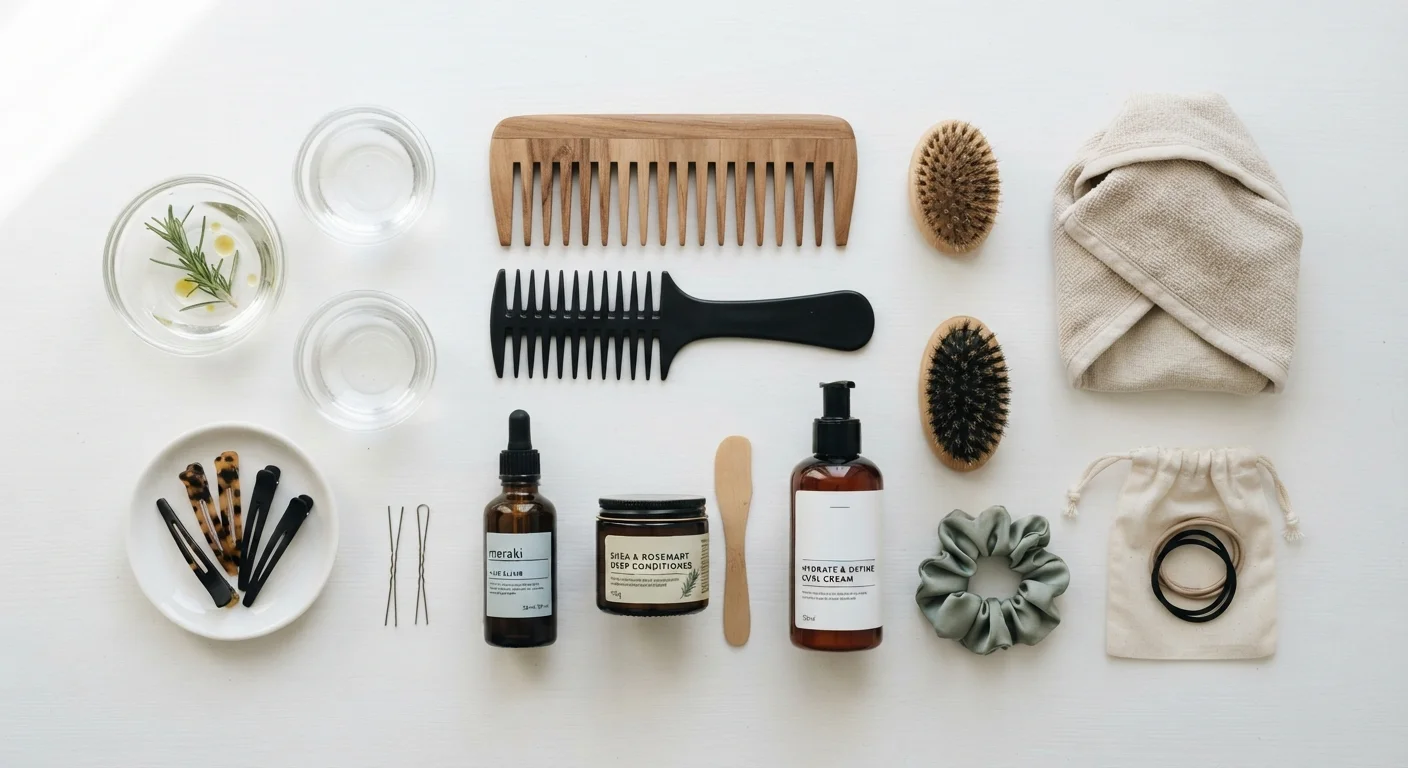
Photo: InDepthReads.com | Streamlining Learning For All editorial
Key Takeaways
- Porosity determines how well your hair absorbs and retains moisture from products.
- Hair density and texture are separate properties that each affect styling choices differently.
- High-porosity hair benefits from heavier, sealing products; low-porosity hair needs lightweight, heat-activated formulas.
- Fine-textured hair and high-density hair are not the same thing — you can have both or neither.
- Knowing your hair properties eliminates guesswork and reduces product waste.
Why These Three Properties Matter More Than Curl Pattern
Walk into any hair care aisle and you'll find products organized by curl type — wavy, curly, coily. While curl pattern is visible and intuitive, it tells you relatively little about what your hair actually needs. Porosity, density, and texture are the properties that determine whether a product works brilliantly or leaves your hair limp, greasy, or still parched after conditioning.
Think of these properties as your hair's operating system. Once you understand them, product labels start to make sense, and you can stop cycling through things that aren't suited to your hair's actual structure. For a broader look at how curl pattern fits into this picture, our guide to hair typing systems offers helpful context on what those labels do — and don't — tell you.
80,000–120,000
Average number of hair strands on a human scalp
According to general trichology references, the typical adult scalp contains between 80,000 and 120,000 individual hair follicles, though this varies by genetics and hair color.
3 layers
Structural layers that make up each hair strand
Each hair strand is composed of the medulla (inner core), cortex (middle layer holding pigment and strength), and cuticle (outer protective layer) — the cuticle being the key to porosity.
~0.07mm
Diameter of a typical fine hair strand
Fine hair strands typically measure around 0.05–0.07mm in diameter, while coarse strands can measure 0.10mm or more, influencing product weight tolerance significantly.
Porosity: The Most Misunderstood Property
Porosity measures how open or closed your hair's cuticle layer is — and therefore how easily moisture gets in and stays in. There are three general categories:
- Low porosity: The cuticle lies flat and tightly overlapping. Water and products tend to bead up and sit on the surface rather than absorbing quickly. Lightweight, liquid-based products and gentle heat (like a warm towel or steamer) can help products penetrate.
- Medium (or normal) porosity: The cuticle allows moisture in and holds it reasonably well. This hair type tends to be the most forgiving with products and responds well to a wide range of routines.
- High porosity: The cuticle is more open — sometimes due to genetics, sometimes from chemical or heat damage. Moisture enters easily but escapes just as fast. Heavier creams, oils, and leave-ins that form a barrier help seal hydration in.
If your hair drinks up conditioner fast but feels dry again quickly, high porosity may be worth exploring. Our article on why hair feels dry even after conditioning walks through exactly this scenario.
Try a Simple Porosity Check
Density and Texture: Two Properties People Often Confuse
Density is the number of hair strands on your scalp. You can have high density (lots of strands) with very fine individual strands — which can result in hair that looks full but feels delicate. Or low density with coarse strands, which may look thinner overall but feel robust. To get a rough sense of your density, look at your scalp when your hair is dry and parted: if you can easily see your scalp, density is likely on the lower side.
Texture refers to the diameter of each individual strand. Fine strands can be overwhelmed by heavy products and tend to lose volume quickly. Coarse strands are more structurally sturdy and can handle richer formulations, but may resist moisture if low porosity is also a factor.
Understanding these together matters. Fine, high-density hair and coarse, low-density hair can look similar in volume but need completely different approaches. For a deeper look at ingredients suited to different textures, our glossary of hair care ingredients is a helpful companion.
Putting It All Together in Your Routine
Once you have a working sense of your porosity, density, and texture, you can start making more intentional choices — not just about products, but about techniques and timing.
For example, low-porosity hair often responds better to applying products on damp (not soaking wet) hair, since the cuticle is slightly more receptive. High-porosity hair tends to benefit from applying products in layers — a water-based leave-in first, then an oil or cream to seal. Fine-textured hair usually does better with volumizing mousses or light mists rather than creams and butters that can flatten it.
Density also shapes decisions around clarifying. High-density hair can accumulate buildup more readily between washes, which is worth factoring into how often you consider a deeper cleanse. Our guide to clarifying your hair covers how to know when it's time. For the foundation underneath it all, scalp health also plays a significant role in how your hair grows and behaves.
“The hair strand itself is essentially dead tissue — all of the living activity happens at the follicle. Understanding the structural properties of the strand helps us care for what's already grown, while scalp health determines the quality of what grows next.”
— Trichology education materials, General reference in professional hair science training
This article is for informational purposes only. For concerns about significant hair loss or changes in hair health, consult a qualified healthcare professional.
Frequently Asked Questions
The content on this site is for informational purposes only and is not a substitute for professional advice. Always consult a qualified professional for guidance specific to your situation.