
Hair Typing Systems: Useful Framework or Overhyped Label?

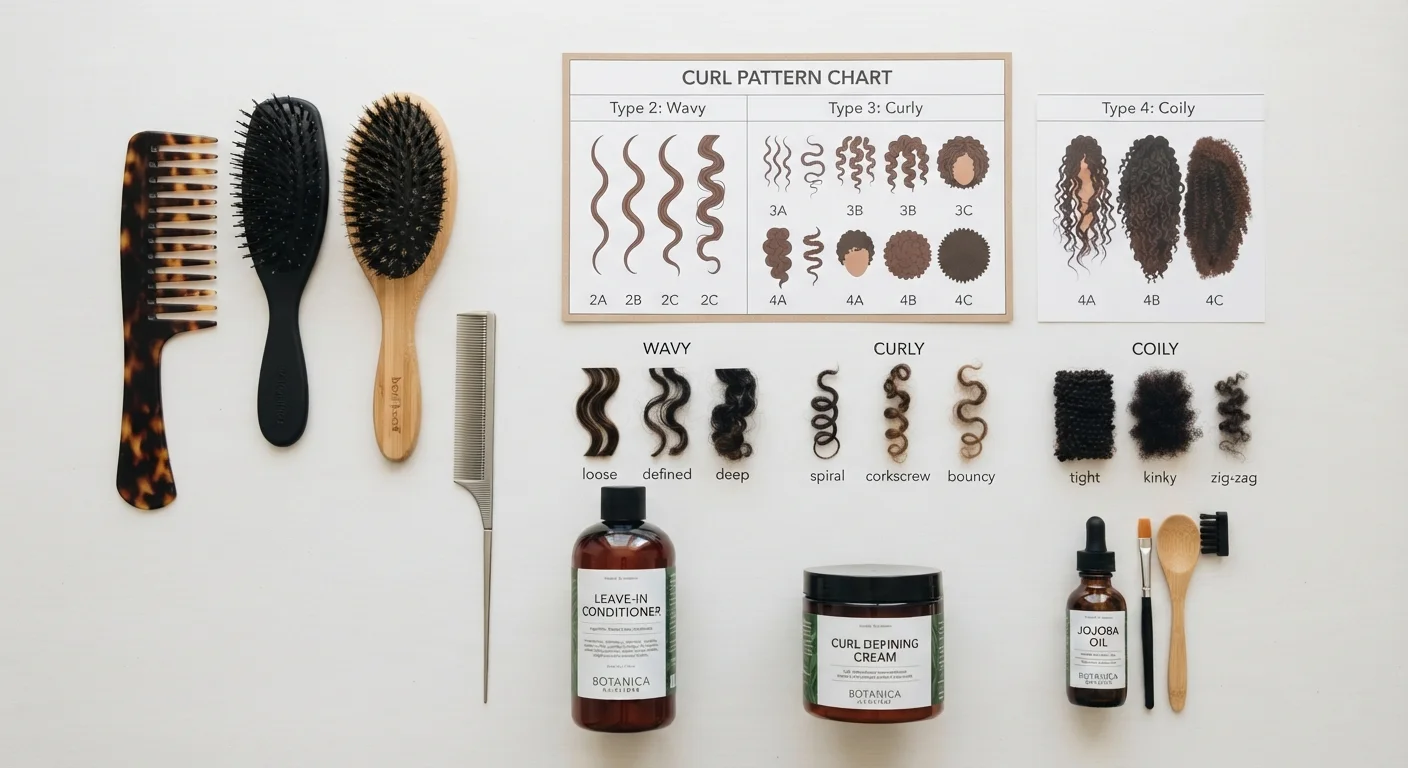
Photo: InDepthReads.com | Streamlining Learning For All editorial
Key Takeaways
- The 1–4C system describes curl pattern only, not the full picture of your hair's behavior.
- Many people have more than one hair type on their head, making a single label imprecise.
- Porosity, density, and texture often predict product results better than curl type alone.
- Hair typing works best as a starting point, not a strict rulebook.
- Understanding multiple hair properties together leads to more effective, personalized routines.
Where the System Comes From
The hair typing framework most people recognize today traces back to a classification system described by hairstylist André Walker in the 1990s. His original categories covered straight, wavy, curly, and coily hair. The natural hair community — particularly online communities that flourished in the 2000s and 2010s — expanded the system by adding lettered subcategories (A, B, C) to each number, creating a more granular grid that many people now use as their first step in understanding their hair.
The appeal is obvious: a simple chart that promises to tell you who you are, hair-wise, and what to do about it. Type your hair, find your products, go. But as with most shortcuts, the reality is a bit more layered.
“Curl pattern is the first thing people see, but it's rarely the most important factor in how hair behaves. The properties underneath — porosity, elasticity, density — are what drive the real decisions.”
— A licensed cosmetologist specializing in textured hair, Textured Hair Specialist and Educator
What Hair Typing Actually Measures
The system measures one thing: curl pattern, or the geometric shape your hair strand takes as it grows. Type 1 is straight with no visible wave. Type 2 has a wave pattern. Type 3 curls form distinct spirals. Type 4 features tight coils or zig-zag patterns. The lettered subcategories (A through C) distinguish between looser and tighter expressions within each group.
What it does not measure matters just as much. Curl pattern tells you nothing about:
- Porosity — how readily your hair absorbs and holds moisture
- Density — how many strands you have per square inch of scalp
- Strand width — whether your individual hairs are fine, medium, or coarse
- Elasticity — how well your hair stretches and recovers without breaking
These properties often have a bigger influence on which products and routines actually work for your hair. Porosity, density, and texture can reshape your entire approach to hair care in ways that knowing your curl type alone simply can't.
A Note on Consistency Within Types
Where Hair Typing Helps — and Where It Falls Short
Hair typing isn't without value. For someone new to working with their natural texture, identifying a general curl pattern provides a useful entry point. It can help narrow down styling technique options — diffusing versus air drying, for example — and give you a shared vocabulary when searching for tutorials or community advice online.
The friction starts when labels get treated as prescriptions. A 3C and a 4A might both respond beautifully to the same moisturizing routine, while two people both claiming 4C can have completely different experiences with the same product because their porosity levels differ dramatically. Adding to the complexity, most people have more than one curl pattern on their head — edges, nape, and crown often behave differently from one another.
4+
Main hair type categories in the 1–4 system
Each of the four main types (1–4) includes up to three subcategories (A, B, C), resulting in up to 12 distinct labels — yet most styling advice remains broadly generalized within each number.
3+
Hair properties beyond curl pattern
Porosity, density, and strand width are three widely recognized hair properties that, combined with curl type, give a far more complete picture of how hair will respond to products and routines.
Routines like co-washing are sometimes recommended broadly by curl type, but whether they work well depends heavily on individual scalp oil production and porosity — not just curl pattern. Similarly, decisions about heat styling and protective styling are best made with a fuller understanding of your hair's specific properties.
Try a Multi-Property Hair Assessment
Building a Smarter Starting Point
Think of the hair typing system as a first chapter, not the whole book. It can open the door to learning about your hair, but the deeper insight comes from exploring properties beyond curl shape. Once you understand how your hair handles moisture, how it responds to protein, and how dense or fine your strands are, you have a much richer foundation for building a routine that actually works.
If you want to go deeper, explore what porosity, density, and texture mean in practice — these are the factors that tend to predict real-world results. And when you're ready to decode what's in the bottles you're reaching for, a glossary of common hair care ingredients can help you make more informed choices without the guesswork.
Hair care works best when it's personalized — and personalization means looking past the label.
Frequently Asked Questions
The content on this site is for informational purposes only and is not a substitute for professional advice. Always consult a qualified professional for guidance specific to your situation.