
Why Your Hair Feels Dry Even After Conditioning

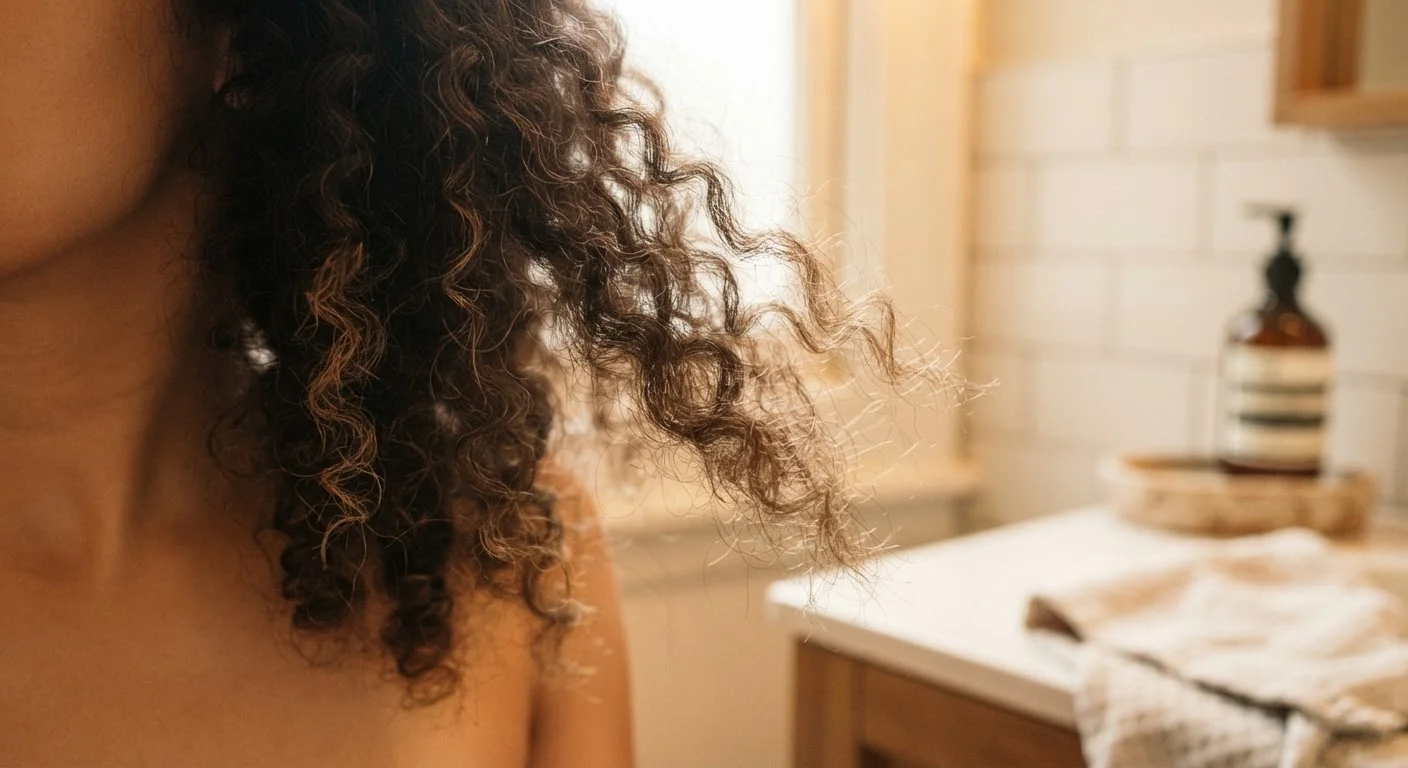
Photo: InDepthReads.com | Streamlining Learning For All editorial
Key Takeaways
- Applying conditioner to soaking-wet hair dilutes it, reducing how much moisture actually absorbs.
- Hair porosity determines whether moisture enters and stays — mismatched products make dryness worse.
- Product buildup can block conditioner from reaching the hair shaft entirely.
- Rinsing with hot water strips moisture immediately after conditioning, undoing your work.
- Some hair types need additional leave-in products or sealants beyond rinse-out conditioner alone.
When Conditioner Isn't the Problem — Your Routine Is
You're conditioning regularly, yet your hair still feels like straw by midday. The frustrating truth is that conditioner rarely fails on its own — it's usually how, when, or on what foundation it's applied that creates the disconnect. Before switching products again, it's worth examining the habits around your conditioning step. Several small missteps can collectively block moisture from doing its job, and most are easy to correct once you know what to look for.
Understanding your hair's individual properties is also key here. Hair porosity, density, and texture are the factors that determine how moisture enters, moves through, and stays in each strand — and ignoring them means you may be using a product that's fundamentally mismatched to your hair's needs.
Applying conditioner to soaking-wet hair straight from the showerhead.
Using a conditioner that doesn't match your hair's porosity level.
Concentrating conditioner on the scalp instead of the mid-lengths and ends.
Not leaving the conditioner on long enough to work.
Skipping conditioner on wash days when a clarifying or strong shampoo is used.
The Buildup and Rinse Factors Most People Overlook
Two of the sneakiest contributors to ongoing dryness have nothing to do with your conditioner's formula. The first is product buildup. When layers of styling products, silicones, or even previous conditioners accumulate on the hair shaft, they create a barrier that fresh conditioner simply cannot penetrate. The result is hair that feels coated but not actually hydrated. If you haven't incorporated a periodic clarifying wash into your routine, buildup may be the silent culprit.
The second factor is water temperature at rinse-out. Finishing your shower with hot water feels satisfying, but it opens the hair cuticle and allows the moisture you just deposited to escape immediately. A cool or lukewarm rinse helps seal the cuticle, locking in hydration. This single adjustment can noticeably improve softness without changing a single product.
~95°F
Temperature where hair cuticle begins to open
Hair science research consistently notes that heat — from hot water or styling tools — raises the cuticle, making moisture retention harder without a sealing step.
3 Types
Hair porosity levels that affect moisture absorption
Hair is generally classified as low, medium, or high porosity, and each type responds differently to conditioner formulas and application methods.
For those who need more than a rinse-out conditioner can deliver — particularly people with coily, highly porous, or chemically treated hair — layering oils, butters, and creams after conditioning can help seal moisture in rather than letting it evaporate as hair dries.
Scalp health also plays a supporting role. An imbalanced scalp can affect the condition of hair along the entire length. If dryness is accompanied by flaking or irritation, scalp health factors are worth exploring alongside your conditioning routine.
Don't Over-Protein Dry Hair
The content on this site is for informational purposes only and is not a substitute for professional advice. Always consult a qualified professional for guidance specific to your situation.