
Mistakes That Shorten the Life of Portable Chargers

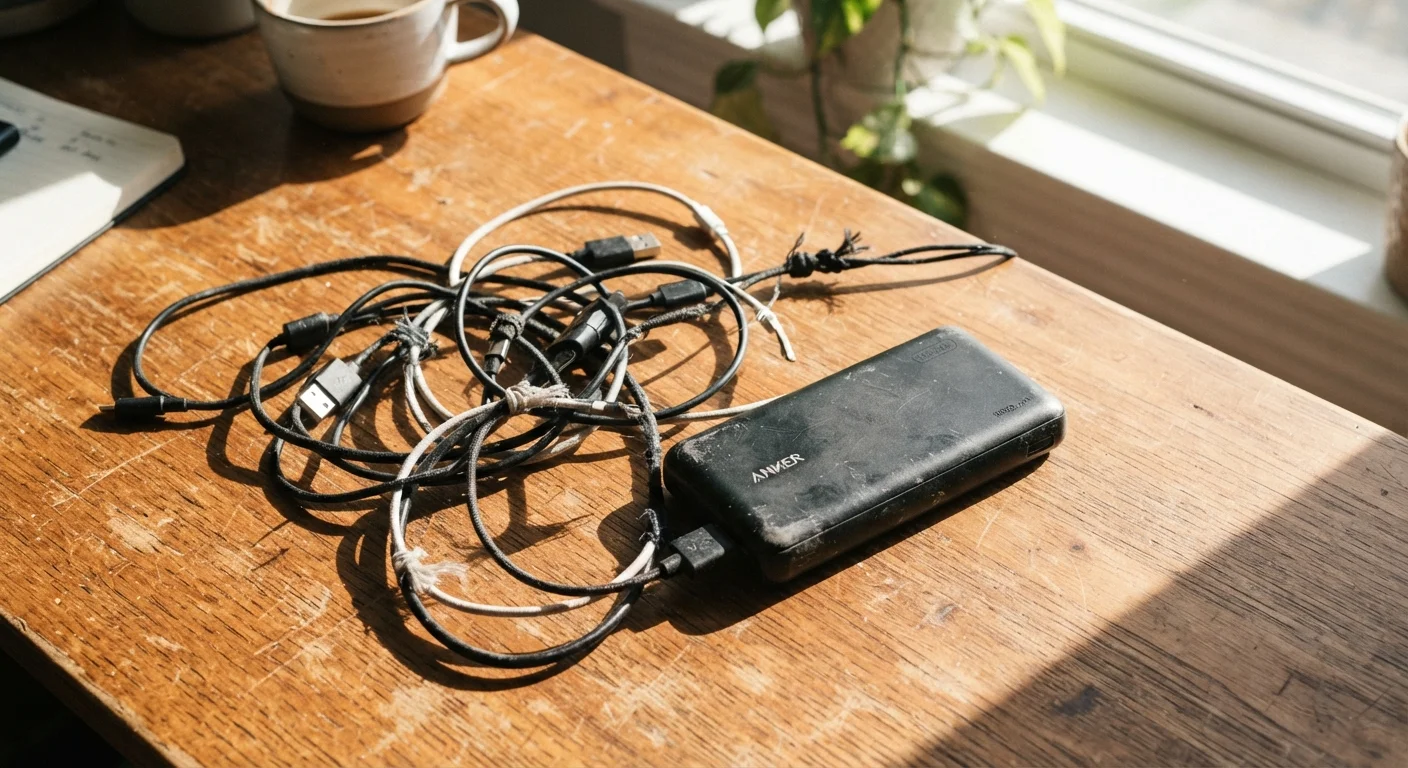
Photo: InDepthReads.com | Streamlining Learning For All editorial
Key Takeaways
- Lithium-ion batteries in power banks degrade faster when stored at very high or very low charge levels.
- Heat is the single biggest enemy of portable charger longevity — avoid hot cars and direct sunlight.
- Using the wrong charging cable or adapter can stress battery cells and reduce overall capacity over time.
- Storing a power bank unused for months without periodic top-ups accelerates irreversible capacity loss.
Why Power Bank Lifespan Is Easier to Damage Than You Think
Portable chargers feel durable — they're dense, compact, and built to survive a bag toss. But the lithium-ion cells inside follow the same electrochemical rules as any rechargeable battery: abuse the conditions, and capacity quietly erodes with each cycle. Most users don't notice the damage until their once-reliable charger barely keeps a phone alive through a single charge.
Understanding what actually shortens a power bank's life puts you in control. For a broader look at how electronics age from the inside out, see why gadgets degrade over time. The same principles apply here — and the fixes are simpler than most people expect.
Leaving the power bank fully charged or fully drained during long-term storage.
Exposing the power bank to high heat — such as leaving it in a parked car or a direct sunbeam.
Charging the power bank with a cheap, uncertified cable or a mismatched wall adapter.
Running the power bank down to zero percent and leaving it discharged for extended periods.
Charging the power bank and a device simultaneously (pass-through charging) as a regular habit.
Ignoring physical damage such as swelling, dents, or a warped casing.
Storage and Charging Habits That Silently Cause Damage
Beyond the individual mistakes outlined above, a few systemic habits compound the damage over time. One of the most common is treating a power bank like a set-and-forget device — charging it to 100%, tossing it in a drawer, and not touching it for three to six months. Lithium-ion cells kept at full charge while idle experience elevated internal stress, and cells left fully discharged for extended periods can enter a deep-discharge state that makes them difficult or impossible to recover.
~500
Typical charge cycles before noticeable capacity loss
Most lithium-ion cells are rated for approximately 300–500 full charge cycles before capacity drops to around 80%, according to general battery industry specifications.
25%+
Capacity loss from chronic high-heat storage
Battery research consistently shows that storing lithium-ion cells at elevated temperatures (above 104°F/40°C) can accelerate capacity loss by 25% or more compared to room-temperature storage.
The sweet spot for long-term storage is roughly 50–60% charge, checked every one to three months with a brief top-up if needed. This keeps the cells in a stable, low-stress state without cycling them unnecessarily.
It's also worth revisiting the foundational battery myths that lead people astray — for example, the belief that you should drain a battery completely before recharging. That practice, left over from older nickel-cadmium technology, actively harms lithium-ion cells. Common battery life myths explains the science behind why partial charges are actually better for modern batteries.
Don't Charge Overnight on a Soft Surface
The content on this site is for informational purposes only and is not a substitute for professional advice. Always consult a qualified professional for guidance specific to your situation.