
Smart Home Devices: What They Offer and Where They Fall Short

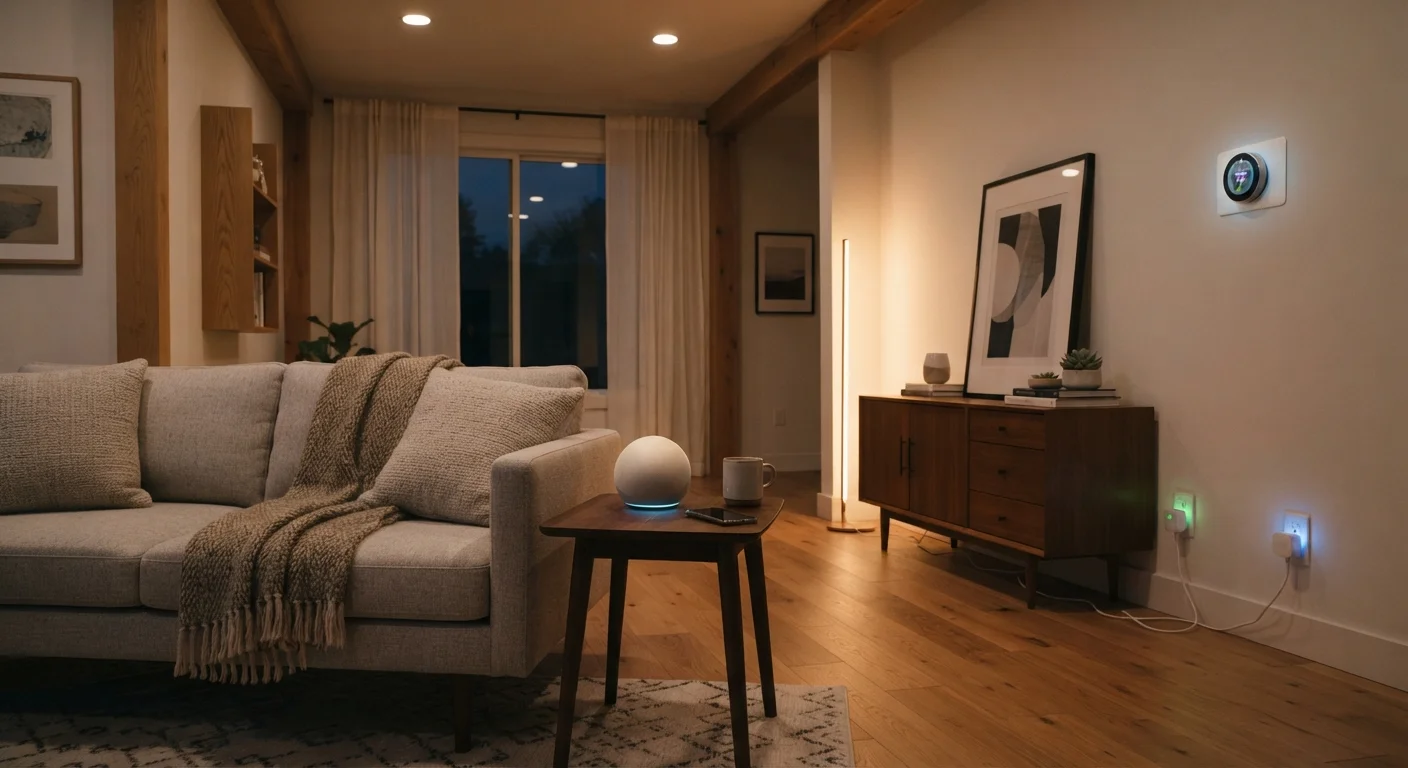
Photo: InDepthReads.com | Streamlining Learning For All editorial
Key Takeaways
- Smart home devices can automate routine tasks and improve energy efficiency, but they require reliable Wi-Fi and ongoing software support.
- Privacy is a genuine concern — most connected devices collect usage data and some always-on microphones have raised transparency questions.
- Compatibility between devices from different manufacturers is inconsistent and can limit how well your setup works together.
- A smart home ecosystem works best when built incrementally, starting with high-impact, low-risk devices like smart thermostats or plugs.
Reduces energy use through smart scheduling
Programmable thermostats and smart plugs can cut energy consumption by avoiding heating, cooling, or powering devices when no one is home. The U.S. Department of Energy has noted that programmable thermostat use can contribute to meaningful energy savings over time.
Remote control from anywhere with a phone
Smart locks, cameras, and switches can be monitored and controlled via app from any location, which is particularly useful for travelers or anyone managing a second property.
Improves accessibility for people with mobility limitations
Voice-activated lighting, door locks, and appliance control can significantly improve independence for people who find manual switches or physical effort difficult.
Automation reduces day-to-day friction
Scheduled routines — lights off at bedtime, heat reduced while away — run without manual input once configured, reducing small but recurring tasks.
Scalable starting from low-cost entry points
Smart plugs and basic bulbs are inexpensive entry points that let households test smart home functionality before committing to more involved or costly systems.
Dependent on a reliable internet connection
Most smart home devices require a working Wi-Fi connection to function remotely or respond to voice commands. An outage or weak signal can render them temporarily unusable or unpredictable.
Raises legitimate privacy and data collection concerns
Many devices — particularly voice assistants and cameras — collect usage data and, in some cases, audio snippets. Users should review each manufacturer's privacy policy and data retention practices carefully.
Compatibility between brands is inconsistent
Devices from different manufacturers may not communicate reliably with each other or with a chosen voice assistant platform, often discovered after purchase rather than before.
Software support has a limited lifespan
Manufacturers periodically discontinue software updates or cloud services for older devices, which can render previously functional hardware unsupported or unusable mid-product-life.
Setup complexity varies and can be frustrating
While entry-level devices are straightforward to install, multi-device ecosystems involving hubs, routines, and third-party integrations can require considerable technical patience to configure reliably.
Security vulnerabilities exist in connected devices
Any internet-connected device is a potential entry point for unauthorized access if not properly secured. Using strong, unique passwords and keeping firmware updated are basic but essential precautions.
What Smart Home Devices Actually Do
The term "smart home" covers a wide range of connected devices: voice-activated speakers, programmable thermostats, smart plugs, lighting systems, video doorbells, locks, and security cameras. What they share is the ability to be monitored, controlled, or automated via a smartphone app, voice command, or predefined schedule — often from anywhere with an internet connection.
At the entry level, a smart plug turns any ordinary lamp or appliance into something you can switch on and off remotely. At the more involved end, a fully integrated system can adjust your home's temperature, lighting, and security based on your routine, your location, or even the local weather. The promise is a home that responds to you rather than one you have to manage manually.
For new homeowners especially, understanding what these devices can and can't do before purchasing is important. New homeowners often discover that the infrastructure — router placement, home wiring, Wi-Fi dead zones — matters as much as the devices themselves.
The Real Advantages
When smart home devices work well, the benefits are tangible rather than gimmicky.
Reduces energy use through smart scheduling
Programmable thermostats and smart plugs can cut energy consumption by avoiding heating, cooling, or powering devices when no one is home. The U.S. Department of Energy has noted that programmable thermostat use can contribute to meaningful energy savings over time.
Remote control from anywhere with a phone
Smart locks, cameras, and switches can be monitored and controlled via app from any location, which is particularly useful for travelers or anyone managing a second property.
Improves accessibility for people with mobility limitations
Voice-activated lighting, door locks, and appliance control can significantly improve independence for people who find manual switches or physical effort difficult.
Automation reduces day-to-day friction
Scheduled routines — lights off at bedtime, heat reduced while away — run without manual input once configured, reducing small but recurring tasks.
Scalable starting from low-cost entry points
Smart plugs and basic bulbs are inexpensive entry points that let households test smart home functionality before committing to more involved or costly systems.
~$50/year
Estimated savings from a smart thermostat
The U.S. Environmental Protection Agency's ENERGY STAR program estimates that a certified smart thermostat can save households roughly $50 or more annually on heating and cooling costs, depending on usage patterns.
69%
U.S. adults using some form of smart home tech
According to Statista consumer survey data, a majority of U.S. adults reported owning or using at least one smart home device, with smart speakers and streaming devices among the most common categories.
Beyond energy savings, smart home tech can meaningfully improve accessibility. Voice-controlled lighting and locks are particularly valuable for people with mobility limitations. Remote monitoring features — checking a camera feed or receiving a door sensor alert — provide genuine peace of mind for families with young children or elderly relatives living independently.
Automation also reduces cognitive load. Scheduled routines that turn off lights, lock doors, or adjust the thermostat at bedtime eliminate small but recurring sources of friction — without requiring active management once set up.
Where Smart Devices Fall Short
The drawbacks of smart home technology are real, and they're worth understanding before committing to any ecosystem.
Dependent on a reliable internet connection
Most smart home devices require a working Wi-Fi connection to function remotely or respond to voice commands. An outage or weak signal can render them temporarily unusable or unpredictable.
Raises legitimate privacy and data collection concerns
Many devices — particularly voice assistants and cameras — collect usage data and, in some cases, audio snippets. Users should review each manufacturer's privacy policy and data retention practices carefully.
Compatibility between brands is inconsistent
Devices from different manufacturers may not communicate reliably with each other or with a chosen voice assistant platform, often discovered after purchase rather than before.
Software support has a limited lifespan
Manufacturers periodically discontinue software updates or cloud services for older devices, which can render previously functional hardware unsupported or unusable mid-product-life.
Setup complexity varies and can be frustrating
While entry-level devices are straightforward to install, multi-device ecosystems involving hubs, routines, and third-party integrations can require considerable technical patience to configure reliably.
Security vulnerabilities exist in connected devices
Any internet-connected device is a potential entry point for unauthorized access if not properly secured. Using strong, unique passwords and keeping firmware updated are basic but essential precautions.
Network dependency is perhaps the most underappreciated limitation. If your internet goes down or your router underperforms, many smart devices stop responding — or behave unpredictably. Understanding your home's network setup is a practical first step before adding connected devices.
Privacy is a separate and serious concern. Always-on microphones in voice assistants, and cameras with cloud storage, create data footprints that many consumers don't fully account for at the point of purchase. Reviewing privacy settings carefully during device setup is one of the most impactful steps you can take.
Compatibility: The Hidden Complication
The Matter Standard: A Step Toward Compatibility
One of the most common frustrations with smart home devices is that products from different manufacturers don't always work together reliably. A thermostat optimized for one voice assistant platform may offer limited functionality with another, and smart lighting from one brand may not integrate cleanly with a hub from a different company.
The industry has been working toward interoperability through shared standards, but meaningful fragmentation still exists in the market. Before purchasing any device, it's worth verifying that it explicitly supports the platforms and other devices already in your home — not just that it carries a "smart home compatible" label.
This ecosystem lock-in dynamic also has spending implications. Upgrading one device sometimes means replacing others to maintain compatibility. As explored in common smart spending traps, buying into features you won't use — or systems that don't integrate — is a frequent and avoidable mistake.
The content on this site is for informational purposes only and is not a substitute for professional advice. Always consult a qualified professional for guidance specific to your situation.