
Why Your Budget Keeps Falling Apart by Week Two

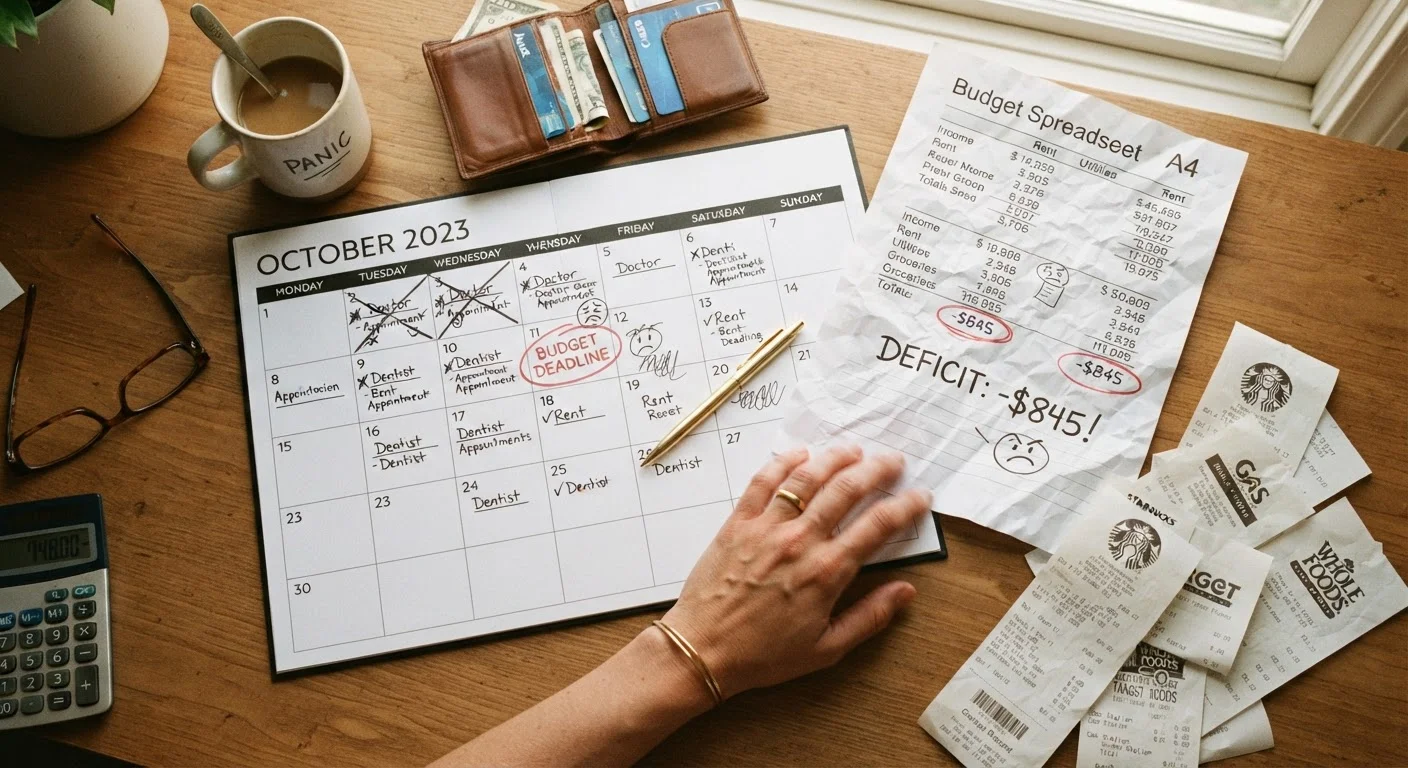
Photo: InDepthReads.com | Streamlining Learning For All editorial
Key Takeaways
- Budgets fail most often for behavioral reasons, not because the math is wrong.
- Irregular expenses — not monthly bills — are the most common budget-busters.
- Budgets that feel too restrictive are more likely to be abandoned within two weeks.
- Tracking spending in real time dramatically improves budget adherence.
- A budget only works if it reflects your actual life, not an idealized version of it.
The Real Reason Budgets Break Down
Most people who struggle with budgeting assume their problem is discipline. In reality, the breakdown usually comes down to design flaws — budgets built on assumptions that don't hold up in real life. By the second week of the month, those gaps become impossible to ignore.
Understanding why your budget falls apart is the first step toward building one that actually holds. The mistakes below are among the most common — and most fixable — reasons people abandon their spending plans before the month is half over. For a broader look at what the evidence says about money management habits, see common budgeting myths worth reconsidering.
Setting spending limits based on what you wish you spent, not what you actually spend.
Forgetting to account for irregular but predictable expenses.
Making the budget so tight that one small slip feels like total failure.
Not tracking spending in real time during the month.
Treating a one-time budget failure as proof that budgeting doesn't work.
Building a Budget That Survives Contact With Real Life
A budget isn't a punishment — it's a planning tool. The goal isn't to spend as little as possible; it's to align your money with your actual priorities. That requires honesty about your spending patterns, not just your intentions.
~33%
Americans with a written monthly budget
Surveys by the National Foundation for Credit Counseling have consistently found that fewer than one in three American adults maintains a detailed monthly budget.
2–3 weeks
Typical point when new budgets break down
Behavioral finance research suggests most new financial habits face their highest abandonment risk within the first two to three weeks, before routines solidify.
Start by reviewing at least two to three months of past bank and credit card statements before setting any category limits. Real spending data is far more reliable than estimates. From there, build in a buffer — most financial educators suggest allocating a small "miscellaneous" category of around 5% of your take-home income for unexpected minor costs.
Irregular but predictable expenses are one of the biggest traps. Car registration, annual subscriptions, back-to-school costs — these aren't surprises, but they're easy to forget. Sinking funds are a practical way to plan for these costs without blowing your monthly budget when they arrive.
Finally, schedule a regular check-in. Catching budget drift early — before a small overage becomes a pattern — makes course corrections much easier. A monthly financial review checklist can help you stay on track and adjust before small problems compound.
This article is for general informational and educational purposes only and does not constitute personalized financial advice. Consider consulting a qualified financial professional for guidance tailored to your specific situation.
The content on this site is for informational purposes only and is not a substitute for professional advice. Always consult a qualified professional for guidance specific to your situation.