
Things People Get Wrong About How Budgeting Works

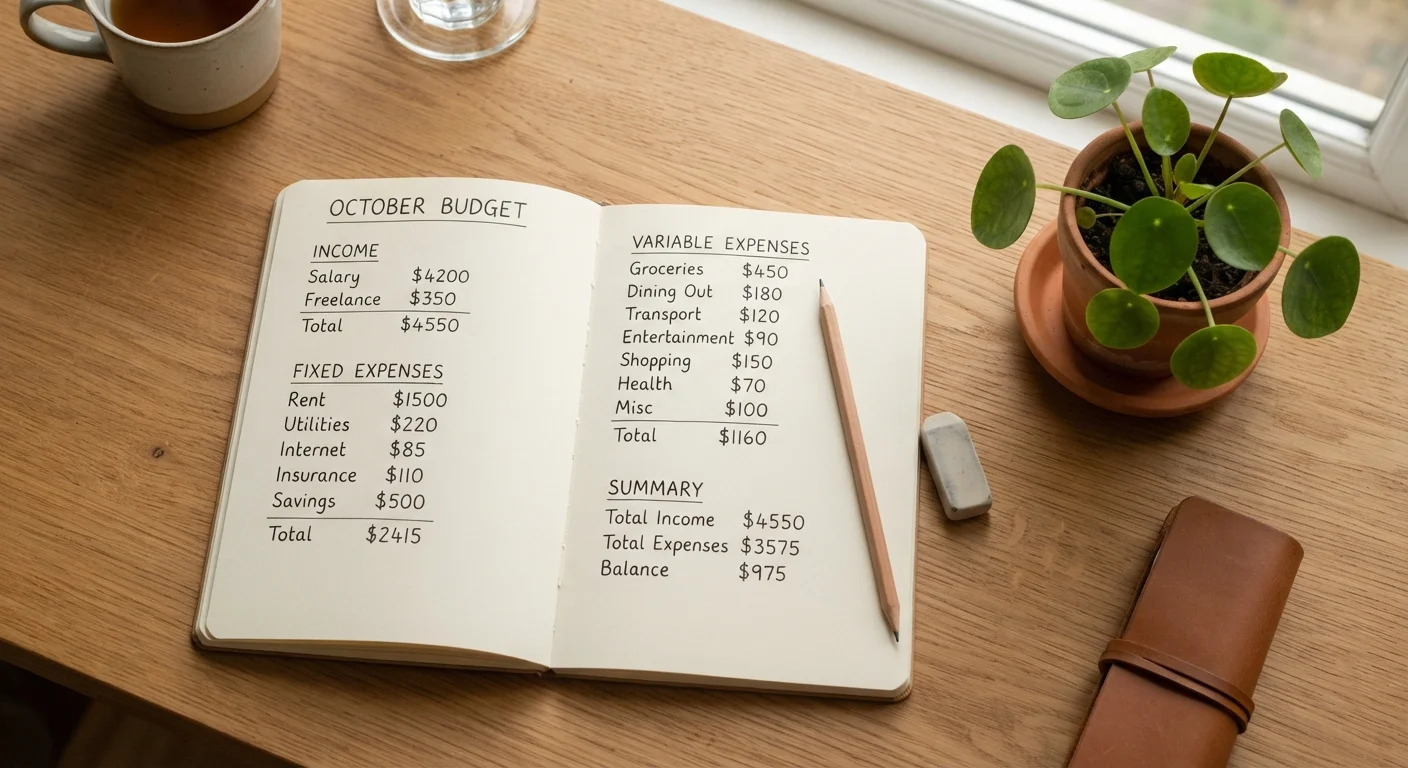
Photo: InDepthReads.com | Streamlining Learning For All editorial
Key Takeaways
- Budgeting is useful at every income level, not just when you're in financial trouble.
- A good budget accounts for irregular and discretionary spending — not just fixed bills.
- Budgets succeed through flexible systems and realistic expectations, not willpower alone.
- Most budget failures stem from behavioral patterns, not bad math or insufficient income.
- Tracking spending is the foundation of budgeting, even before setting formal limits.
Why Budgeting Myths Persist
Budgeting has a reputation problem. Many Americans associate it with restriction, stress, or financial failure — rather than with the practical planning tool it actually is. These associations aren't accidental: they come from widely shared misconceptions that get passed along as common sense.
The result? People who could benefit most from a budget often avoid building one. And those who do try frequently set themselves up for frustration by approaching it the wrong way.
This article takes the most common budgeting myths head-on — and replaces them with what the evidence and established financial guidance actually support. If you've ever started a budget only to abandon it, or assumed budgeting simply isn't for someone in your situation, the explanations below may reframe the whole exercise.
Myth
Budgeting is only for people who are broke or in debt.
Fact
A budget is a planning tool that benefits anyone who earns and spends money — regardless of income level.
This is one of the most damaging myths because it causes higher earners to skip a habit that could meaningfully improve their long-term financial stability. Budgeting isn't a sign of scarcity — it's a method for directing money deliberately. High-income households that skip budgeting often discover, sometimes late, that income doesn't automatically translate into wealth. Consistent spending without a plan is how people at every income level accumulate debt or fail to build savings. Whether you're working toward an emergency fund, paying down a mortgage, or building toward retirement, a budget is the mechanism that connects daily decisions to long-term goals. Explore more about those goals at financial goal-setting.
Myth
A budget only works if you track every single penny perfectly.
Fact
Effective budgets require consistency, not perfection — approximate tracking beats no tracking by a wide margin.
The all-or-nothing thinking around budgeting is a primary reason people quit. If one week goes off the rails, many people abandon the entire plan rather than simply adjusting. In practice, a budget that's 80% accurate month after month delivers far more financial insight than a precise one followed for two weeks. Behavioral finance research consistently shows that the act of tracking spending — even imprecisely — changes how people make decisions. The goal is awareness, not a perfect ledger. A flexible system that you actually maintain is more valuable than a theoretically correct one you abandon. For a deeper look at why budgets break down, see common budget breakdown points.
Myth
You need strong willpower to stick to a budget.
Fact
Budget success depends far more on system design and realistic expectations than on personal willpower.
Framing budgeting as a test of character sets most people up to fail. Willpower is a limited cognitive resource — it depletes with use, varies day to day, and is poorly suited to long-term financial management. Effective budgeters don't rely on willpower; they build systems. Automating savings transfers, setting up separate accounts for specific goals, and designing spending categories that reflect real life (including fun money) all reduce the moment-to-moment discipline required. A budget that accounts for how you actually behave will outperform an ideal budget built around a version of yourself that never gets tired or stressed. Credit card misconceptions often stem from similar willpower myths — see credit card debt myths for related context.
Myth
Budgeting means giving up everything you enjoy spending money on.
Fact
A well-designed budget explicitly includes discretionary spending — cutting enjoyment entirely undermines sustainability.
Budgets built entirely around restriction tend to collapse because they don't account for human behavior. If your budget has no room for a dinner out, a hobby, or entertainment, the first time you make those purchases — and most people will — you may feel like the budget has failed. The more useful framing is that budgeting gives those purchases a designated place. You decide in advance how much you're comfortable spending on discretionary items, which actually reduces guilt compared to unplanned spending. Many financial planners use frameworks like the 50/30/20 guideline (roughly 50% needs, 30% wants, 20% savings or debt) precisely because they formalize room for enjoyment. Explore savings and debt guidance at Saving & Debt.
Myth
Once you make a budget, it should stay the same.
Fact
Budgets need regular updates as income, expenses, and goals change — a static budget quickly becomes inaccurate.
Life doesn't hold still, and neither should your budget. A budget built during one stage of life — say, before a job change, a new child, or a move — will misrepresent your finances six months later if it's never revised. Financial planners typically recommend reviewing your budget at least quarterly, and immediately after any significant life or income change. Irregular expenses like car repairs, medical bills, or annual subscriptions are also frequently omitted from initial budgets, which is why many first budgets feel inaccurate. Building in a buffer category for irregular costs, and revisiting your numbers regularly, keeps a budget connected to reality. If you're new to this process, your first budget guide covers how to set realistic starting categories.
What Good Budgeting Actually Looks Like
Once you strip away the myths, budgeting looks less like a rigid rulebook and more like a living document — one you update as your life changes. The goal isn't to spend as little as possible; it's to spend intentionally, in ways that align with what matters to you.
~33%
Americans who follow a formal household budget
Surveys conducted by Gallup have consistently found that fewer than one in three American adults maintain a detailed household budget, despite most expressing interest in improving their finances.
60%+
Adults living paycheck to paycheck at some income levels
Research from multiple consumer finance surveys suggests that a majority of Americans across income brackets report financial stress related to monthly cash flow, underscoring that income alone doesn't guarantee financial stability.
Two popular frameworks worth exploring are goal-based budgeting and zero-based budgeting — see how they compare to understand which philosophy fits your situation. If you've already tried budgeting and hit a wall, why budgets fall apart by week two explains the behavioral patterns behind those breakdowns — and how to work around them.
A Budget Is a Plan, Not a Report Card
For those just starting out, building your first budget walks through the core concepts in plain language with realistic expectations. And if you share finances with a partner or family, budgeting as a household adds important dimensions beyond the numbers alone.
This article is for general informational and educational purposes only and does not constitute personalized financial advice. For guidance specific to your financial situation, consider consulting a qualified financial professional.
The content on this site is for informational purposes only and is not a substitute for professional advice. Always consult a qualified professional for guidance specific to your situation.