
Goal-Based Budgeting vs. Zero-Based Budgeting

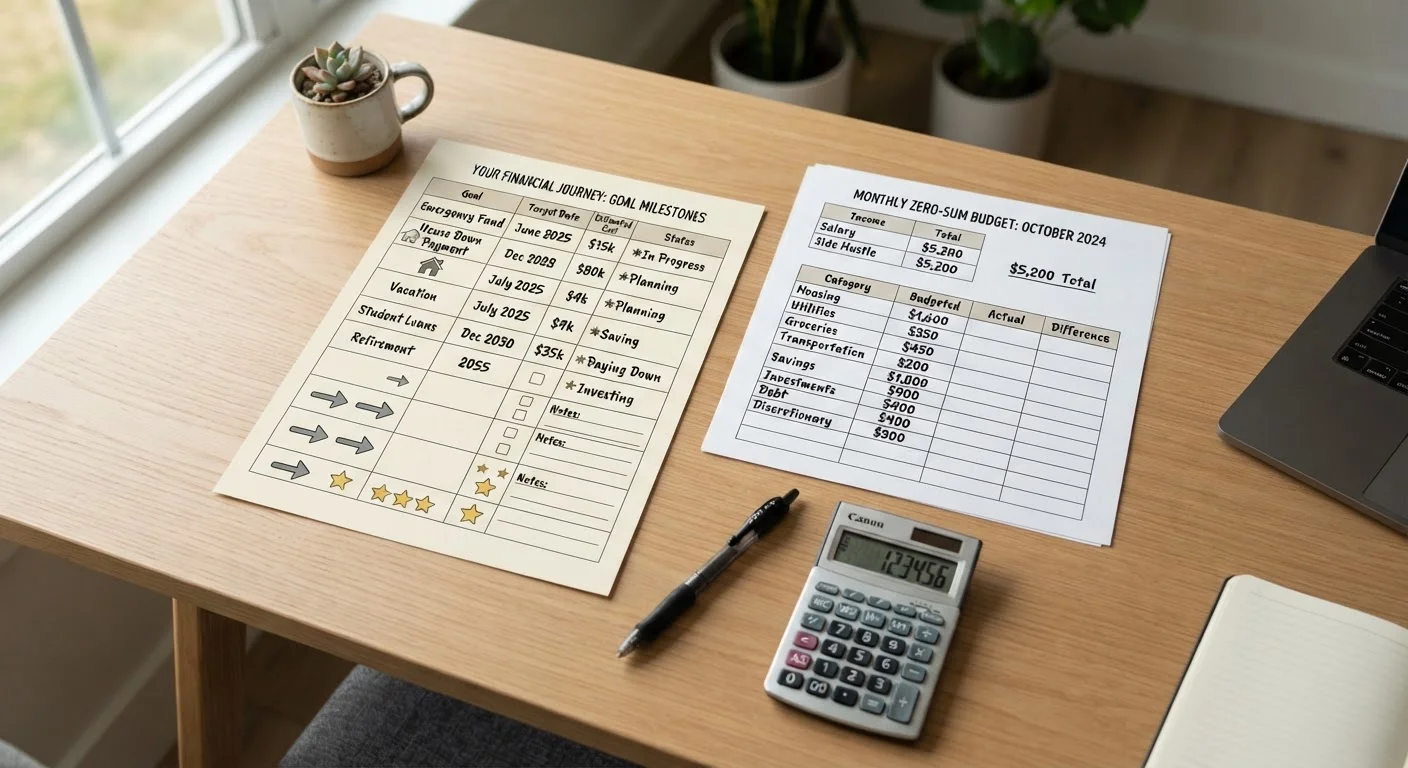
Photo: InDepthReads.com | Streamlining Learning For All editorial
Key Takeaways
- Goal-based budgeting organizes spending around specific financial milestones you want to reach.
- Zero-based budgeting assigns every dollar of income a purpose before each month begins.
- Both methods require knowing your income and expenses — understanding fixed vs. variable costs matters for either approach.
- Goal-based budgeting suits those motivated by long-term outcomes; zero-based suits those who want tight monthly control.
- Neither method guarantees results — consistency and regular review determine success.
The Core Philosophy Behind Each Method
Budgeting is not one-size-fits-all. Two of the most structured approaches — goal-based budgeting and zero-based budgeting — share a commitment to intentional spending but differ fundamentally in how they organize your money.
Goal-based budgeting starts with outcomes. You identify specific financial goals — building an emergency fund, paying off a car loan, saving for a home down payment — and reverse-engineer your budget to fund those targets. Spending categories are evaluated based on whether they support or delay your goals.
Zero-based budgeting (ZBB) starts with the present. Each month, you allocate every dollar of expected income to a category — housing, food, transportation, savings, debt payments — until the total reaches zero. No dollar is left unassigned. If income changes, the entire budget is rebuilt from scratch. For a broader look at how this compares to other frameworks, see budgeting methods compared.
How Each Method Structures Your Money
Understanding the mechanics of each approach helps clarify which one fits your household's habits and priorities.
With goal-based budgeting, you typically:
- List concrete goals with dollar amounts and target dates (e.g., $6,000 emergency fund in 12 months = $500/month).
- Subtract goal contributions from take-home income first.
- Allocate remaining income to essential and discretionary spending.
With zero-based budgeting, you typically:
- Calculate total expected monthly income.
- List every expense category and assign a dollar amount to each.
- Adjust until income minus all allocations equals zero.
- Repeat the process fresh each month.
Both methods benefit from a solid grasp of your spending patterns. Knowing which costs are fixed and which vary is foundational — understanding fixed vs. variable expenses makes either system far more reliable.
| Goal-Based Budgeting | Zero-Based Budgeting | |
|---|---|---|
| Primary focus | Long-term financial goals | Monthly dollar-by-dollar control |
| Setup frequency | Set goals periodically, review monthly | Rebuilt from scratch each month |
| Best income type | Variable or irregular income | Stable, predictable income |
| Time commitment | Moderate — goal tracking focus | Higher — full monthly rebuild required |
| Spending visibility | Moderate — goal progress tracked | High — every category assigned |
| Motivational anchor | Future milestones and outcomes | Current-month discipline and control |
| Flexibility | More flexible month to month | Less flexible — requires reallocation |
Strengths, Limitations, and Common Pitfalls
Neither method is without trade-offs, and choosing the wrong fit can lead to frustration rather than financial progress.
Goal-based budgeting strengths: It keeps motivation high by connecting daily spending decisions to meaningful outcomes. It also adapts well to irregular income — you prioritize goal contributions when income is higher and scale back when it dips.
Goal-based budgeting limitations: Without monthly category-level tracking, it's easy to overspend on discretionary items and still tell yourself you're on track because goal contributions were made.
Zero-based budgeting strengths: It surfaces spending leaks because every dollar must be justified. It works especially well for households trying to identify where money actually goes each month.
Zero-based budgeting limitations: It requires significant time at the start of each month to rebuild allocations. For those with variable or unpredictable income, estimating accurately enough to balance to zero can feel forced.
Don't Confuse Saving With Budgeting
If you're new to budgeting entirely, both methods assume a baseline of financial self-awareness. Starting with a plain-English first budget can help you build that foundation before committing to either system.
Choosing the Right Fit — or Combining Both
The most effective budget is one you'll actually maintain. Consider your current financial situation and working style:
- Choose goal-based budgeting if you are highly motivated by milestones, have a stable sense of your monthly spending, or earn variable income that makes month-to-month rebuilding impractical.
- Choose zero-based budgeting if you want to eliminate spending blind spots, have a relatively consistent income, and are willing to invest 30–60 minutes each month planning your allocations.
- Consider combining both by using zero-based mechanics to build your monthly plan, while using goal-based logic to set savings priorities at the top of that plan.
It's also worth examining common misconceptions before you start — what people frequently get wrong about budgeting can help you set realistic expectations. For further context on popular percentage-based frameworks that complement either method, see the 50/30/20 rule explained.
This article is for general informational and educational purposes only and does not constitute personalized financial advice. Consult a qualified financial professional before making significant financial decisions.
The content on this site is for informational purposes only and is not a substitute for professional advice. Always consult a qualified professional for guidance specific to your situation.