
The 50/30/20 Rule Explained

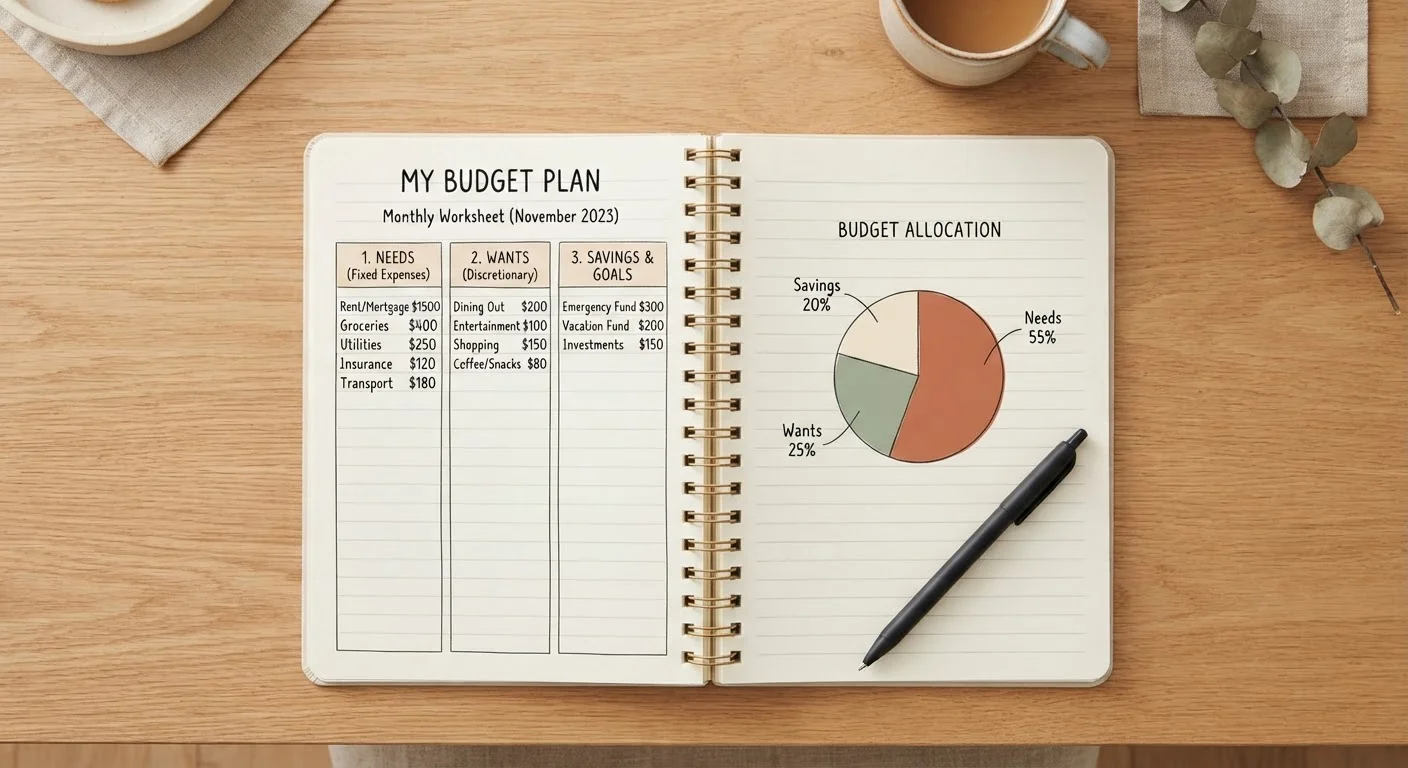
Photo: InDepthReads.com | Streamlining Learning For All editorial
Key Takeaways
- The 50/30/20 rule splits after-tax income into needs (50%), wants (30%), and savings/debt (20%).
- "Needs" covers essential expenses like housing, food, utilities, and minimum debt payments.
- "Wants" covers discretionary spending — dining out, subscriptions, and entertainment.
- The 20% savings bucket includes emergency funds, retirement contributions, and extra debt payoff.
- The rule is a starting guideline, not a rigid requirement — adjust percentages to fit your real situation.
- High-cost-of-living areas or significant debt loads may require rebalancing the percentages.
Breaking Down the Three Categories
Understanding what belongs in each bucket is the most important step when applying this framework to your own finances.
Needs (50%)
Needs are expenses you cannot reasonably eliminate without seriously disrupting your life. These include:
- Rent or mortgage payments
- Utilities (electricity, gas, water)
- Groceries and basic household supplies
- Health insurance premiums and essential medications
- Minimum required debt payments
- Basic transportation costs (car payment, transit pass, gas)
The 50% ceiling is intentional — it creates pressure to keep essential costs from crowding out everything else.
Wants (30%)
Wants are the choices that improve quality of life but are not strictly required. Examples include dining out, streaming subscriptions, gym memberships, vacations, and hobbies. The distinction between a need and a want is sometimes blurry. Internet service, for instance, is practically essential for most working Americans, while a premium cable package is a want. Being honest with yourself about this line is where the real budgeting work happens.
Savings and Debt Repayment (20%)
This category covers building your financial foundation: contributions to an emergency fund, retirement accounts such as a 401(k) or IRA, and any debt payments beyond the required minimum. Prioritizing this bucket — even modestly — is what separates a budget that maintains the status quo from one that builds long-term security.
Automate Your 20% First
How to Apply the Rule to Your Paycheck
Start with your monthly after-tax income. If you are paid biweekly, multiply one paycheck by 26 and divide by 12 to get a monthly figure. Then apply the percentages:
- Multiply your take-home pay by 0.50 — this is your needs ceiling.
- Multiply by 0.30 — this is your wants allowance.
- Multiply by 0.20 — this is your savings and debt-repayment target.
Compare those numbers against your actual current spending. Most people find the exercise itself revealing — even before changing a single habit. If you have never built a budget before, our plain-English starting point walks through the foundational concepts step by step.
~33%
Average share of income spent on housing
According to the U.S. Bureau of Labor Statistics Consumer Expenditure Survey, housing alone accounts for roughly one-third of average household spending — often pushing needs past the 50% guideline.
57%
Americans living paycheck to paycheck
A 2023 LendingClub report found that more than half of U.S. consumers describe themselves as living paycheck to paycheck, underscoring why a structured savings allocation matters.
$1,000
Minimum emergency fund starting target
Many financial educators recommend a $1,000 starter emergency fund as a first milestone for the 20% savings bucket before addressing other financial goals.
Once you have a baseline, a structured monthly budget check-in helps you catch category drift before it compounds into a larger problem.
When the Rule Works Well — and When It Doesn't
The 50/30/20 rule performs best for households with stable, predictable income and moderate costs. It is especially useful as an entry point because it requires no detailed expense tracking — just three numbers.
However, several real-world situations can strain the framework:
- High housing costs: In cities where rent alone approaches or exceeds 30–40% of take-home pay, squeezing all other needs into the remaining share is unrealistic.
- Significant student loan or credit card debt: Households carrying heavy debt may need to shift more than 20% toward payoff, at least temporarily.
- Irregular income: Freelancers and gig workers with variable monthly earnings may find percentage-based budgeting harder to anchor to a fixed number.
- Very tight budgets: When essential expenses already exceed 50% of income, the rule highlights a structural gap rather than offering a workable fix on its own.
For those navigating competing priorities — debt, emergency savings, and retirement contributions all at once — structured frameworks for deciding what to tackle first can help sequence your goals more strategically.
Percentages Are Benchmarks, Not Laws
If the three-category approach feels too broad for your situation, zero-based budgeting or the envelope method offer more granular control. You can also explore goal-based versus zero-based budgeting to see how each philosophy structures money differently.
“The goal of the 50/30/20 plan is not to guilt you about your spending. It is to show you how to spend in a way that lets you have a life today while still building security for tomorrow.”
— Elizabeth Warren & Amelia Warren Tyagi, Authors of 'All Your Worth: The Ultimate Lifetime Money Plan' (2005)
This article is for general informational and educational purposes only and does not constitute personalized financial advice. Consider consulting a qualified financial professional for guidance tailored to your circumstances.
Frequently Asked Questions
The content on this site is for informational purposes only and is not a substitute for professional advice. Always consult a qualified professional for guidance specific to your situation.