
Indoor vs. Outdoor Cats: Health Trade-Offs Owners Rarely Discuss

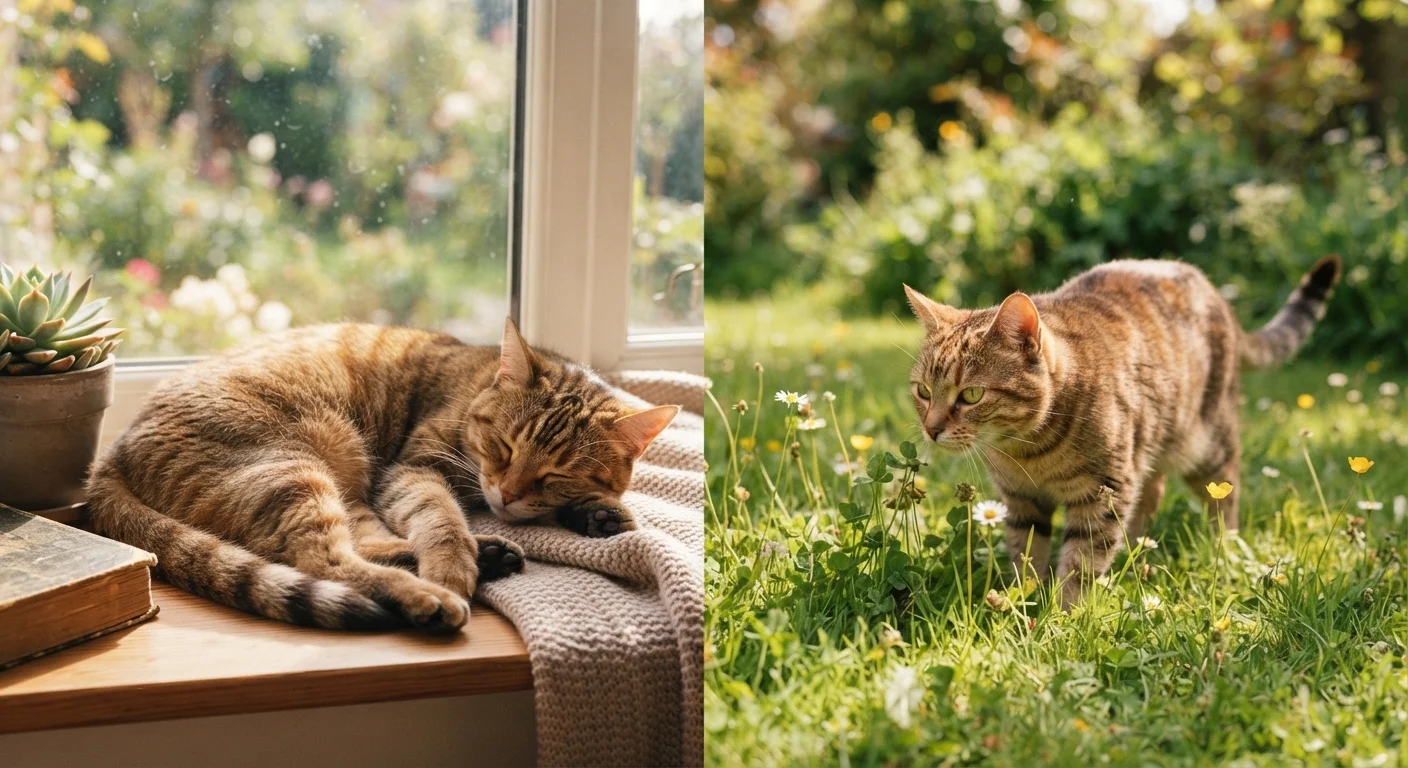
Photo: InDepthReads.com | Streamlining Learning For All editorial
Key Takeaways
- Indoor cats typically live significantly longer than outdoor cats due to reduced exposure to hazards.
- Outdoor cats face higher risks of trauma, infectious disease, and parasites.
- Indoor cats are more prone to obesity, behavioral stress, and lower urinary tract issues.
- A cat's individual temperament and prior history should guide the lifestyle decision.
- Enriched indoor environments and supervised outdoor access can address many trade-offs.
Significantly longer average lifespan
Indoor cats have an average lifespan estimated at 12–18 years, while outdoor cats average considerably less due to higher exposure to injury and disease.
Dramatically reduced infectious disease risk
Diseases like FeLV and FIV, transmitted through contact with infected cats, are rarely seen in cats with no outdoor exposure.
Lower parasite burden
Fleas, ticks, intestinal worms, and protozoan infections are far less prevalent in indoor-only cats, reducing both treatment costs and health complications.
Protection from traffic and predator injury
Vehicle strikes and attacks from dogs or other cats are among the most common causes of serious injury and death in outdoor cats — risks essentially eliminated indoors.
Safer for immunocompromised household members
Reduced parasite and pathogen exposure in indoor cats lowers zoonotic disease risk, which is clinically relevant for households with vulnerable individuals.
Higher risk of obesity and related disease
Reduced activity in indoor environments contributes to weight gain, which is a leading risk factor for diabetes, arthritis, and liver disease in cats.
Increased risk of behavioral stress
Without adequate environmental stimulation, indoor cats can develop anxiety, compulsive grooming, and aggression — particularly in multi-cat households with limited space.
Greater incidence of lower urinary tract disease
Sedentary indoor cats, especially those on dry food diets, have elevated rates of feline idiopathic cystitis and urinary blockages, conditions linked to stress and low water intake.
Sensory and exploratory deprivation
Cats have strong instinctual drives to hunt, patrol territory, and engage with varied stimuli; indoor environments that don't address these needs can result in chronic understimulation.
Why This Decision Matters More Than Most Owners Realize
For many cat owners, the indoor-outdoor question feels like a lifestyle preference — but veterinary professionals consistently frame it as a health decision with measurable consequences. The American Veterinary Medical Association and most feline welfare organizations note that indoor cats generally live considerably longer than their outdoor counterparts, yet indoor-only cats carry their own set of health vulnerabilities that owners often overlook.
Understanding both sides of this trade-off helps owners make more deliberate choices, or find middle-ground strategies that address the weaknesses of each approach. Diet is a related factor worth considering alongside environment — see our resources on pet nutrition and diet for more context on how lifestyle and food choices interact.
Not a One-Size-Fits-All Decision
The Case for Keeping Cats Indoors
Indoor cats avoid an extensive list of acute hazards that veterinarians treat regularly. Road traffic remains one of the leading causes of injury and death in outdoor cats, alongside predator attacks, falls, and accidental poisoning from garden chemicals or antifreeze. Infectious diseases — feline leukemia virus (FeLV), feline immunodeficiency virus (FIV), and upper respiratory infections — spread primarily through contact with other cats, a risk virtually eliminated indoors.
Significantly longer average lifespan
Indoor cats have an average lifespan estimated at 12–18 years, while outdoor cats average considerably less due to higher exposure to injury and disease.
Dramatically reduced infectious disease risk
Diseases like FeLV and FIV, transmitted through contact with infected cats, are rarely seen in cats with no outdoor exposure.
Lower parasite burden
Fleas, ticks, intestinal worms, and protozoan infections are far less prevalent in indoor-only cats, reducing both treatment costs and health complications.
Protection from traffic and predator injury
Vehicle strikes and attacks from dogs or other cats are among the most common causes of serious injury and death in outdoor cats — risks essentially eliminated indoors.
Safer for immunocompromised household members
Reduced parasite and pathogen exposure in indoor cats lowers zoonotic disease risk, which is clinically relevant for households with vulnerable individuals.
Parasite burden is also dramatically reduced. Fleas, ticks, intestinal worms, and Toxoplasma gondii are all far less common in strictly indoor cats. For households with immunocompromised members, this is a clinically meaningful consideration.
The Hidden Health Costs of Indoor-Only Living
While the safety benefits are real, indoor confinement introduces its own health risks — and these tend to be chronic rather than acute, making them easier to miss until they're serious.
Higher risk of obesity and related disease
Reduced activity in indoor environments contributes to weight gain, which is a leading risk factor for diabetes, arthritis, and liver disease in cats.
Increased risk of behavioral stress
Without adequate environmental stimulation, indoor cats can develop anxiety, compulsive grooming, and aggression — particularly in multi-cat households with limited space.
Greater incidence of lower urinary tract disease
Sedentary indoor cats, especially those on dry food diets, have elevated rates of feline idiopathic cystitis and urinary blockages, conditions linked to stress and low water intake.
Sensory and exploratory deprivation
Cats have strong instinctual drives to hunt, patrol territory, and engage with varied stimuli; indoor environments that don't address these needs can result in chronic understimulation.
Obesity is the most common preventable condition in domestic cats, and sedentary indoor lifestyles are a primary driver. Overweight cats face elevated risk of diabetes mellitus, osteoarthritis, hepatic lipidosis, and lower urinary tract disease. Mental health also matters: cats with insufficient environmental stimulation can develop anxiety, compulsive behaviors, and inter-cat aggression in multi-cat homes. The choice between wet and dry food becomes especially relevant indoors, where hydration from diet helps offset the higher incidence of urinary tract problems.
What Outdoor Access Actually Exposes Cats To
The risks of outdoor life are not evenly distributed. Urban and suburban cats face far greater danger from traffic and other cats than rural cats with space to roam. Key hazards include:
- Trauma: Vehicle strikes, dog attacks, and falls from heights are the most common causes of emergency veterinary visits for outdoor cats.
- Infectious disease: FeLV and FIV are transmitted through bites and close contact with infected cats — both common outdoors. Neither has a cure.
- Parasites: Outdoor cats require year-round parasite prevention; untreated infestations can cause anemia, weight loss, and secondary infections.
- Toxins: Rodenticides, pesticides, and certain ornamental plants pose serious poisoning risks in gardens and neighborhoods.
12–18 yrs
Average indoor cat lifespan
Veterinary consensus generally places indoor cat lifespans at 12–18 years, compared to estimates of 2–5 years for exclusively outdoor cats in urban environments.
~60%
Domestic cats classified as overweight or obese
Veterinary surveys in the U.S. consistently estimate that more than half of domestic cats are overweight or obese, with sedentary indoor lifestyle as a contributing factor.
Owners considering outdoor access should also be aware of wildlife impact: free-roaming cats are significant predators of birds and small mammals, a factor with ecological implications beyond individual cat health.
Bridging the Gap: Enrichment and Supervised Access
Many veterinary behaviorists advocate for an enriched indoor environment as the most practical solution for most cats. Key elements include vertical space (cat trees, shelving), rotating puzzle feeders, interactive play sessions, and window perches with outdoor views. These interventions meaningfully reduce stress and sedentary behavior.
For cats with strong outdoor motivation — particularly those transitioned from outdoor living — supervised outdoor access through a securely enclosed catio, harness training, or leashed walks can provide environmental stimulation without uncontrolled exposure to hazards. Nutrition plays a parallel role: understanding cats' obligate carnivore biology informs how feeding practices can support activity levels in either environment. For owners weighing a home-prepared diet alongside these lifestyle choices, our comparison of homemade versus commercial diets is a useful reference.
This article provides general information for educational purposes only and is not a substitute for professional veterinary advice. Consult your veterinarian for guidance tailored to your cat's specific health needs and circumstances.
The content on this site is for informational purposes only and is not a substitute for professional advice. Always consult a qualified professional for guidance specific to your situation.