
Physical vs. Chemical Exfoliation: Understanding the Difference

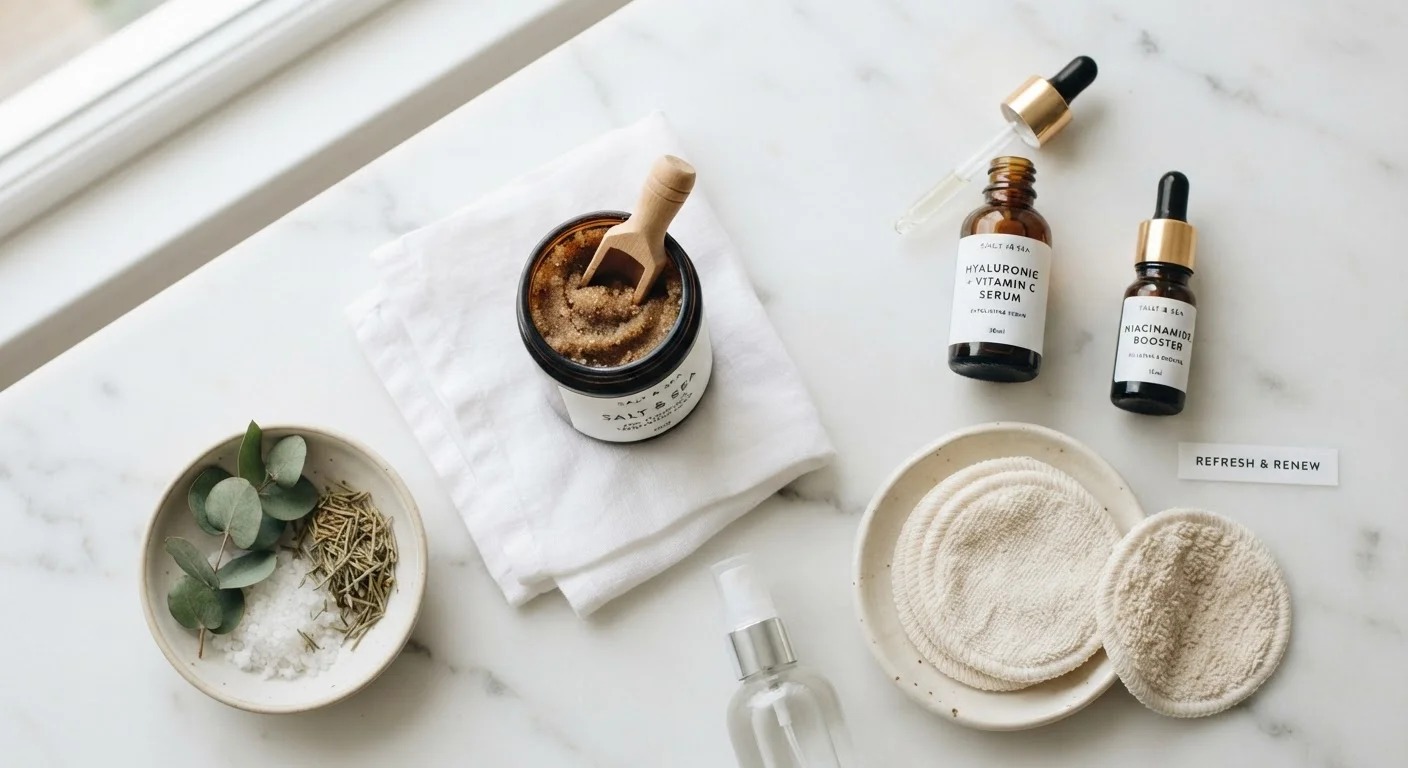
Photo: InDepthReads.com | Streamlining Learning For All editorial
Key Takeaways
- Physical exfoliation uses friction to manually buff away dead skin cells from the surface.
- Chemical exfoliation uses acids or enzymes to dissolve the bonds holding dead cells together.
- Chemical exfoliants generally offer more targeted, even results with less risk of micro-tears.
- Over-exfoliating with either method can damage your skin barrier and cause irritation.
- Your skin type and concerns should guide which method — or combination — works for you.
- Sunscreen is essential after any form of exfoliation, as skin becomes more photosensitive.
How Each Method Actually Works
Both physical and chemical exfoliation share the same end goal — removing the layer of dead skin cells that can make skin look dull, feel rough, or clog pores. But they take completely different routes to get there.
Physical exfoliation is mechanical. It uses friction — whether from a scrub, a cleansing brush, or a textured cloth — to manually slough dead cells off the skin's surface. You can feel it working, which is part of its appeal. The caveat: the force applied matters a lot. Scrubs with harsh, irregular particles can create tiny tears in the skin, particularly if used too vigorously or too often.
Chemical exfoliation works without any scrubbing. Instead, it relies on acids or enzymes that break down the proteins holding dead skin cells together, allowing them to shed naturally. The two main categories are alpha-hydroxy acids (AHAs) — such as glycolic and lactic acid, which work on the skin's surface — and beta-hydroxy acids (BHAs) like salicylic acid, which are oil-soluble and can penetrate into pores. Enzyme exfoliants, often derived from fruit, offer a gentler alternative that's worth exploring if your skin is reactive. For a deeper look at how these ingredients function, this ingredient overview is a helpful starting point.
| Criterion | Physical Exfoliation | Chemical Exfoliation |
|---|---|---|
| How it works | Mechanical friction removes cells | Acids or enzymes dissolve cell bonds |
| Immediate feel | Tactile, scrubbing sensation | No texture; absorbed into skin |
| Best skin types | Normal to oily, non-sensitive | All types, including sensitive and dry |
| Targets pores | Surface only | Yes, especially BHAs |
| Risk of irritation | Higher if overused or too abrasive | Lower with correct concentration |
| Addresses tone/texture | Mildly, at surface level | More effectively, especially AHAs |
| Ease of use | Intuitive, no ingredient knowledge needed | Requires understanding of formulas and frequency |
| Typical frequency | 1–2 times per week | 1–3 times per week, formula-dependent |
Matching the Method to Your Skin
There's no universally superior approach — it really comes down to your skin type, sensitivity level, and what you're hoping to address. If you're unsure of your skin type, this skin type guide can help you figure that out first.
2×
Increased UV sensitivity after exfoliation
Dermatologists broadly note that exfoliation — both physical and chemical — temporarily increases the skin's sensitivity to sun exposure, making daily SPF application more important.
~80%
Of exfoliation-related irritation cases tied to over-use
Skincare educators commonly attribute most exfoliation-induced barrier damage to frequency or application pressure, not the choice of product type itself.
Dry or sensitive skin types generally respond better to chemical exfoliation, particularly enzyme-based or lactic acid formulas, which tend to be gentler than glycolic acid and far gentler than most physical scrubs. Oily and acne-prone skin often benefits from BHAs, which can work inside the pore to clear congestion.
Normal and combination skin types have the most flexibility — a mild physical exfoliant used once or twice a week, or a low-concentration AHA, can work well. Some people do use both methods, alternating on different days, though this requires paying close attention to how your skin responds. More is not better with exfoliation. Overdoing it strips the skin barrier, leading to redness, tightness, and breakouts — the opposite of what you're after.
Whatever method you choose, applying a broad-spectrum SPF the morning after exfoliating is non-negotiable. Both types of exfoliation increase your skin's sensitivity to UV exposure, making sun protection an essential follow-up step. And if you're laying the groundwork for a fuller routine, be sure you're starting clean — thorough makeup removal before exfoliating ensures the treatment actually reaches your skin.
This article is for informational purposes only. If you have a skin condition or significant skin concerns, consult a qualified dermatologist before adding exfoliants to your routine.
The content on this site is for informational purposes only and is not a substitute for professional advice. Always consult a qualified professional for guidance specific to your situation.