
SPF in Skincare: What the Numbers and Labels Actually Mean

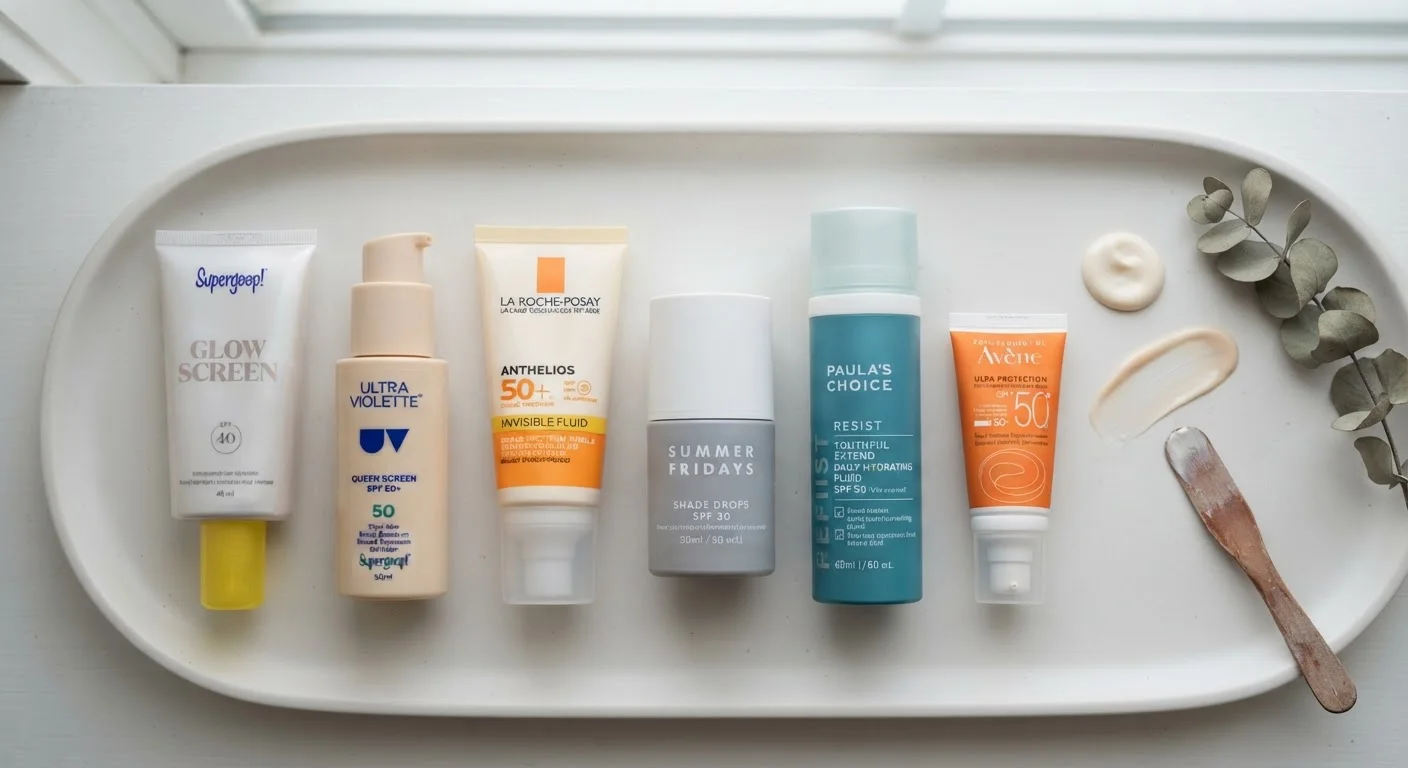
Photo: InDepthReads.com | Streamlining Learning For All editorial
What SPF Actually Measures
SPF stands for Sun Protection Factor, and it measures how well a sunscreen shields skin from UVB rays — the wavelengths primarily responsible for sunburn. Here's the clearest way to understand the numbers: an SPF 30 sunscreen filters out roughly 97% of UVB rays, while SPF 50 filters about 98%. SPF 100 edges closer to 99%. The scale is not linear, and the differences between higher numbers are increasingly small.
What the number does not tell you is how long you can stay in the sun without reapplying. That calculation depends on your skin type, intensity of sunlight, sweating, and whether you're in water — too many variables to put on a label. Dermatologists generally recommend reapplying every two hours regardless of SPF value.
| SPF 30 UVB filtration | ~97% (FDA sunscreen monograph) |
| SPF 50 UVB filtration | ~98% (FDA sunscreen monograph) |
| Recommended reapplication interval | Every 2 hours (American Academy of Dermatology guidance) |
| Minimum SPF recommended for daily use | SPF 30 (American Academy of Dermatology) |
| Broad-spectrum testing required by | U.S. FDA (21 CFR Part 352) |
| PA++++ (highest PA rating) UVA-PF equivalent | 16 or higher (Japanese Cosmetic Industry Association standard) |
Broad-Spectrum, UVA, and the PA+++ System
UVB isn't the only wavelength worth blocking. UVA rays penetrate deeper into the skin and are associated with long-term concerns like premature aging and hyperpigmentation. A sunscreen labeled broad-spectrum has passed FDA testing to confirm it protects against both UVA and UVB wavelengths — this designation is regulated in the United States and is worth looking for on the label.
You may also spot PA+++ ratings on products, especially those made or sold in Asian markets. The PA system (Protection Grade of UVA) uses plus signs — PA+, PA++, PA+++, and PA++++ — to indicate increasing levels of UVA protection. More plus signs mean a higher measured UVA protection factor. While PA ratings aren't required on U.S. labels, they're not uncommon on imported skincare and are a reliable indicator of UVA coverage.
SPF (Sun Protection Factor)
A measure of how effectively a sunscreen blocks UVB rays. SPF 30 filters about 97% of UVB; higher numbers offer marginally more protection but no formula blocks 100%.
Broad-Spectrum
An FDA-regulated label claim indicating a sunscreen protects against both UVA and UVB radiation, verified through standardized testing.
PA Rating
A UVA protection grading system common in Asian markets, expressed as PA+ through PA++++. More plus signs indicate a higher measured UVA protection factor.
Mineral Sunscreen
A sunscreen that uses physical filters — zinc oxide or titanium dioxide — to deflect UV rays from the skin's surface.
Chemical Sunscreen
A sunscreen that uses organic UV-absorbing compounds to convert UV radiation into heat, which is then released from the skin.
Water-Resistant (40/80 min)
An FDA-regulated claim indicating a sunscreen maintains its SPF level for either 40 or 80 minutes during water exposure or sweating.
Water-Resistant, Sport, and Other Label Claims
The FDA regulates what sunscreen labels can and cannot say in the U.S. "Water-resistant" must be followed by a time in parentheses — either 40 minutes or 80 minutes — indicating how long protection holds during swimming or sweating. No sunscreen is permitted to claim it is "waterproof" or "sweatproof," as those terms imply permanent protection that doesn't exist.
Terms like "sport" or "everyday" are largely marketing language and carry no regulated meaning. Similarly, claims like "reef-safe" have no standardized federal definition in the U.S., though some states and municipalities have regulations about certain chemical filters. When in doubt, the ingredient list tells you more than the front-of-pack claims.
If you're working out how sunscreen fits alongside your other products, see our guide to AM vs. PM skincare ingredients — SPF is firmly a morning step.
SPF in Makeup and Moisturizers
Chemical vs. Mineral Filters: What the Ingredient List Tells You
Sunscreen formulas fall into two main categories based on their active ingredients. Mineral sunscreens use zinc oxide, titanium dioxide, or both — they sit on the skin's surface and physically deflect UV rays. Chemical sunscreens use organic compounds like avobenzone, octinoxate, or homosalate that absorb UV energy and convert it to heat.
Neither type is universally superior. Mineral formulas tend to be visible (the classic "white cast"), though newer micronized versions have improved considerably. Chemical filters often feel lighter and more transparent on skin. Some people find mineral filters preferable for sensitive skin, but individual reactions vary. A product may use a blend of both types.
Understanding ingredient labels here mirrors the logic of reading any product label carefully — much like layering your skincare products correctly, knowing what's in your formula helps you use it more effectively.
97%
UVB rays blocked by SPF 30
According to FDA sunscreen testing standards, SPF 30 filters approximately 97% of UVB radiation under controlled conditions.
2 hours
Recommended reapplication interval
The American Academy of Dermatology advises reapplying sunscreen every two hours, and immediately after swimming or heavy sweating.
1%
Additional UVB protection: SPF 30 vs. SPF 50
The difference between SPF 30 (~97%) and SPF 50 (~98%) is roughly one percentage point — useful context when comparing label numbers.
The content on this site is for informational purposes only and is not a substitute for professional advice. Always consult a qualified professional for guidance specific to your situation.