
AM vs. PM Skincare: Which Ingredients Belong in Which Routine

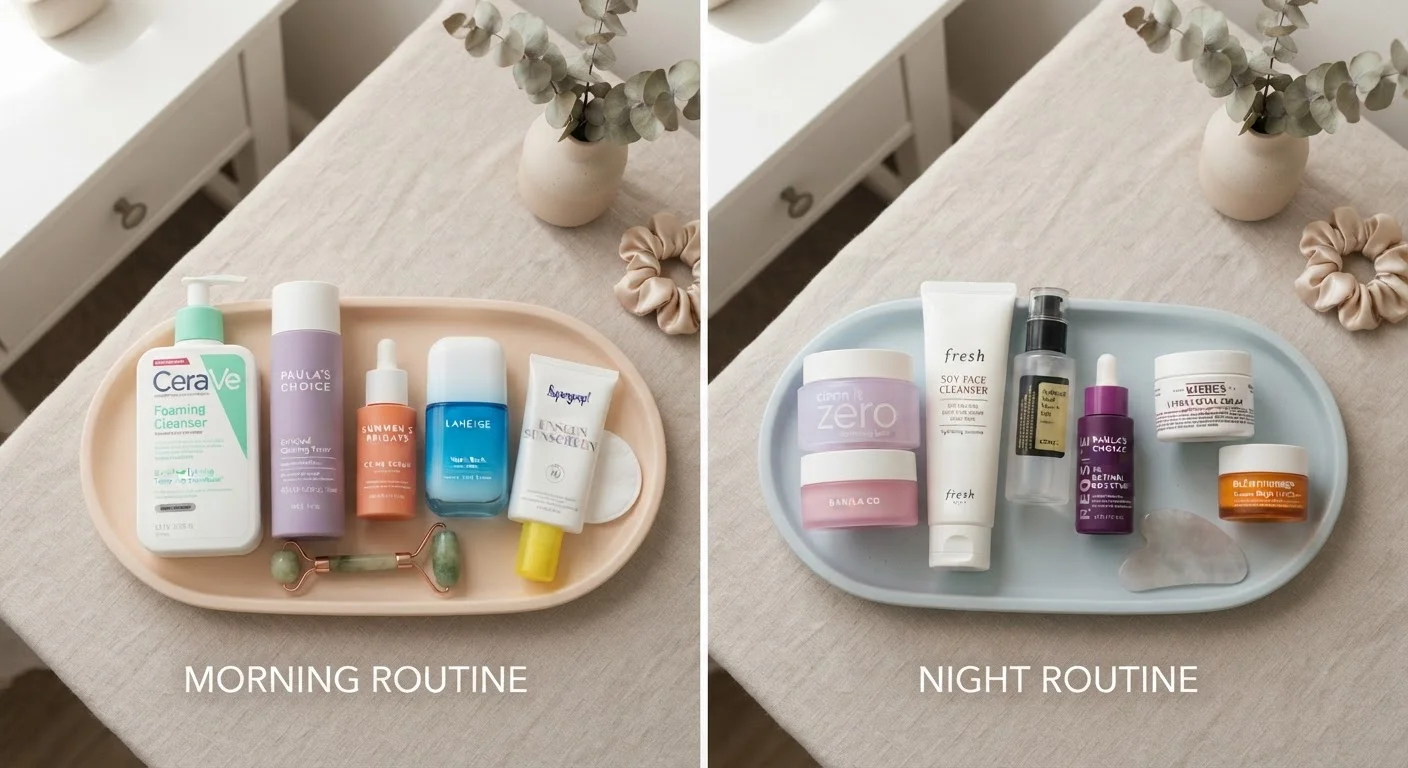
Photo: InDepthReads.com | Streamlining Learning For All editorial
Key Takeaways
- SPF and antioxidants like vitamin C belong in the morning to defend against UV and pollution damage.
- Retinol and exfoliating acids work best at night because sunlight can degrade or irritate them.
- Skin's natural repair cycle peaks during sleep, making nighttime ideal for heavier actives.
- Some ingredients — like hyaluronic acid and moisturizer — are beneficial in both routines.
- Layering order matters as much as timing; use the right sequence to maximize absorption.
Why Ingredient Timing Actually Matters
Your skin isn't static — it shifts between two distinct modes depending on the time of day. In the morning, it's in defense mode, bracing against UV radiation, pollution, and environmental free radicals. At night, it switches to repair mode, ramping up cell turnover and collagen synthesis while you sleep. Understanding this rhythm is the foundation of effective skincare timing.
Certain ingredients are chemically suited to one part of the day. Retinol, for example, degrades when exposed to sunlight and can also make skin more photosensitive — both good reasons to reserve it for evening. Vitamin C, on the other hand, is a powerful antioxidant that partners well with morning SPF to fight oxidative stress from UV rays. If you're newer to building a routine, this beginner's guide is a great place to start before adding actives into the mix.
| Criterion | AM Routine | PM Routine |
|---|---|---|
| Primary goal | Protect from UV and environmental damage | Repair, renew, and restore skin overnight |
| Skin's natural state | Defense mode | Repair and cell-turnover mode |
| Essential actives | Vitamin C, niacinamide, SPF | Retinol, AHAs, BHAs, peptides |
| Moisturizer weight | Lighter, non-pilling formulas | Richer creams or overnight masks |
| SPF required | Yes — always last step | No |
| Exfoliating acids | Not recommended | Ideal timing |
| Retinol/retinoids | Avoid — degrades in sunlight | Preferred time of use |
| Hyaluronic acid | Works well | Works well |
Your AM Routine: Protection is the Priority
Think of your morning routine as putting on armor. The goal isn't transformation — it's preservation. A cleanser (or a simple water rinse if your skin is dry), an antioxidant serum, moisturizer, and broad-spectrum SPF are the core players here.
Vitamin C is the morning MVP. Applied under SPF, it helps neutralize free radicals that sunscreen alone doesn't fully block. Niacinamide is another daytime-friendly ingredient — it helps regulate oil production, support the skin barrier, and can be layered under almost anything. Hyaluronic acid also fits comfortably in both routines, drawing moisture into skin for a plump, hydrated look throughout the day.
What belongs firmly off the morning menu: retinol, retinoids, AHAs, and BHAs. These actives increase photosensitivity and can break down in UV light, reducing their effectiveness and raising your risk of irritation. Learn more about how these common actives work before committing to a routine built around them.
90%+
Of skin aging attributed to UV exposure
Research published in dermatology literature consistently identifies UV radiation as the dominant external cause of premature skin aging, reinforcing the case for daily SPF.
~23:00
Peak hour of skin cell turnover
Studies on circadian skin biology suggest cell mitosis — the process of new skin cell production — tends to peak in the late evening and overnight hours.
2–3×
Increased photosensitivity with AHA use
The FDA has noted that certain AHAs can increase sun sensitivity, making evening application and consistent morning SPF use especially important for users of these exfoliants.
Your PM Routine: Repair, Renew, Restore
Nighttime is when you bring in the heavy hitters. Skin cell turnover naturally increases during sleep, which means active ingredients have a more receptive environment to do their work. This is the window for ingredients that are either too photosensitive for daytime use or simply too rich for wearing under makeup.
Retinol (and its prescription-strength cousins, retinoids) is the gold standard of evening actives. It supports collagen production and speeds up cell renewal, but it breaks down in sunlight and increases UV sensitivity — making PM use non-negotiable. Start slowly if you're new to it; a few nights a week is typically recommended before building to nightly use.
Alpha hydroxy acids (AHAs) like glycolic and lactic acid and beta hydroxy acids (BHAs) like salicylic acid are chemical exfoliants best reserved for evening as well. They remove dead skin cells and can cause photosensitivity. Peptides and richer occlusives or facial oils also shine at night, supporting the skin barrier while you sleep without any of the daytime pilling concerns.
Once you've locked in your ingredient timing, layering them in the right order ensures each step can actually absorb properly rather than sitting on top of the next.
The Ingredients That Work Any Time — and How to Audit What You Have
Not every ingredient is time-sensitive. Hyaluronic acid, ceramides, and a gentle moisturizer are genuinely useful morning or night. If you use a hydrating toner or essence, it can slot in wherever it fits your schedule. The flexibility of these workhorse ingredients makes them easy anchors for both routines.
One common mistake? Doubling up on potent actives you've heard are great without considering timing conflicts. Retinol and vitamin C, for instance, work better when separated into their respective routines rather than layered together. Similarly, using an AHA in the morning without SPF follow-up is a setup for sensitivity. If you're unsure whether your current lineup is working for or against you, a routine audit can help you identify gaps and conflicts.
And while you're thinking about your morning routine, it's worth understanding what SPF labels actually mean — because SPF 30 and SPF 50 behave differently, and the right knowledge makes your morning protection genuinely count.
New to Retinol? Start Slowly
This article is for general informational purposes only and does not constitute medical or dermatological advice. Consult a licensed dermatologist for personalized skin health guidance.
The content on this site is for informational purposes only and is not a substitute for professional advice. Always consult a qualified professional for guidance specific to your situation.