
A No-Overwhelm Introduction to Skincare for Complete Beginners

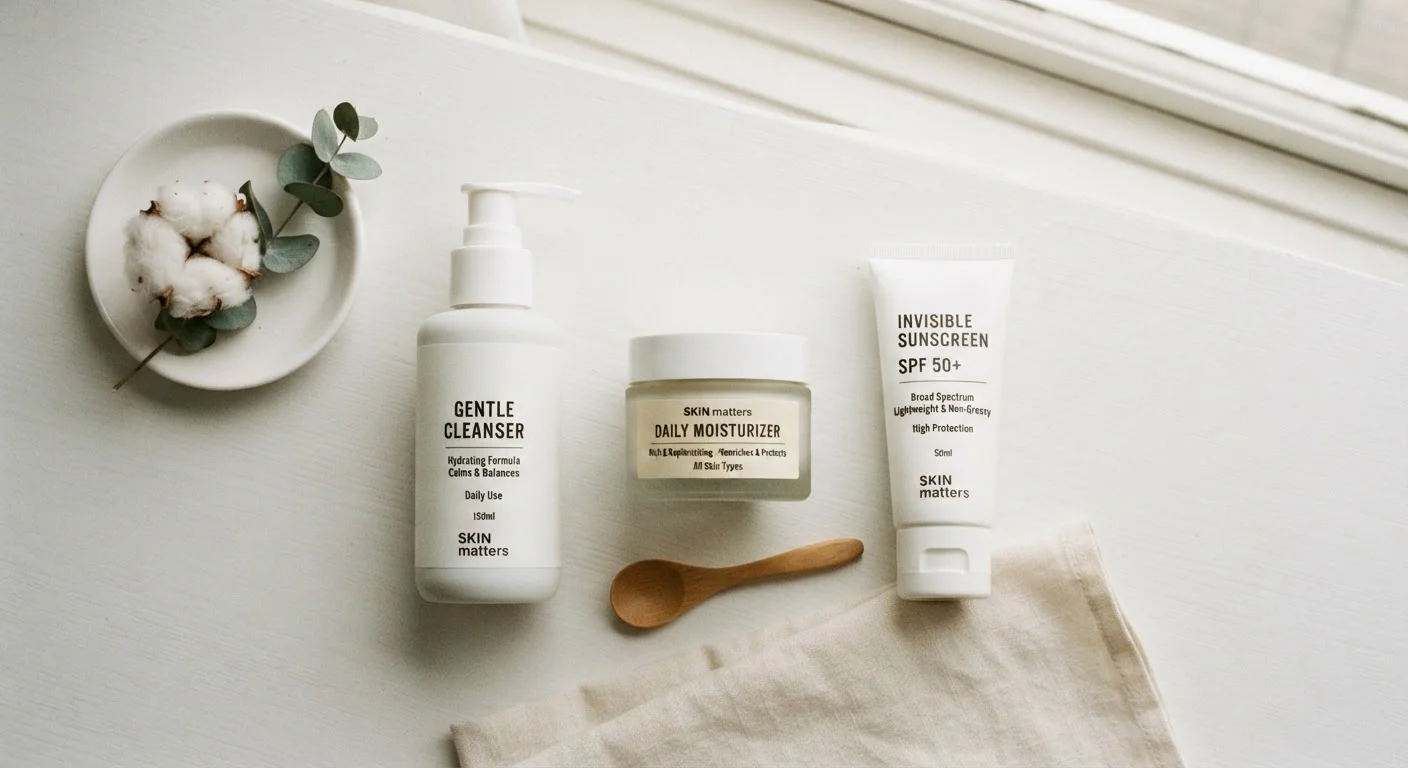
Photo: InDepthReads.com | Streamlining Learning For All editorial
Key Takeaways
- A three-step routine — cleanse, moisturize, protect — covers the fundamentals for most beginners.
- Consistency over several weeks matters more than which specific products you choose.
- Knowing your basic skin type helps you select formulas that won't cause dryness or breakouts.
- Introducing too many new products at once makes it harder to tell what's working.
- Daily SPF use is the single most evidence-supported skincare habit for long-term skin health.
Why Skincare Feels Overwhelming (And Why It Doesn't Have to Be)
Walk down any beauty aisle and you'll find serums, essences, exfoliants, toners, eye creams, and treatments promising everything from brightening to anti-aging — often with ingredient names that sound like a chemistry exam. No wonder skincare feels intimidating for first-timers.
Here's the reassuring truth: the science-backed basics are actually quite simple. Most dermatologists agree that a short, consistent routine delivers real results. You don't need twelve products or a hefty budget — you need three things done reliably. The complexity you see in the beauty industry largely reflects consumer demand for variety, not medical necessity.
This guide skips the noise and focuses on exactly what you need to start, without overwhelming you in the process. If you're curious about what's behind popular ingredient names like hyaluronic acid or niacinamide, our ingredient primer breaks them down in plain language — but save that for after you've nailed the basics.
Skin barrier
The outermost layer of skin that acts as a protective seal, keeping moisture in and irritants out. A healthy barrier is the goal of most basic skincare steps.
Broad-spectrum SPF
A sunscreen that protects against both UVA and UVB rays. 'Broad-spectrum' on the label means it addresses both types of UV exposure.
Exfoliant
A product that helps remove dead skin cells from the surface. Chemical exfoliants use acids (like AHAs or BHAs), while physical exfoliants use gentle abrasion.
Sebum
The natural oil your skin produces to lubricate and protect itself. Too much can cause an oily appearance; too little can lead to dryness.
Patch test
Applying a small amount of a new product to a discrete area of skin and waiting 24–48 hours to check for irritation before using it more broadly.
The Three-Step Starter Routine
Every sustainable skincare routine, no matter how elaborate it eventually becomes, is built on three pillars.
Step 1: Cleanse
A gentle cleanser removes dirt, excess oil, and environmental residue without stripping your skin's natural moisture barrier. Look for a formula described as gentle or mild, and avoid anything that leaves your skin feeling tight or squeaky-clean — that's a sign it's over-cleansing. If you wear makeup, thorough removal is its own important step; our article on proper makeup removal explains why half-measures fall short.
Step 2: Moisturize
Moisturizer helps your skin retain water and maintains the protective barrier that keeps irritants out. Even oily skin benefits from hydration — the goal is a lightweight formula appropriate to your skin type, not skipping the step entirely.
Step 3: Protect (SPF)
Daily broad-spectrum sunscreen is the most evidence-supported skincare habit available. UV exposure is a leading contributor to visible aging and uneven skin tone over time. Apply it every morning as the final step before you head out the door.
Apply sunscreen as your very last step
Understanding Your Skin Type
Products are formulated for different skin types, and choosing roughly the right one makes your routine more comfortable and effective from day one. The five common categories are:
- Normal: Generally balanced — not too oily, not too dry, with few sensitivities.
- Oily: Excess sebum production, often with visible shine and enlarged pores.
- Dry: Skin that feels tight, rough, or flaky, especially after cleansing.
- Combination: Oily in some areas (typically the T-zone — forehead, nose, chin) and drier in others.
- Sensitive: Prone to redness, irritation, or reactions to new products or fragrances.
A simple way to assess your type: wash your face with a gentle cleanser, pat dry, and wait 30 minutes without applying anything. How your skin looks and feels at that point is a reasonable indicator. Keep in mind that skin type can shift with seasons, age, hormones, and lifestyle — so think of it as a starting point, not a permanent label.
Common Beginner Mistakes to Sidestep
Starting a skincare routine is exciting, but a few common missteps can slow your progress or cause unnecessary irritation.
Introducing too much at once
Adding five new products in a week makes it impossible to identify what's helping — or what's causing a reaction. Stick to your three-step base for at least four weeks before considering additions.
Skipping patch tests
Apply a small amount of any new product to your inner arm or jaw area and wait 24–48 hours before using it on your full face. This is especially important for exfoliants and active treatments.
Over-exfoliating
Exfoliation removes dead skin cells and can improve texture, but using it too frequently damages your skin barrier. Beginners don't need to exfoliate at all in the first few weeks — build the basics first.
Expecting instant results
Skin has a natural renewal cycle of roughly four to six weeks. Give any new routine at least that long before evaluating whether it's working. Switching products too quickly is one of the most common reasons routines fail.
Curious about other widespread misconceptions? Our piece on skincare myths separates fact from popular fiction.
New breakouts don't always mean a product is wrong
When to Consider Adding More Steps
Once your three-step routine feels comfortable and consistent — usually after six to eight weeks — you can thoughtfully layer in additional steps if you have specific concerns like uneven tone, texture, or dryness.
Common additions include:
- A targeted serum addressing a specific concern (hydration, brightness, or texture)
- An exfoliant used one to two times per week, not daily
- A dedicated eye cream if that area needs extra attention
The key word is thoughtfully — add one new step at a time, give it several weeks, then assess. If you're wondering whether more steps actually deliver better results, our exploration of minimalist vs. multi-step routines offers a grounded look at what the evidence suggests.
And when you're ready to evaluate what's working in your growing routine, the routine audit checklist is a practical next step.
American Academy of Dermatology — Skin Care Basics
The AAD offers free, evidence-based guidance on building a daily routine, understanding skin types, and choosing appropriate products — without product endorsements.
Skincare Routine Audit Checklist
Once you've built a routine, use a structured review to spot gaps, conflicts, or expired products that may be working against you.
This article is for general informational and educational purposes only. It is not a substitute for professional medical or dermatological advice. If you have a skin condition, persistent irritation, or concerns about your skin health, consult a qualified healthcare provider or board-certified dermatologist.
Frequently Asked Questions
The content on this site is for informational purposes only and is not a substitute for professional advice. Always consult a qualified professional for guidance specific to your situation.