
Minimalist Skincare vs. Multi-Step Routines: What the Evidence Suggests

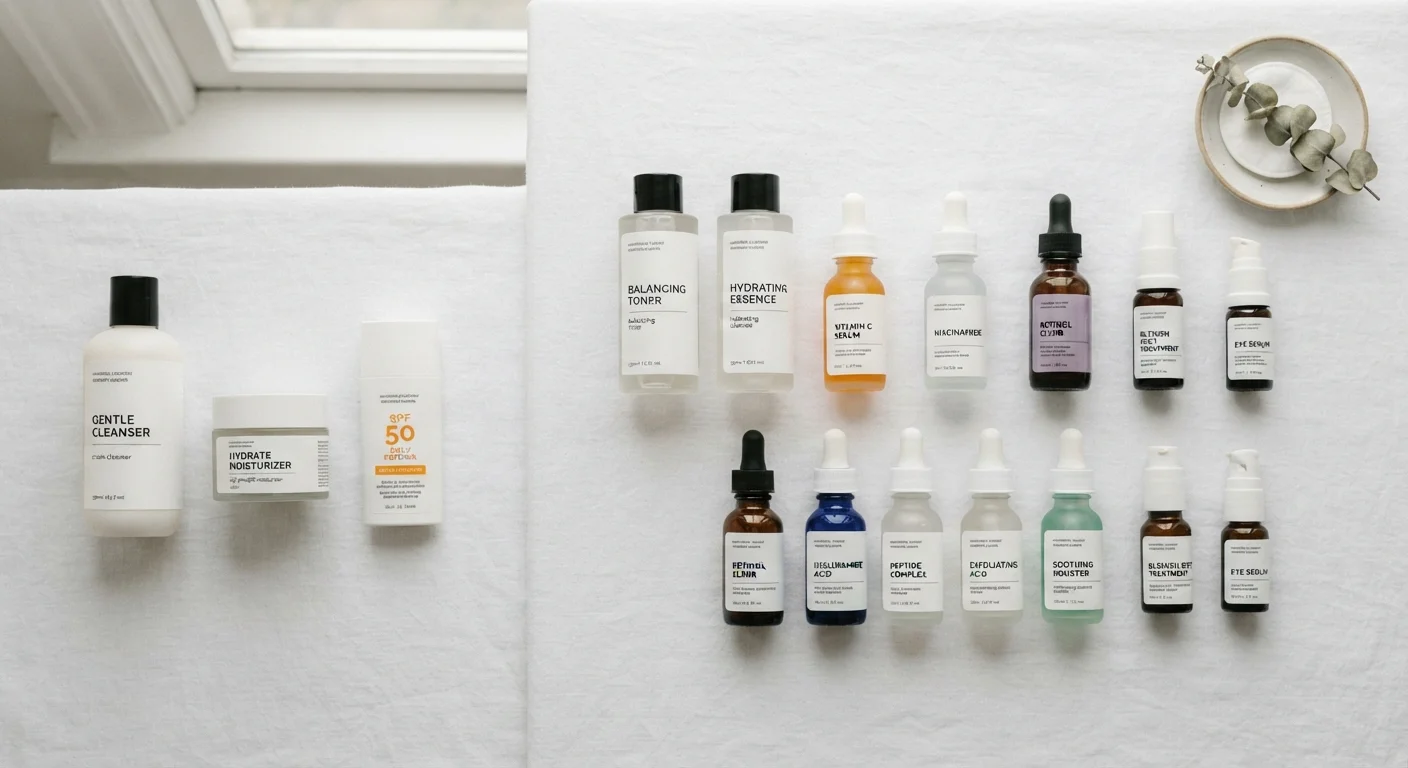
Photo: InDepthReads.com | Streamlining Learning For All editorial
Key Takeaways
- A consistent three-step routine — cleanse, moisturize, SPF — covers the evidence-backed fundamentals for most skin types.
- Multi-step routines can offer targeted benefits but also raise the risk of irritation and ingredient conflicts.
- More products mean more variables, making it harder to identify what is or isn't working for your skin.
- Skin barrier health is a central concern in both approaches; over-exfoliating and layering actives are common pitfalls.
- Sustainability and consistency matter more than routine length — the best routine is one you'll actually stick to.
What We Actually Mean by Minimalist vs. Multi-Step
A minimalist skincare routine typically means three to four products: a gentle cleanser, a moisturizer suited to your skin type, and a broad-spectrum sunscreen for daytime. Some people add a single active ingredient — a retinoid at night, for example — and call it done.
A multi-step routine (sometimes called a layered routine) builds on that core with additional products: micellar water or oil cleansers, toners, essences, multiple serums, eye creams, face oils, and specialty masks. Korean beauty popularized the concept of 10-step routines, bringing the idea mainstream. The logic is that each layer addresses a different skin concern more precisely.
Neither is inherently right or wrong — the question is what the evidence actually supports for everyday skin health, and whether added complexity delivers measurable payoff. If you want a plain-language starting point, this beginner-friendly guide walks through the foundational three steps.
The Case for Keeping It Simple
Dermatological guidance consistently emphasizes that a handful of well-chosen products can maintain a healthy skin barrier and address the most universal concerns — hydration, protection from UV damage, and gentle cleansing. Sun exposure is a leading driver of premature skin aging, and a consistent SPF habit alone is one of the most evidence-supported steps anyone can take.
Minimalism also reduces the risk of ingredient conflicts. Combining certain actives — like retinoids and AHAs, or vitamin C and niacinamide at high concentrations — can cause irritation or reduce efficacy. The fewer products you're working with, the easier it is to pinpoint what's helping or causing a reaction. This matters especially for people with sensitive or reactive skin.
Start Simple, Then Add Deliberately
There's also a practical dimension: a routine you can realistically do twice a day will outperform an elaborate one you skip half the time. Sustainable self-care habits tend to be simple ones.
Where Multi-Step Routines Can Add Real Value
A longer routine isn't automatically better, but it isn't without merit either. When constructed thoughtfully, a multi-step approach lets you layer targeted ingredients for specific concerns — think a niacinamide serum for uneven tone, followed by a hydrating moisturizer, followed by SPF. Each step can play a distinct role.
Research does support the efficacy of individual ingredients like retinoids for cell turnover, hyaluronic acid for surface hydration, and certain antioxidants for environmental protection. The potential benefit comes from combining these purposefully, not from adding volume for its own sake. Understanding what each ingredient is meant to do is essential — this ingredient primer breaks down the most common ones.
| Minimalist Routine | Multi-Step Routine | |
|---|---|---|
| Typical number of products | 3–4 products | 6–10+ products |
| Risk of irritation or conflict | Lower | Higher if actives overlap |
| Ease of identifying problem products | Straightforward | More difficult |
| Ability to target specific concerns | Limited | Greater potential |
| Time commitment | Low (2–5 minutes) | Medium to high (10–20+ minutes) |
| Best for skin barrier health | Generally safer | Depends on ingredient choices |
| Consistency over time | Easier to maintain | Harder to sustain long-term |
Multi-step routines also suit people who genuinely enjoy the ritual aspect of skincare. There's value in a calming evening practice that signals wind-down time — something that intersects neatly with building a pre-sleep routine. Just be cautious that enjoyment of the process doesn't drift into accumulating products that actively conflict with each other.
The Variables That Actually Determine Routine Length
The honest answer is that ideal routine length is personal. Several factors genuinely influence which approach fits better:
- Skin type and sensitivity: Oily or combination skin may tolerate more active ingredients; dry or sensitized skin often does better with fewer, gentler products.
- Specific concerns: Acne, hyperpigmentation, or signs of aging may warrant targeted actives that a bare-bones routine doesn't cover.
- Time and lifestyle: A routine that fits your mornings is infinitely more valuable than a perfect one gathering dust.
- Skin barrier status: An impaired barrier — indicated by redness, tightness, or flaking — generally calls for stripping back, not piling on.
If you've been using multiple products and aren't sure what's working, a routine audit can help you evaluate each step honestly. And regardless of how many products you use, applying them in the right order makes a real difference in how well they absorb.
This article is for general informational and educational purposes only. It is not a substitute for personalized advice from a licensed dermatologist or healthcare professional. If you have a skin condition or concern, consult a qualified provider.
The content on this site is for informational purposes only and is not a substitute for professional advice. Always consult a qualified professional for guidance specific to your situation.