
Skincare Myths That Dermatologists Hear Most Often

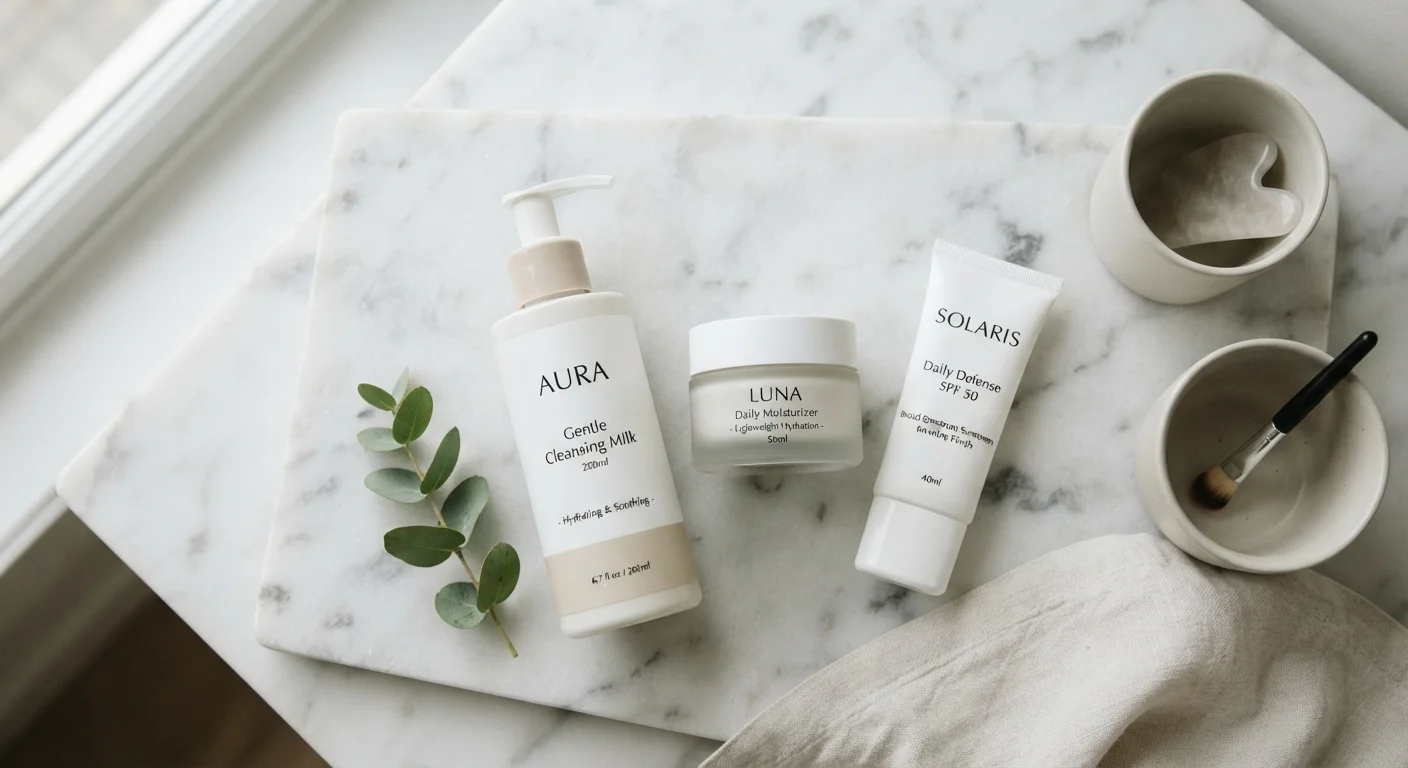
Photo: InDepthReads.com | Streamlining Learning For All editorial
Key Takeaways
- Pores do not physically open or close — steam only softens debris temporarily.
- 'Natural' ingredients are not automatically safe or gentle for all skin types.
- Sunscreen is necessary every day, not just when it's sunny or you're outdoors.
- More expensive products do not automatically outperform affordable alternatives.
- Oily skin still needs moisturizer — skipping it can worsen oil production.
Why Skincare Myths Are So Sticky
Skincare advice travels fast — through social media, word of mouth, and decades-old beauty folklore passed down like family recipes. Some of it is genuinely useful. A surprising amount of it, however, is either oversimplified or flatly wrong. The tricky part? Many myths contain just enough truth to sound credible.
Dermatologists report fielding the same misconceptions over and over in their practices. Understanding where these ideas come from — and why the science tells a different story — can save you time, money, and skin irritation. Whether you're building your first routine or refining one you've had for years, cutting through the noise is the single best upgrade you can make. Check out our beginner's guide to skincare if you're just getting started.
Myth
Steam opens your pores so you can 'deep clean' them.
Fact
Pores don't have muscles and cannot open or close. Steam may temporarily soften the material inside pores, making manual extraction slightly easier, but it does not change pore size.
The idea that pores behave like doors — swinging open with heat and slamming shut with cold — is one of the most persistent myths in beauty. Pore size is largely determined by genetics and skin type. What steam can do is warm the skin and loosen sebum or debris, which may make cleansing feel more effective. But the notion of "open" versus "closed" pores is not anatomically accurate, and cold water or ice won't shrink them either.
Myth
Natural or organic ingredients are always safer than synthetic ones.
Fact
Many natural ingredients are potent allergens or irritants. 'Natural' is a marketing descriptor, not a safety certification.
Poison ivy is natural. So is latex — a known allergen for many people. The source of an ingredient (plant-based vs. lab-synthesized) says nothing about how your skin will respond to it. Some of the most effective and well-tolerated skincare ingredients, like niacinamide and certain peptides, are synthesized. Meanwhile, essential oils, citrus extracts, and fragrant botanicals are among the most common causes of contact dermatitis. Reading ingredient lists critically matters far more than whether a label says 'natural.'
Myth
You only need sunscreen on sunny days or when you're spending time outside.
Fact
UVA rays penetrate clouds and glass year-round. Daily broad-spectrum SPF is recommended by dermatologists regardless of weather or plans.
UVA radiation — the type most associated with premature aging and skin damage — is present at relatively consistent levels throughout the year and passes through window glass. Overcast skies block very little UV radiation. The American Academy of Dermatology recommends daily application of a broad-spectrum SPF 30 or higher as one of the most impactful things you can do for long-term skin health. This holds true for all skin tones; the myth that darker skin doesn't need sun protection is also unsupported by evidence.
Myth
If your skin is oily, you should skip moisturizer to avoid making it worse.
Fact
Skipping moisturizer can prompt the skin to produce more oil to compensate for dehydration. Oily skin still needs hydration.
Oil and hydration are not the same thing. Your skin produces sebum (oil) from sebaceous glands, but it can still be dehydrated — lacking water content in the skin's outer layer. When the skin's moisture barrier is compromised, it may signal the sebaceous glands to ramp up oil production. Lightweight, non-comedogenic (meaning it won't clog pores) moisturizers are formulated specifically for oily or acne-prone skin and can actually help balance the skin's behavior over time.
Myth
More expensive skincare products work better than drugstore options.
Fact
Price does not reliably predict efficacy. Many drugstore formulas contain the same active ingredients as luxury counterparts at a fraction of the cost.
Cosmetic pricing reflects many factors beyond the formula itself: packaging, branding, marketing spend, and retail positioning. Dermatologists frequently point out that key actives — retinoids, hyaluronic acid, ceramides, azelaic acid — are available in effective concentrations across a wide range of price points. What matters most is the concentration and stability of the active ingredient, not the price tag. That said, some prescription-strength formulations are only available through a healthcare provider and genuinely do differ from over-the-counter versions.
What This Means for Your Everyday Routine
Correcting these myths isn't about overhauling everything at once — it's about building confidence in the choices you're already making. A routine that's grounded in how skin actually works tends to be simpler, not more complicated.
90%
Of visible skin aging attributed to UV exposure
According to the Skin Cancer Foundation, approximately 90% of visible skin changes commonly attributed to aging are caused by the sun.
~10%
Of people experience fragrance contact allergy
Research published in dermatology literature estimates fragrance allergy affects roughly 1 in 10 people, making it one of the most common causes of allergic contact dermatitis.
One of the most practical shifts you can make is trusting the order in which you apply products. The sequence matters more than the number of products you use. Our guide on layering skincare products in the right order walks through the logic clearly. And if you've ever wondered whether a 10-step routine is actually better than three well-chosen products, the evidence on minimalist vs. multi-step routines might surprise you.
Don't Let Myths Replace Professional Guidance
Finally, cleansing is one area where myths do real damage. Skipping proper makeup removal — or relying on a single pass with a wipe — leaves residue that accumulates over time. Our piece on makeup removal done right covers what thorough cleansing actually looks like.
This article is for general informational purposes only and does not constitute medical or dermatological advice. Consult a board-certified dermatologist for concerns about your specific skin health.
The content on this site is for informational purposes only and is not a substitute for professional advice. Always consult a qualified professional for guidance specific to your situation.