
Building a Curly Hair Routine When You're Starting From Scratch

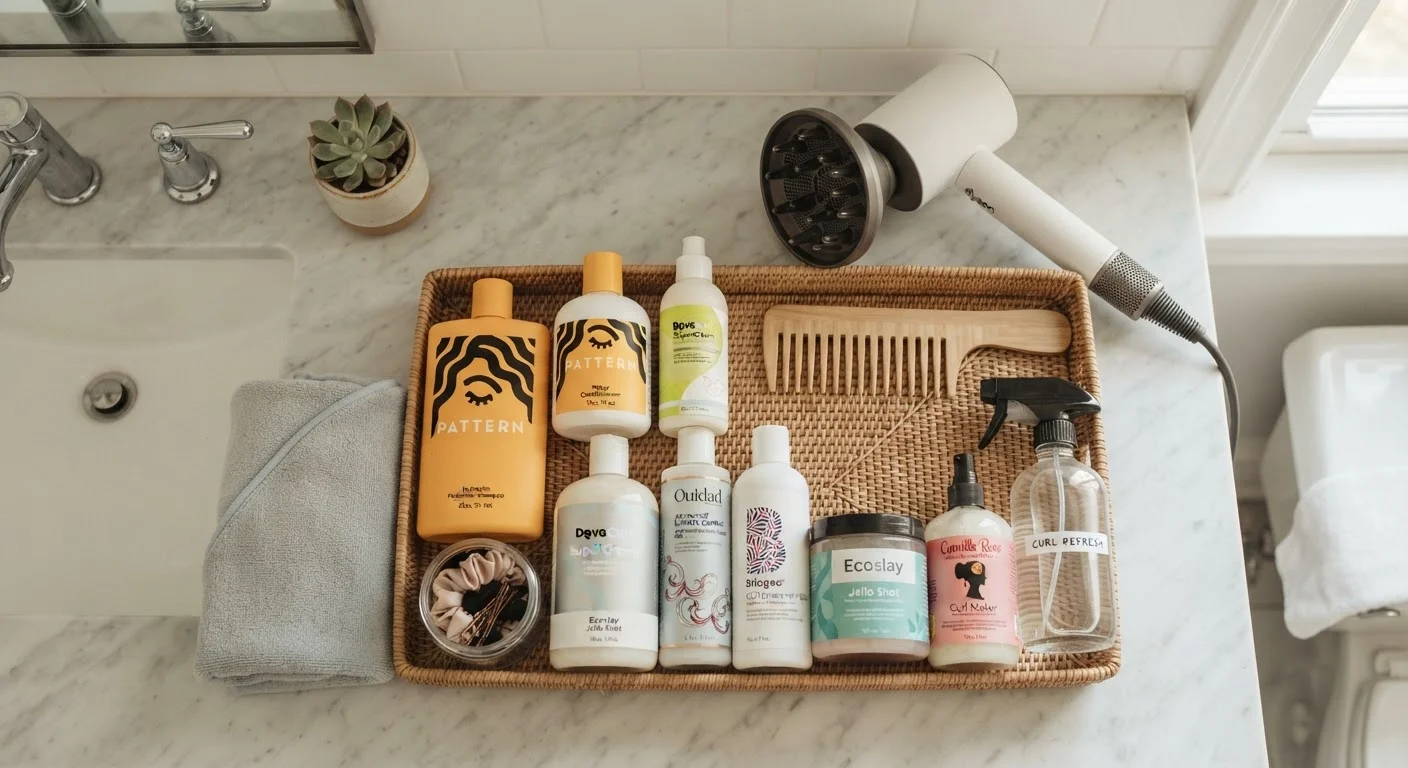
Photo: InDepthReads.com | Streamlining Learning For All editorial
Key Takeaways
- Knowing your curl pattern helps you choose products and techniques that actually work for your hair.
- A simple three-step wash routine — cleanse, condition, style — is enough to start building from.
- Moisture retention is the foundation of healthy curls at every curl type.
- Consistent habits like protective sleeping and gentle detangling matter as much as products do.
- Troubleshooting takes patience — give any new routine at least four to six weeks before evaluating results.
Understanding Your Curl Type
Before buying a single product, it helps to spend a wash day simply observing your hair. Curl patterns are commonly described using a numbered system — Type 2 for wavy, Type 3 for curly, Type 4 for coily — with letter subcategories (a, b, c) indicating tightness. But curl type is just one piece of the puzzle.
Porosity matters just as much. Low porosity hair has tightly sealed cuticles that resist moisture uptake; high porosity hair absorbs moisture easily but loses it just as fast. You can get a rough sense of yours by dropping a clean strand into water — if it sinks quickly, it's likely high porosity; if it floats for a long time, it's likely low porosity.
Understanding these two factors — pattern and porosity — gives you a starting framework for choosing products and techniques, rather than relying on trial and error alone.
Curl porosity
How easily your hair absorbs and retains moisture. Low porosity resists water; high porosity absorbs quickly but also loses moisture fast.
Co-wash
Short for conditioner wash — using a lightweight cleansing conditioner instead of traditional shampoo to clean hair without stripping oils.
Diffuser
A bowl-shaped attachment for a hair dryer that disperses airflow to dry curls without disrupting their shape or causing frizz.
Cast
The crunchy coating some gels form around curls as they dry, which locks in definition. You scrunch it out gently once hair is fully dry for soft, defined curls.
Clarifying shampoo
A stronger cleanser used occasionally to remove product buildup that regular co-washes and low-poo shampoos leave behind.
Leave-in conditioner
A lightweight conditioner applied to wet hair after rinsing that stays in without being washed out, helping to maintain moisture throughout the day.
The Core Steps of a Curly Hair Routine
A beginner's curly hair routine really only needs three steps: cleanse, condition, and style. Everything else builds on that foundation.
- Cleanse: Use a sulfate-free or low-lather cleanser (often called a co-wash or low-poo) to clean the scalp without stripping natural oils. Reserve stronger clarifying shampoos for occasional use when buildup accumulates. See our guide on when and how to clarify your hair for more on that step.
- Condition: Apply a generous amount of rinse-out conditioner, detangle with a wide-tooth comb or fingers starting from the ends, and let it sit for a few minutes before rinsing. Follow with a leave-in conditioner while hair is still soaking wet.
- Style: Apply a curl cream, gel, or both to define and hold your curl pattern. Scrunch upward toward the scalp and either air dry or use a diffuser attachment on low heat.
Consistency with these three steps — not the number of products — is what creates noticeable improvement over time.
Apply Products to Soaking-Wet Hair
Choosing the Right Product Categories
You don't need ten products — you need the right categories. Here's a practical breakdown:
- Cleanser: Look for sulfate-free formulas for regular wash days. They clean without over-drying.
- Rinse-out conditioner: The workhorse of any curly routine. Use it generously every wash day.
- Leave-in conditioner: Applied after rinsing, this keeps moisture in your strands as they dry.
- Styler: Curl creams add softness and definition; gels add hold and frizz control. Many people use a layered combination of both.
For a deeper look at how oils, butters, and creams work differently as moisturizers, check out our article on when to use oils, butters, and creams in a hair routine. Getting familiar with product formats helps you make smarter choices without overspending.
Curl Pattern + Porosity Reference Guide
A visual and descriptive breakdown of curl types and porosity levels to help you identify your hair's characteristics before choosing products.
Wash Day Tracker Template
Log what products you used, how much, and how your curls responded — helpful for spotting patterns and dialing in your routine faster.
CurlTalk Community Forum
A long-running online community where people with all curl types share routines, product observations, and troubleshooting advice in a supportive space.
Habits That Make or Break Your Routine
Products only do so much. These everyday habits have an outsized effect on curl health:
- Sleep on silk or satin: Cotton pillowcases create friction that disrupts curl pattern and causes frizz and breakage overnight. A satin pillowcase or bonnet is a simple, affordable fix.
- Refresh between wash days: A spray bottle with water and a small amount of leave-in conditioner can revive second- or third-day curls without a full wash.
- Detangle gently: Always detangle on wet, conditioned hair — never dry. Work from the ends up toward the roots to avoid unnecessary breakage.
- Handle wet hair carefully: Curly hair is most fragile when wet. Avoid rough towel drying; opt for a microfiber towel or a cotton t-shirt to gently scrunch out excess water.
If building consistent beauty habits feels overwhelming, the same patient, step-by-step approach applies whether you're tackling curls or starting a beginner skincare routine — start small, build from what works.
Troubleshooting Common Curl Struggles
Even a solid routine will hit bumps. Here's what common curl problems often signal:
- Frizz
- Usually a sign of insufficient moisture or not enough product applied to soaking-wet hair. Try applying leave-in conditioner while hair is dripping and seal with a styler immediately after.
- Limp, weighed-down curls
- Often caused by too much product, particularly heavy creams or oils on fine or low-porosity hair. Try using lighter formulas or reducing the amount you apply.
- Product buildup
- If curls stop responding to products that used to work, buildup is likely the culprit. A periodic clarifying wash resets the slate — aim for once or twice a month depending on how much product you use.
- Inconsistent curl pattern
- Multiple curl patterns on one head are completely normal. Different sections may need slightly different amounts of product or technique. Treat each section based on what it needs rather than applying everything uniformly.
Give any adjustment at least two or three wash days before deciding it doesn't work. Curly hair routines reward patience and observation more than any single product or technique.
This article is for general informational and educational purposes only. Results from any hair care routine vary by individual hair type, texture, and condition.
Don't Judge a Routine Too Quickly
Frequently Asked Questions
The content on this site is for informational purposes only and is not a substitute for professional advice. Always consult a qualified professional for guidance specific to your situation.