
Auto Essentials

Buying a Used Car from a Private Seller: A Preparation Checklist

Buying a Used Car from a Private Seller: A Preparation Checklist

Photo: InDepthReads.com | Streamlining Learning For All editorial

Private-party sales move fast. Use this checklist to evaluate condition, verify history, and avoid overlooking key steps.

Key Takeaways

  • Run a vehicle history report using the VIN before you ever meet the seller in person.
  • A pre-purchase inspection by an independent mechanic is the single most valuable step you can take.
  • Verify the seller's name matches the title exactly before signing anything or transferring money.
  • Private-party sales are typically sold as-is — there is no dealer warranty to fall back on.
  • Bring a checklist to the inspection so nothing important gets forgotten in the moment.

Why Private-Party Purchases Require Extra Diligence

Buying a used car directly from its owner can save you money compared with a dealership purchase, but it also removes several layers of protection that dealers typically provide — title verification, lot inspections, and at least some implied accountability. Private sellers are under no obligation to disclose every issue, and once cash changes hands, recourse is limited.

If you're still weighing whether a used vehicle is right for you at all, our guide to the new vs. used decision covers the key trade-offs, from depreciation curves to financing differences. Once you've committed to the used-car path, the checklist below walks you through every stage — from your first look at the listing to the moment you hand over payment.

Private Sales Are Almost Always As-Is

Private sales are almost always as-is transactions. If a mechanical problem emerges after you drive away, the seller generally has no legal obligation to cover repairs. This makes pre-purchase verification — especially an independent mechanical inspection — essential, not optional.

Private sales are almost always as-is transactions. If a mechanical problem emerges after you drive away, the seller generally has no legal obligation to cover repairs. This makes pre-purchase verification — especially an independent mechanical inspection — essential, not optional.

Tools You'll Need Before You Show Up

Arriving prepared separates buyers who get taken advantage of from those who walk away confident. Gather these resources before you schedule a viewing.

Required

Vehicle History Report Service

Reveals accident records, title status, number of previous owners, and odometer history using the vehicle's VIN.

Required

NHTSA Recall Lookup (nhtsa.gov)

Free government tool to check whether any open safety recalls apply to the specific vehicle you're considering.

Required

Independent Mechanic

Performs a pre-purchase inspection to identify mechanical issues not visible to the untrained eye.

Required

Market Valuation Reference

Provides market value estimates based on the vehicle's year, make, model, mileage, and condition so you can evaluate the asking price.

Required

State DMV Transfer Forms

Provides the required bill of sale, odometer disclosure, and title transfer paperwork specific to your state.

Optional

Flashlight

Useful for inspecting the undercarriage, engine bay corners, and interior areas that are difficult to see in ambient light.

The Full Preparation Checklist

Work through each group in order. Complete the research steps before you visit, the physical checks during your appointment, and the paperwork steps before any money moves.

Before You Contact the Seller

Locate the VIN in the listing and run a vehicle history report through a reputable lookup service to check for accidents, title issues, and odometer discrepancies. Must
Verify the asking price against market data sources to understand whether the listed price is within a reasonable range for the year, mileage, and condition described. Must
Search the VIN or license plate against your state's DMV database to confirm the title is clean and not marked salvage, rebuilt, or flood-damaged. Must
Check whether any open recalls exist for the vehicle using the NHTSA's free recall lookup tool at nhtsa.gov. Should
Confirm the seller's contact details are consistent across the listing — mismatched names, multiple phone numbers, or vague location information are early red flags. Should

Physical Inspection — Exterior

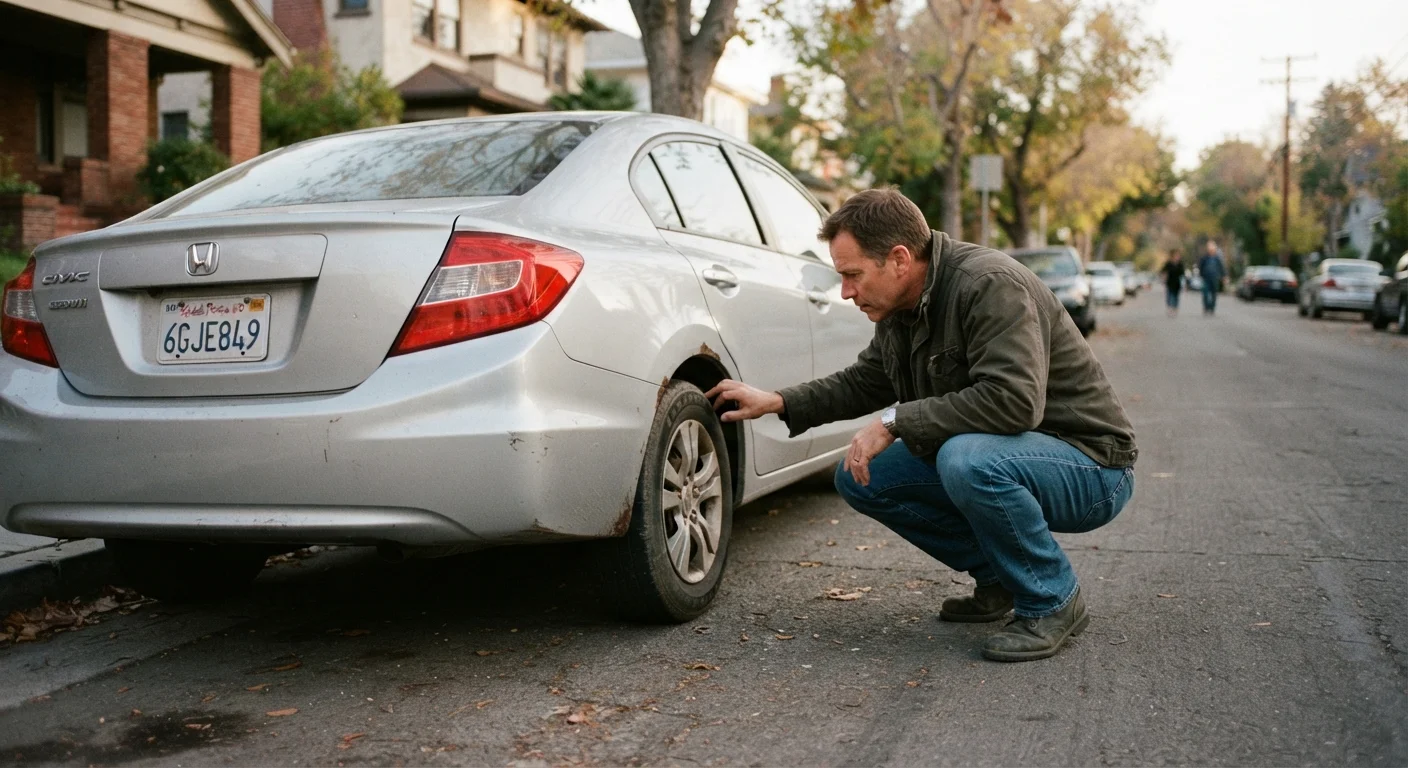
Inspect all body panels in daylight for mismatched paint, uneven panel gaps, or rippling, which can indicate prior collision repair. Must
Check all four wheel wells and the underside of door sills for rust, surface corrosion, or structural damage. Must
Examine tires for uneven wear patterns — cupping or one-sided wear may point to alignment or suspension issues. Should
Test every exterior light — headlights, taillights, turn signals, and reverse lights — to confirm they function correctly. Should

Physical Inspection — Interior and Mechanicals

Sit in the driver's seat and verify all dashboard warning lights extinguish within a few seconds of starting the engine; persistent lights require investigation. Must
Test heat, air conditioning, windows, locks, and infotainment controls to confirm they operate without fault. Should
Inspect the engine bay for visible fluid leaks, frayed belts, corroded battery terminals, and signs of hasty repair work. Must
Check the dipstick for oil level and color — very dark, gritty oil or a milky appearance can signal neglect or a serious engine issue. Should
Bring the vehicle to an independent mechanic for a pre-purchase inspection before committing to a price. Must

Test Drive

Drive the car at highway speeds if possible; note any vibrations, pulling to one side, or hesitation during acceleration. Must
Test the brakes at varying speeds — grinding, pulsing, or a soft pedal are warning signs that warrant mechanic evaluation. Must
Listen for unusual noises when turning at low speeds, which may indicate worn CV joints or power steering issues. Should

Title, Paperwork, and Payment

Confirm the seller's government-issued ID matches the name printed on the title exactly — a mismatch can complicate or block registration. Must
Verify the title is not a duplicate (marked "Duplicate" or "Reissued"), which can indicate a title was reported lost after being used as loan collateral. Must
Obtain a signed bill of sale and an odometer disclosure statement as required by your state's DMV before completing any payment. Must
Arrange insurance coverage to begin on the purchase date so the vehicle is covered the moment you take ownership. Must
Use a traceable, secure payment method such as a cashier's check issued in person at a bank branch — avoid wire transfers and cash for large sums. Should

For a deeper look at what a mechanic actually evaluates during a formal inspection, see our plain-English walkthrough of what happens during a vehicle inspection.

Completing the Transfer Safely

Even after a clean inspection and a price you're happy with, the final steps carry real risk if rushed. Payment method matters: cash is untraceable and a wire transfer is irreversible. A cashier's check from a legitimate bank branch is widely preferred for private sales because it offers a paper trail without exposing your account details. Confirm with your state's DMV which transfer documents are required — most states mandate a signed title, a bill of sale, and an odometer disclosure statement.

Never Sign a Title With Blank Fields

Some sellers pre-sign titles and leave the buyer's name field blank — sometimes called a "floating" or "open" title. Accepting one creates a chain-of-title gap that can cause significant problems when you attempt to register the vehicle. Insist on completing all title fields in full at the time of transfer, with both parties present.

Meet in a Safe, Public Location

Arrange test drives and inspections at a well-lit, public location — a busy parking lot during daylight is appropriate. Avoid traveling alone to unfamiliar private residences to hand over large sums of cash. Bringing a second person adds both safety and a second set of eyes on the vehicle.

Once paperwork is signed and transfer is complete, loop back to the practical side of ownership. Our guide for first-time car owners covers registration, insurance timelines, and the routine maintenance schedule you'll want to set up from day one.

Tech & Autos Editorial Team

InDepthReads.com | Streamlining Learning For All

Tech & Autos Editorial Team is the collective byline for our editorial team and contributor network. Articles published under this byline or an editorial pen name are researched, written, and reviewed according to our editorial standards for clarity, consistency, and independence before publication.

Electronics BasicsAuto Essentials
View author profile

The content on this site is for informational purposes only and is not a substitute for professional advice. Always consult a qualified professional for guidance specific to your situation.