
New Car vs. Used Car: How to Think Through the Decision

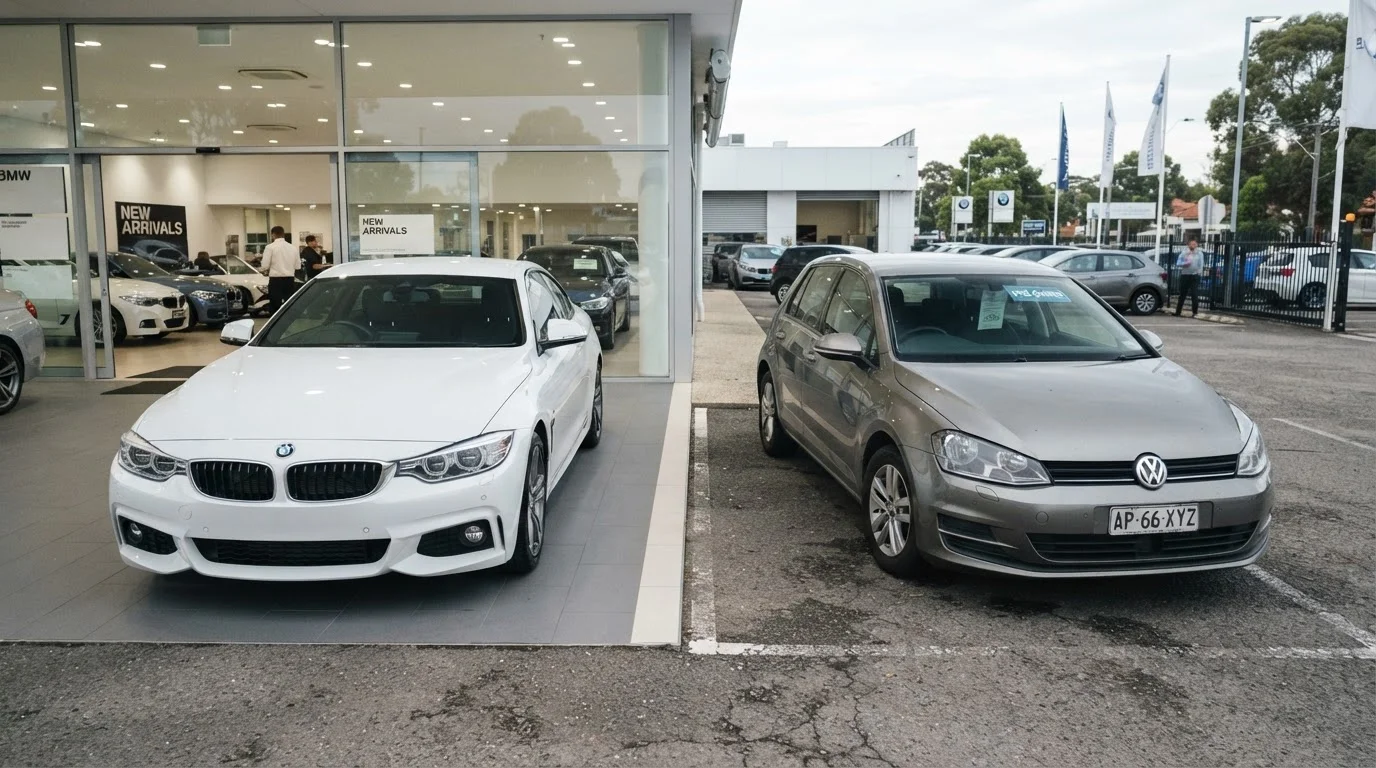
Photo: InDepthReads.com | Streamlining Learning For All editorial
Key Takeaways
- New cars lose a significant portion of their value in the first few years — a factor that favors used buyers.
- New vehicles typically come with factory warranties and the latest safety features included as standard.
- Used cars carry lower sticker prices but may bring higher maintenance costs and shorter remaining warranties.
- Financing rates and insurance premiums often differ between new and used vehicles.
- Your budget, driving habits, and risk tolerance should drive this decision more than price alone.
The Core Trade-Off: Price Today vs. Cost Over Time
The sticker price is the most visible number in any car purchase, but it rarely tells the whole story. A new car commands a premium not just for newness, but for certainty — certainty about its history, its condition, and what is covered under warranty. A used car trades some of that certainty for a lower entry price.
The single biggest financial dynamic separating these two choices is depreciation. New vehicles typically lose a notable portion of their market value within the first two to three years of ownership. That means a used buyer can often acquire a nearly identical vehicle — same model, similar features — for meaningfully less than what the original buyer paid. For a deeper look at how this works, see how depreciation affects your vehicle's value.
That said, a lower purchase price does not automatically mean lower total cost. Older vehicles may need repairs sooner, carry no remaining factory warranty, and in some cases come with unknown service histories that create financial uncertainty down the road.
~20%
Average first-year depreciation for new vehicles
Industry data consistently shows new cars can lose roughly 15–20% of their value within the first year of ownership, with the steepest losses in years one through three.
3–5 yrs
Typical bumper-to-bumper warranty window
Most major automakers offer bumper-to-bumper coverage for three to five years or a defined mileage threshold, whichever comes first.
2–4 yrs
Used vehicle age that often offers best value
Vehicles in this age range have absorbed most early depreciation while often retaining meaningful remaining powertrain warranty coverage.
Warranties, Reliability, and Hidden Costs
One of the clearest advantages of buying new is warranty coverage. Most new vehicles come with a bumper-to-bumper warranty for a set period plus a separate powertrain warranty covering the engine and transmission for longer. This provides a defined window where most significant repair costs fall on the manufacturer, not the owner.
Used vehicles may have some remaining factory warranty — especially if they are certified pre-owned (CPO), which typically requires an inspection and extends limited coverage. However, non-certified used cars are often sold with little to no remaining protection, meaning the buyer absorbs all repair costs from day one.
| Criterion | New Car | Used Car |
|---|---|---|
| Purchase Price | Higher — full market value | Lower — depreciation absorbed |
| Depreciation Exposure | High in first 2–3 years | Lower — prior owner absorbed it |
| Factory Warranty | Full — bumper-to-bumper plus powertrain | Partial or none (CPO extends coverage) |
| Vehicle History | Known — zero miles, no prior owners | Must be verified via report and inspection |
| Financing Rate | Often lower; promotional rates available | Typically slightly higher |
| Insurance Cost | Generally higher — larger replacement value | Generally lower — especially if owned outright |
| Safety Technology | Latest driver-assistance systems standard | Varies by model year and trim level |
| Customization Options | Choose color, trim, and features at order | Limited to available inventory |
Reliability varies widely by vehicle age, mileage, make, and maintenance history. Reviewing a vehicle history report and arranging a pre-purchase inspection by an independent mechanic are standard steps for any used vehicle purchase. If you are considering a private-party purchase specifically, a used car preparation checklist can help you cover the key steps before signing.
Financing, Insurance, and the True Monthly Picture
Financing is where the comparison becomes more nuanced. New cars typically qualify for lower interest rates — automakers often offer promotional financing that is not available on used vehicles. However, the loan principal is higher because the vehicle costs more, which can offset the rate advantage depending on your loan term.
Used car loans generally carry slightly higher rates through traditional lenders, though the lower purchase price means you may still end up with a smaller monthly payment and a lower total interest bill overall. How you plan to pay for the vehicle is a distinct decision from which type to buy — for a fuller look at that question, see leasing vs. financing a vehicle.
Insurance costs also tend to differ. New vehicles are typically more expensive to insure because their replacement value is higher, and lenders require comprehensive and collision coverage on financed vehicles regardless of your preference. A used vehicle — especially one owned outright — may allow more flexibility in your coverage choices, potentially reducing your annual premium.
Lender Requirements for Financed Vehicles
Budgeting for total cost of ownership rather than just the monthly payment is the most reliable approach. Factor in insurance, estimated fuel costs (which vary by powertrain — see gas, hybrid, and electric trade-offs), and a realistic maintenance reserve before comparing the two paths side by side.
The content on this site is for informational purposes only and is not a substitute for professional advice. Always consult a qualified professional for guidance specific to your situation.