
Leasing vs. Financing a Vehicle

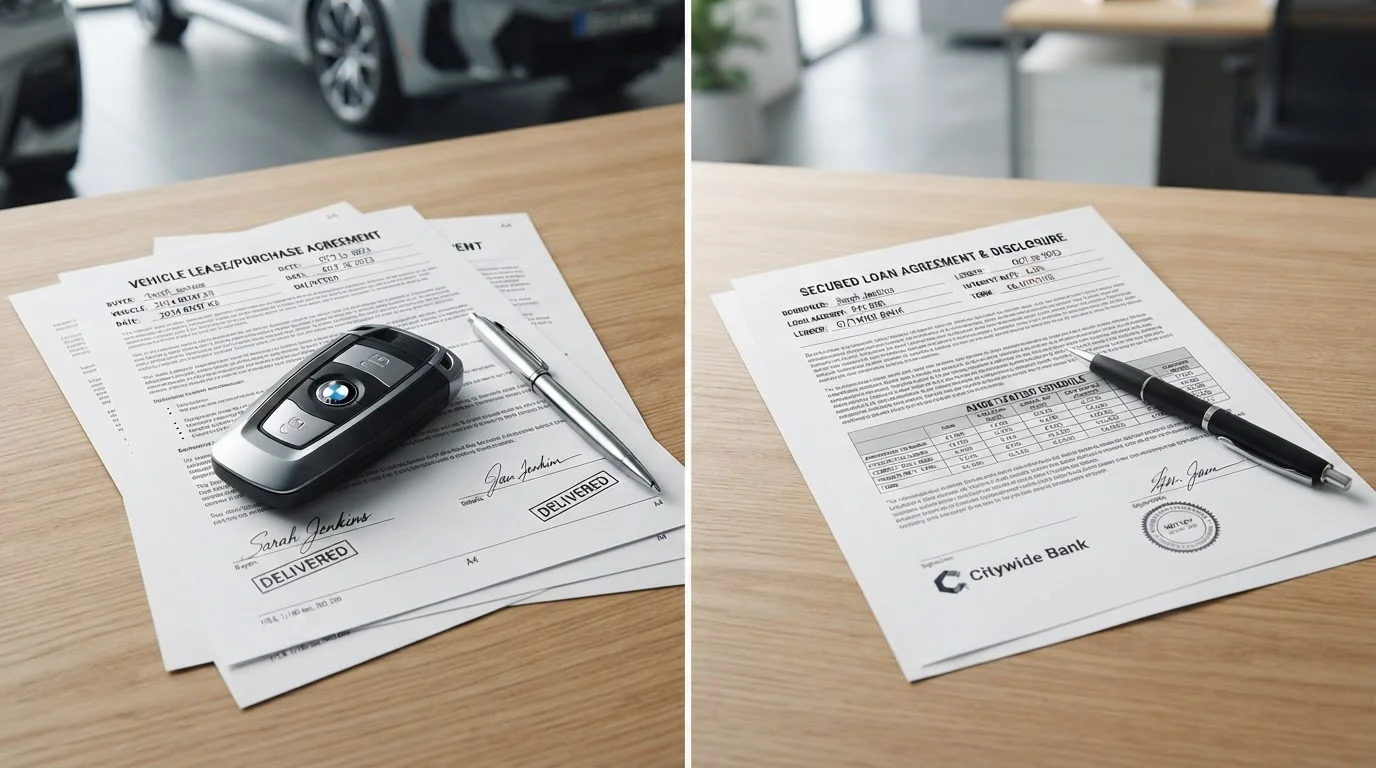
Photo: InDepthReads.com | Streamlining Learning For All editorial
Key Takeaways
- Leasing typically means lower monthly payments but no ownership stake at the end of the term.
- Financing builds equity over time and gives you full ownership once the loan is paid off.
- Mileage limits, wear-and-tear fees, and early termination penalties are unique to leases.
- Your driving habits, budget, and long-term plans should drive the decision — not monthly payment alone.
- Both options require careful review of total costs, not just the headline payment figure.
How Each Option Actually Works
When you lease a vehicle, you're essentially paying for the portion of the car's value you consume during the lease term — typically two to four years. At the end, you return the vehicle, with an option to buy it at a pre-set residual value or walk away and lease something new. You never own the car during the lease period.
When you finance (take out an auto loan), you borrow the full purchase price, minus any down payment, and repay it with interest over a set term — commonly 48 to 72 months. Once the final payment clears, you own the vehicle outright. That equity can be traded in, sold, or kept as a paid-off asset.
Think of leasing as a long-term rental agreement with defined rules, and financing as a purchase paid over time. The distinction has real consequences for cost, flexibility, and what you're left with when the term ends. For a broader look at how lease-style agreements compare with ownership across different contexts, see our overview of renting versus buying.
Breaking Down the Costs
| Leasing | Financing | |
|---|---|---|
| Monthly payment | Typically lower | Typically higher |
| Ownership at end of term | None (unless buyout exercised) | Full ownership |
| Mileage restrictions | Yes — penalty for overages | None |
| Early exit flexibility | Limited — penalties apply | Can sell or refinance anytime |
| Long-term cost (7+ years) | Higher — recurring payments | Lower once loan is paid off |
| Wear-and-tear risk | Financial liability at turn-in | Affects resale value only |
| Vehicle customization | Generally not permitted | Full discretion as owner |
Monthly lease payments are often lower than loan payments for the same vehicle, because you're only financing depreciation — not the full price. However, that lower number doesn't tell the whole story.
With a lease, you may also face:
- Acquisition and disposition fees charged by the leasing company
- Excess mileage charges if you exceed the contracted annual limit (commonly 10,000–15,000 miles)
- Wear-and-tear fees for damage beyond normal use at turn-in
- Early termination penalties that can be substantial if your situation changes mid-lease
With financing, your main variable beyond the monthly payment is depreciation — but that depreciation affects your resale value, not a penalty charge. Once the loan is paid off, your cost of ownership drops significantly.
Calculate the Total Cost, Not Just the Monthly
Flexibility and Long-Term Trade-Offs
Leasing offers a predictable, bounded commitment — but flexibility has its limits. You're locked into a contract for the full term, and exiting early often costs more than the remaining payments. On the other hand, at lease-end you can simply return the vehicle, which is appealing if your lifestyle or needs are likely to shift.
Financing gives you more options as time goes on. You can sell the vehicle whenever you choose, refinance if interest rates improve, or run the car well past the loan payoff date — which is when ownership becomes significantly cheaper per month. Drivers who keep vehicles for seven or more years generally find financing more cost-efficient over time.
Also worth considering: insurance requirements. Leased vehicles typically require higher liability and comprehensive coverage limits, as specified by the leasing company. Make sure to factor that into your monthly cost estimate. Our guide to car insurance coverage types explains what those requirements usually involve.
Lease Contracts Have Strict Terms
Which Drivers Each Option Tends to Suit
There's no universal right answer — but some patterns are well established:
- Leasing may be a better fit if you:
- Stay within predictable annual mileage limits (under 12,000–15,000 miles per year)
- Value driving a vehicle with current technology and warranty coverage at all times
- Prefer a fixed monthly cost without surprise repair bills during the term
- Financing may be a better fit if you:
- Drive more miles than a standard lease allows
- Want to build equity or have a paid-off vehicle as a financial asset
- Plan to keep the same vehicle for many years
If you're also weighing whether a new or used vehicle makes sense for your situation, the new vs. used car trade-off guide covers the depreciation and financing angles worth understanding before you decide. Your broader financial goals — including how a car payment fits into your monthly budget — should also inform this decision.
This article is for general informational purposes only and does not constitute financial or legal advice. Consult a qualified financial professional before making decisions about vehicle financing that depend on your personal financial situation.
The content on this site is for informational purposes only and is not a substitute for professional advice. Always consult a qualified professional for guidance specific to your situation.