
Renting vs. Buying a Home: A Realistic Look at Both Paths

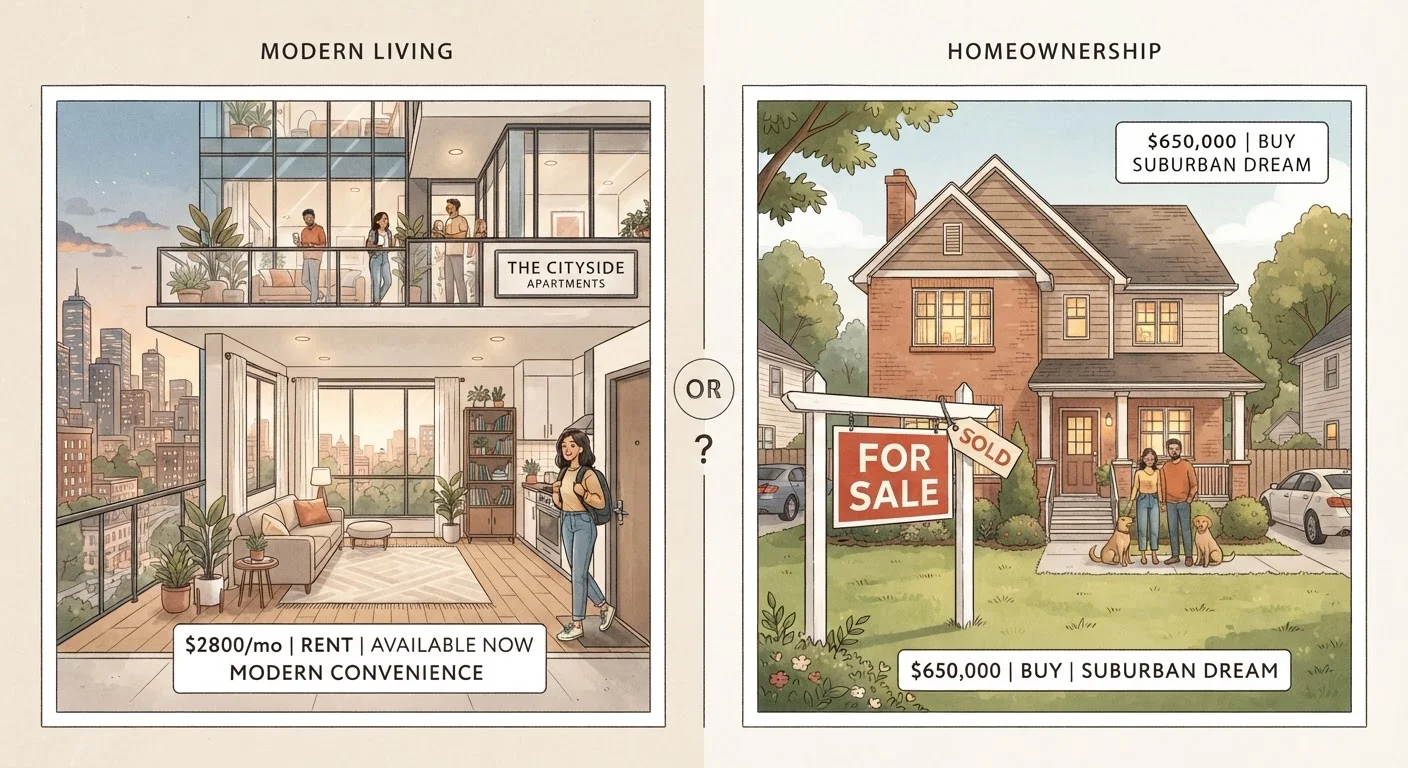
Photo: InDepthReads.com | Streamlining Learning For All editorial
Key Takeaways
- Renting offers flexibility and lower upfront costs, while buying builds equity but requires substantial capital and commitment.
- The financial case for buying depends heavily on local market conditions, how long you plan to stay, and your full cost picture.
- Neither path is universally superior — the right choice hinges on personal finances, life stage, and housing market dynamics.
- Hidden costs exist on both sides: maintenance and property taxes for owners, fees and rent increases for renters.
- A licensed financial adviser or HUD-approved housing counselor can help you evaluate the numbers for your specific situation.
The Real Question Behind Rent vs. Buy
The rent-vs.-buy debate is often framed as a financial competition, but it's really a question about fit. Your income stability, savings, expected length of stay, local housing costs, and personal priorities all shape which path makes sense — and those variables differ enormously from one person to the next.
What's worth avoiding is the assumption that buying always wins. Homeownership builds equity over time, but it also concentrates financial risk in a single illiquid asset, demands significant upfront capital, and carries ongoing costs that renters don't face. Conversely, renting isn't simply "throwing money away" — it provides optionality and frees up capital that can be deployed elsewhere. For a deeper look at the numbers on both sides, see the financial trade-offs most people overlook.
| Renting | Buying | |
|---|---|---|
| Upfront costs | Security deposit + first/last month | Down payment + closing costs (often 5–25% of price) |
| Monthly cost predictability | Subject to lease renewal increases | Fixed-rate mortgage is stable; taxes/insurance vary |
| Equity building | None — payments go to landlord | Gradual equity through principal paydown and appreciation |
| Flexibility to relocate | High — typically 30–60 days notice | Low — selling takes months and carries transaction costs |
| Maintenance responsibility | Landlord handles most repairs | Owner bears all costs and coordination |
| Market risk exposure | Rent increases; lease non-renewal risk | Property value declines; illiquidity risk |
| Tax considerations | No deductions (generally) | Mortgage interest and property tax deductions may apply |
The Real Costs of Each Path
Monthly payments are only part of the picture. Renters should account for security deposits, renters insurance, utilities (when not included), and annual rent increases tied to local market conditions. The full costs of renting extend well beyond what's on the lease.
For buyers, the upfront costs alone are substantial: a down payment (often 3–20% of the purchase price depending on loan type — see down payment options beyond the 20% rule), closing costs typically ranging from 2–5% of the loan amount, moving costs, and immediate repair or furnishing needs. Ongoing ownership costs include property taxes, homeowners insurance, HOA fees where applicable, and maintenance — commonly estimated at 1–2% of home value annually, though this varies significantly.
Run a Price-to-Rent Ratio Check
The mortgage type you choose also shapes long-term costs. Fixed-rate vs. adjustable-rate mortgages carry meaningfully different risk profiles over a 15- or 30-year term.
Flexibility vs. Stability: A Trade-Off, Not a Flaw
Renting's most undervalued advantage is mobility. A lease typically commits you to one year; a mortgage commits you to a market and a location for potentially decades. If your career, family situation, or preferences shift, renting allows you to adapt with far less friction and financial consequence.
Ownership, by contrast, offers a form of stability that renting cannot replicate. Landlords can raise rents, sell properties, or decline to renew leases — all legally, in most markets. Understanding how supply, demand, and seasonality shape rent prices helps renters anticipate these shifts rather than being blindsided by them.
Homeowners, meanwhile, face market risk in a different direction: if property values fall or a job relocation becomes necessary, selling at the wrong time can result in a financial loss. Buying in a competitive market can compound this risk by pushing purchase prices above historical norms.
~66%
U.S. homeownership rate
According to U.S. Census Bureau data, the national homeownership rate has hovered around 65–66% in recent years, meaning roughly one in three American households rents.
5+ years
Typical break-even horizon for buying
Many housing analysts use a five-year minimum stay as a rough threshold before the transaction costs of buying are offset by equity gains and avoided rent increases, though this varies by market.
When Buying Makes Financial Sense
The financial case for buying strengthens the longer you stay in one place. Transaction costs — agent commissions, closing costs, moving expenses — are substantial and must be recouped through appreciation and equity before buying becomes economically superior to renting. Most housing economists suggest a minimum 5-year horizon as a rough threshold, though local market dynamics matter enormously.
Credit score, debt-to-income ratio, and employment history are the core factors lenders evaluate. If those aren't yet strong, a period of deliberate renting while building financial foundations may produce a better eventual purchase outcome than buying prematurely. First-time renters can use that period to understand what they actually want in a home before locking in a decades-long commitment.
Once ready to buy, understanding the homebuying process from start to finish helps prevent costly surprises at each stage.
Making the Decision for Your Situation
No formula produces a universal answer. A useful starting point is honest assessment across three dimensions: financial readiness (savings, credit, income stability), time horizon (how long you realistically expect to stay), and local market conditions (price-to-rent ratios vary dramatically by city and neighborhood).
If you're weighing ownership, understanding what homeownership actually entails — beyond the deed — is essential groundwork. And common myths about homeownership are worth examining before assumptions drive a decision of this magnitude.
A HUD-approved housing counselor (available free or low-cost through the U.S. Department of Housing and Urban Development) can help you work through the numbers without a sales agenda. A licensed financial adviser can model how a home purchase fits within your broader financial goals. Neither renting nor buying is a default to accept without scrutiny — both deserve a clear-eyed evaluation.
This article is for general informational and educational purposes only and does not constitute financial, legal, or investment advice. Consult a qualified financial adviser or housing counselor before making decisions based on your individual circumstances.
The content on this site is for informational purposes only and is not a substitute for professional advice. Always consult a qualified professional for guidance specific to your situation.