
Gas, Hybrid, and Electric: Understanding the Powertrain Trade-Offs

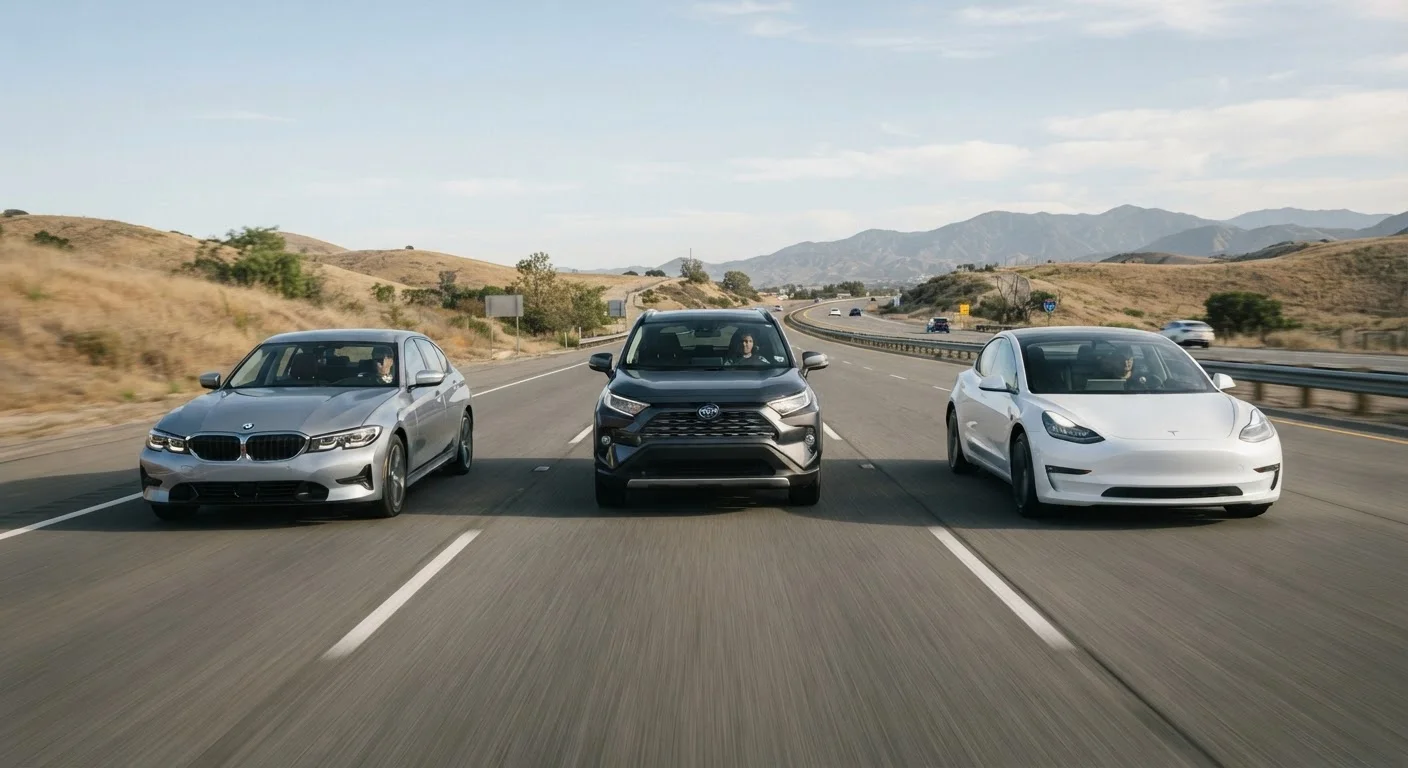
Photo: InDepthReads.com | Streamlining Learning For All editorial
Key Takeaways
- Gas vehicles have lower upfront costs but higher long-term fuel expenses compared to electrics.
- Hybrids offer a practical middle ground, especially for drivers without easy access to charging.
- Electric vehicles typically have lower per-mile energy costs but require home or public charging infrastructure.
- Your daily driving distance, charging access, and budget all shape which powertrain makes practical sense.
Why Powertrain Choice Is a Long-Term Decision
Choosing between a gas, hybrid, or electric vehicle isn't just a preference — it's a commitment that affects your fuel costs, maintenance schedule, and daily routine for years. Unlike picking a color or trim level, the powertrain you choose shapes how you interact with the car every single day.
Before weighing options, it helps to understand what each system actually does. A gasoline (internal combustion) engine burns fuel to generate power mechanically. A hybrid pairs a gas engine with an electric motor and a battery that recharges through braking and driving — no plugging in required for most standard hybrids. A plug-in hybrid (PHEV) extends this with a larger battery you can charge externally. A fully electric vehicle (EV) runs entirely on battery power with no combustion engine at all.
If you're also weighing broader purchase decisions, see our guide on new vs. used cars — powertrain availability often varies significantly between the new and used markets.
| Gas | Hybrid | Electric | |
|---|---|---|---|
| Typical purchase price | Generally lower | Moderate premium | Higher upfront cost |
| Fuel/energy cost per mile | Highest | Moderate | Lowest in most regions |
| Maintenance complexity | Standard (oil, transmission) | Similar to gas, fewer brakes | Minimal (no oil changes) |
| Refueling convenience | Gas stations everywhere | Gas stations everywhere | Home or public charging needed |
| Cold weather performance | Minimal impact | Minor impact | Noticeable range reduction |
| Tailpipe emissions | Highest | Lower than gas | Zero tailpipe emissions |
| Long-trip practicality | High — fast refueling | High — no range limits | Moderate — plan charging stops |
Cost Breakdown: Purchase Price, Fuel, and Maintenance
Upfront, gas-powered vehicles generally carry lower sticker prices than comparable hybrids or EVs, largely because the technology is mature and widely produced. Electric vehicles often cost more at purchase, though federal tax credits and state incentives — which vary by income, vehicle price cap, and location — can reduce that gap. Always verify current eligibility with a tax professional before factoring incentives into your budget.
Where EVs tend to gain ground is in ongoing costs. Electricity is generally cheaper per mile than gasoline, and EVs have fewer moving parts — no oil changes, fewer brake replacements (due to regenerative braking), and no transmission fluid. Hybrids benefit from similar brake savings while still requiring conventional engine maintenance.
Calculate Your Real Cost of Ownership
Long-term ownership costs are complex. For a fuller picture of how financing structures interact with these costs, our leasing vs. financing comparison walks through how each approach affects your monthly outlay and flexibility.
Range, Charging, and Real-World Practicality
Range anxiety — the concern that an EV will run out of charge before reaching a destination — remains a real consideration for many drivers, even as charging infrastructure expands. Most modern EVs offer 200–300+ miles of range on a full charge, but actual range varies with temperature, highway speeds, and climate system use. Cold weather, in particular, can reduce battery range noticeably.
Charging at home overnight using a standard 240-volt outlet (Level 2 charging) is the most convenient solution for most EV owners. Renters, apartment dwellers, or those without a dedicated parking space may find this impractical. Public DC fast chargers are expanding but aren't yet as universally available as gas stations.
Hybrids sidestep this challenge entirely — they refuel like a gas car. For drivers covering large distances or traveling through areas with sparse charging networks, this flexibility is a genuine advantage. Gas vehicles require no infrastructure changes whatsoever, which is why they remain dominant in rural markets.
Charging Access Can Make or Break EV Ownership
Environmental Considerations and the Bigger Picture
EVs produce zero tailpipe emissions, which benefits local air quality. However, their total environmental footprint depends on how the electricity powering them is generated. In regions where the electrical grid relies heavily on coal or natural gas, the lifecycle emissions advantage over a modern, efficient gas car narrows — though most analyses still favor EVs on a national average basis.
Battery production does carry an environmental cost, primarily in mining lithium, cobalt, and other minerals. Battery recycling infrastructure is developing, but isn't yet comprehensive. Hybrids produce lower emissions than comparable gas vehicles, though they still emit tailpipe pollutants.
These are important context points, not reasons to dismiss any option — they simply underscore that every powertrain involves trade-offs, and the right answer depends on your local grid, driving habits, and priorities.
This article is for general informational purposes only. Vehicle costs, tax incentives, and infrastructure availability vary by location and change over time. Consult a qualified financial or automotive professional for guidance specific to your situation.
The content on this site is for informational purposes only and is not a substitute for professional advice. Always consult a qualified professional for guidance specific to your situation.