
What Actually Happens During a Vehicle Inspection

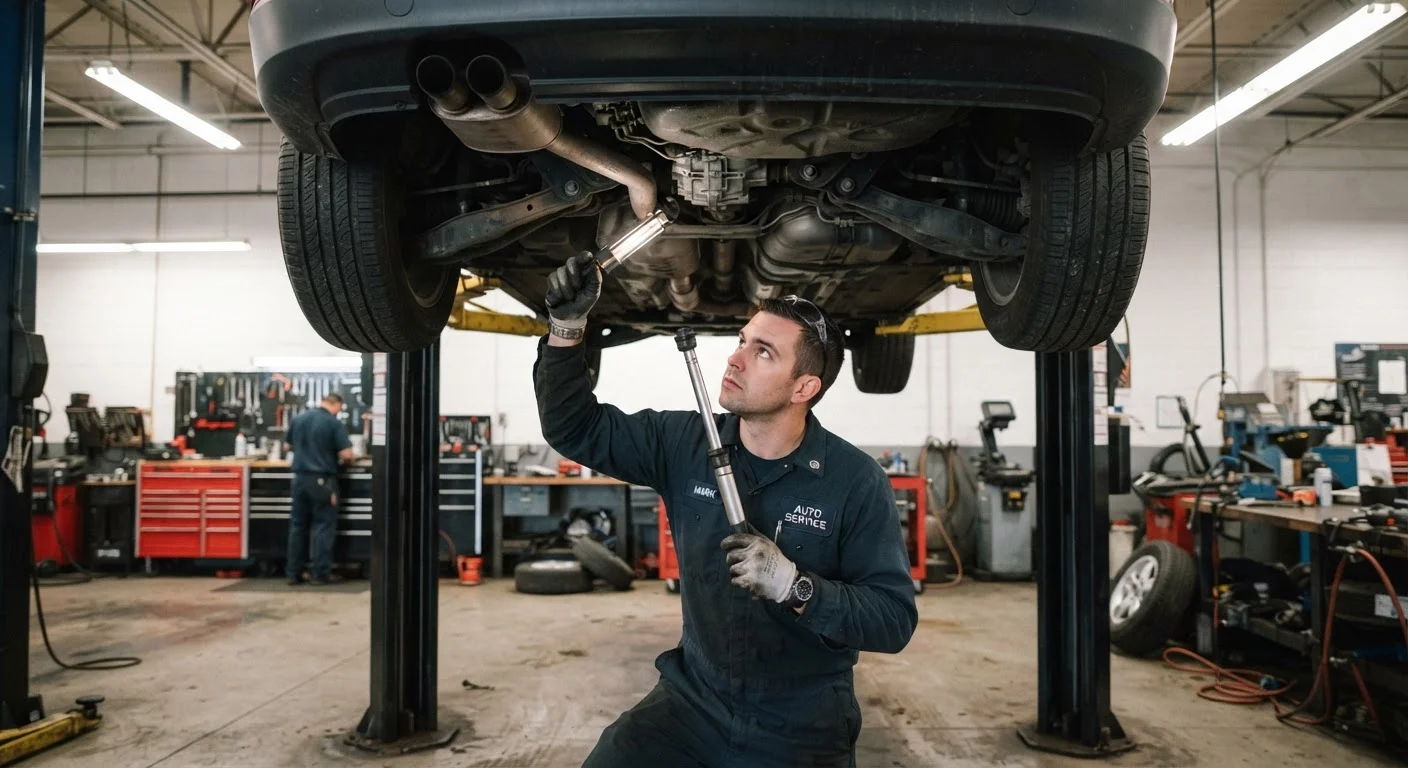
Photo: InDepthReads.com | Streamlining Learning For All editorial
Key Takeaways
- Inspections vary by state but almost always cover brakes, lights, tires, and steering.
- An inspector follows a fixed checklist — they cannot add charges for items outside that list.
- Failing an inspection doesn't mean your car is totaled — most failures involve fixable issues.
- Emissions testing is a separate process from safety inspections in many states.
- Knowing what's checked in advance helps you spot potential failures before your appointment.
Why States Require Vehicle Inspections
Vehicle inspections exist for a straightforward reason: a car in poor mechanical condition is a hazard to everyone on the road, not just the driver. States use inspections to set and enforce minimum safety thresholds — ensuring that vehicles operating on public roads can stop reliably, be seen by other drivers, and be steered safely.
Not every state requires annual safety inspections. Some only trigger an inspection at registration transfer or when a vehicle crosses state lines. Others, particularly in the West, prioritize emissions testing to meet federal air quality standards. Understanding your state's specific requirements is the first step to avoiding lapses that can lead to fines or registration holds.
Requirements Vary Significantly by State
What Inspectors Actually Examine
Inspectors work through a government-defined checklist — they don't improvise or probe systems at random. While exact items vary by state, most safety inspections cover the following categories:
- Brakes: Inspectors check pad and rotor thickness, brake fluid condition (visually), and may test brake response. Worn-through pads or scored rotors are common failure points.
- Lights and signals: All exterior lights — headlights, taillights, brake lights, turn signals, and hazard lights — must function. A single burned-out bulb can fail an inspection.
- Tires: Tread depth is measured against a legal minimum (typically 2/32 of an inch in most states). Inspectors also look for sidewall damage or uneven wear patterns indicating alignment or suspension problems.
- Steering and suspension: Inspectors check for excessive play in the steering wheel and may shake components to detect worn ball joints or tie rod ends.
- Windshield and wipers: Cracks in the driver's line of sight or wiper blades that fail to clear the glass are both grounds for failure.
- Horn: Must be audible and functional.
- Mirrors: Required mirrors (typically driver's side and rearview) must be intact and properly positioned.
For a sense of how structured checklists like this compare to other types of inspections, it's worth noting that home inspectors follow a similarly defined scope — with clear inclusions and notable exclusions.
~17
States requiring annual safety inspections
As of recent surveys, roughly 17 states mandate periodic vehicle safety inspections; the remainder have no statewide requirement or focus solely on emissions.
2/32"
Minimum legal tire tread depth in most states
This is the statutory minimum in the majority of U.S. states; safety organizations such as AAA recommend replacing tires at 4/32" for better wet-weather performance.
~30–60 min
Typical inspection duration
Most standard vehicle safety inspections are completed within 30 to 60 minutes at licensed inspection stations.
Emissions Testing: A Separate Process
In states where emissions testing is required, it typically runs parallel to or separately from the safety inspection. Rather than physical components, emissions tests evaluate what your vehicle releases from the tailpipe — or, in modern vehicles, what the onboard diagnostics system (OBD-II) reports.
A common reason for emissions failure is an illuminated check engine light. Even if the underlying issue seems minor, an active diagnostic fault code will cause a failure in OBD-II-based testing programs. Clearing the code without fixing the root cause generally won't help — most states require the system to complete a full drive cycle before testing.
Address the Check Engine Light Before Your Appointment
What Happens If You Fail
A failed inspection isn't a crisis — it's a repair list. The inspector is required to document exactly which items failed, giving you a clear starting point. You then have a defined window (varying by state) to complete repairs and return for a re-inspection, often at a reduced fee for the re-check.
One important caution: just because something passes a state inspection doesn't mean it's in ideal condition. Inspections confirm legal minimums, not optimal mechanical health. Tires at 3/32 of an inch pass the standard but are close to the threshold — they're worth replacing soon. This is a distinction worth keeping in mind so you don't conflate a passing sticker with a clean bill of health. Our coverage of common mechanic missteps explores how over-relying on minimums can lead to unexpected repair costs down the road.
This article provides general educational information about vehicle inspections. Requirements vary by state — always verify your local regulations and consult a licensed mechanic for advice specific to your vehicle's condition.
Frequently Asked Questions
The content on this site is for informational purposes only and is not a substitute for professional advice. Always consult a qualified professional for guidance specific to your situation.