
Auto Essentials

The Assumptions That Cost Drivers Money at the Mechanic

The Assumptions That Cost Drivers Money at the Mechanic

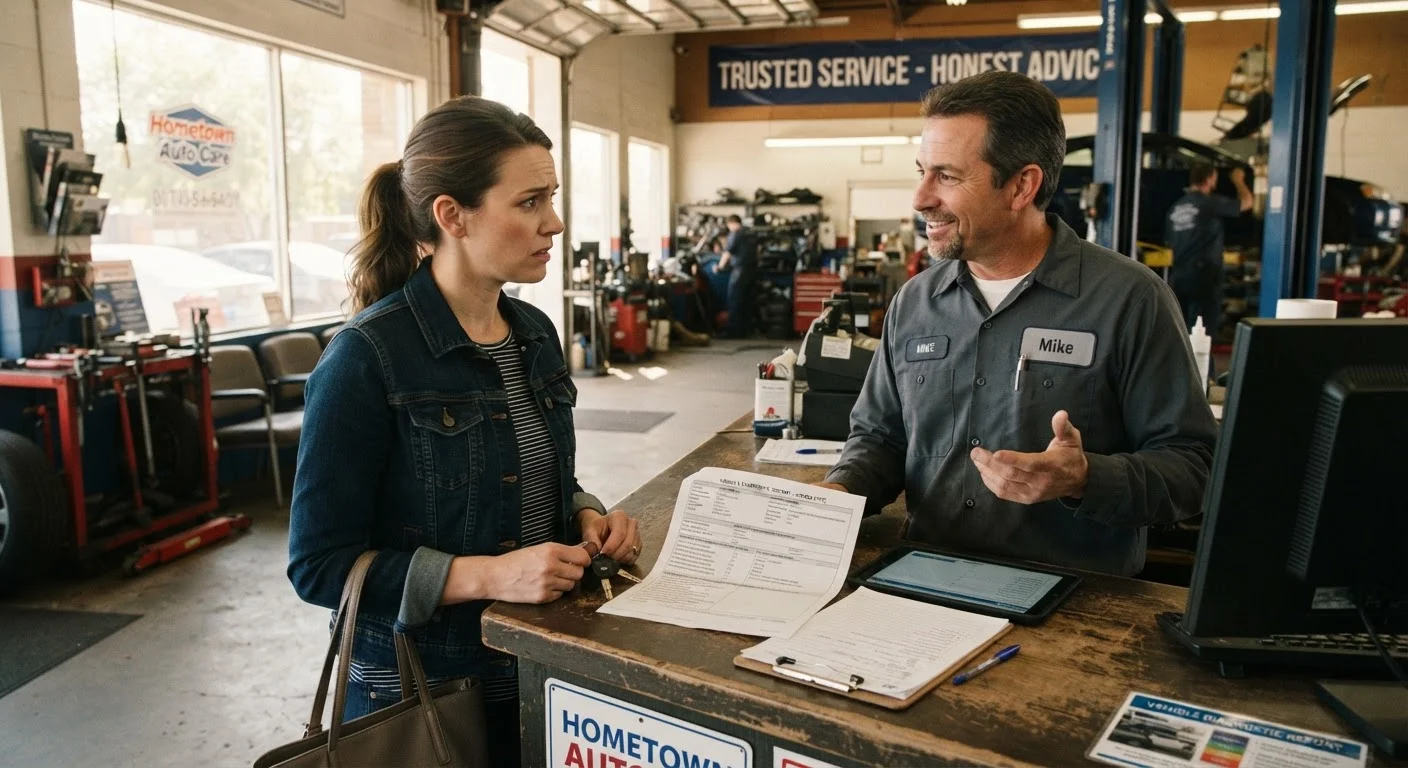
Photo: InDepthReads.com | Streamlining Learning For All editorial

Skipping the second opinion, misreading urgency, and other common missteps that lead to unnecessary repair bills.

Key Takeaways

  • Assuming all repair estimates are final often leads to overpaying for standard services.
  • Misreading warning light urgency can turn a minor issue into a major, expensive failure.
  • Skipping a second opinion on large repairs is one of the costliest habits drivers have.
  • Neglecting to ask what is included in a quoted price leads to surprise charges at pickup.
  • Your owner's manual is a more reliable maintenance guide than upsell recommendations at the counter.

Why Good Intentions Lead to Bad Repair Bills

Most drivers don't lose money at the mechanic because they're careless — they lose it because they operate on assumptions that feel reasonable but aren't grounded in how the repair industry actually works. Trust, time pressure, and a lack of technical vocabulary create the perfect conditions for overspending. Understanding where these assumptions come from is the first step toward avoiding them.

These mistakes are especially consequential because auto repairs are rarely small. A single misread situation can mean hundreds of dollars spent unnecessarily. For a broader view of where car costs accumulate, see our overview of car ownership costs most drivers underestimate.

1

Assuming the first estimate is the only reasonable price for a repair.

Why it happens: Drivers often feel that questioning a quote is confrontational, or they assume all shops charge roughly the same rates for the same work.
How to avoid: Get at least two written estimates for any repair above a few hundred dollars. Labor rates and parts markups vary significantly between dealerships, independent shops, and chain service centers, and a single call can reveal meaningful price differences.
2

Treating every dashboard warning light as either an emergency or irrelevant.

Why it happens: Most drivers have little context for what different warning lights actually indicate, so they default to panic or dismissal depending on their personality.
How to avoid: Look up the specific warning light in your owner's manual before deciding how to respond. Some lights — like a low tire pressure indicator — allow you to drive safely to a shop; others, like an oil pressure warning, require you to stop driving immediately. For more on one of the most misunderstood indicators, see what your tire pressure light is really telling you.
3

Agreeing to additional services recommended at drop-off without verifying they're due.

Why it happens: Service advisors routinely suggest extras — flushes, filter replacements, inspections — that may sound overdue but are actually well within their service window.
How to avoid: Before your appointment, review your owner's manual and any recent service records. When an add-on is suggested, ask the advisor to show you in your manual where the manufacturer recommends that interval. This one habit can save significant money over years of ownership.
4

Assuming 'urgent' language from a shop always reflects real mechanical urgency.

Why it happens: Shops sometimes use words like 'critical' or 'safety concern' for conditions that are real but not immediately dangerous, which makes it difficult for drivers to prioritize repairs accurately.
How to avoid: Ask the mechanic to classify the repair clearly: Is this a safety issue that affects driving right now, or is it something that will become a problem over weeks or months? Getting a concrete timeline helps you make informed decisions about what to address immediately versus what to plan for.
5

Not asking what is — and is not — included in a quoted price.

Why it happens: Drivers assume a quote covers everything needed, when in practice it may exclude disposal fees, shop supplies, diagnostic time, or related parts that emerge mid-repair.
How to avoid: Ask specifically: 'Does this price include parts, labor, and any associated fees?' Request that any additional charges require your approval before work proceeds. Most shops will honor this request, and it protects you from bill shock at pickup.
6

Delaying minor maintenance to save money in the short term.

Why it happens: When budgets are tight, small service items like a cabin air filter or worn wiper blades feel skippable — and individually, they often are — but the habit of deferring can extend to more consequential items.
How to avoid: Separate truly optional comfort items from maintenance that protects drivetrain and safety systems. Deferring an oil change or brake inspection to save money short-term is a pattern that consistently results in higher total costs. This mirrors the same dynamic explored in spending decisions that feel savvy but frequently backfire.

How to Protect Yourself Without Becoming a Mechanic

You don't need technical training to make better decisions at the shop — you need a few reliable habits. Before authorizing any repair over a threshold you set for yourself (many consumer advocates suggest $300–$500), ask for a written estimate that itemizes parts and labor separately. This makes it easier to compare quotes and spot inflated charges.

Verbal Authorizations Can Be Risky

If you approve additional work over the phone or verbally in the shop, you may have limited recourse if the final bill is higher than discussed. Whenever possible, request a written estimate before work begins and ask that any scope changes be communicated to you in writing or by text before they proceed. Many states have consumer protection laws that require written estimates above certain dollar amounts — it's worth knowing the rules in your state.

Reference your owner's manual before agreeing to any maintenance service. Manufacturers set service intervals based on engineering data, and those schedules are often more conservative than what shops recommend. Similarly, maintaining a simple log of past services helps you avoid paying for something that was done recently. The same discipline that prevents deferred maintenance — which compounds into far larger problems over time — also prevents duplicate or unnecessary service charges.

Your Owner's Manual Outweighs Counter Advice

Manufacturer-recommended service intervals are based on engineering data for your specific vehicle. When a service advisor recommends a flush, replacement, or inspection ahead of the schedule in your manual, ask for documentation or a clear explanation of why your driving conditions warrant it. The manual is your most reliable and cost-effective reference — and it came with the car.

Finally, a second opinion is not an insult to a mechanic — it's standard consumer practice for any significant expense. A trustworthy shop will not discourage you from getting one. If a shop pressures you to authorize work immediately, that pressure itself is useful information.

This article is for general informational purposes only and does not constitute professional mechanical or financial advice. Always consult a qualified mechanic for diagnosis and repair decisions specific to your vehicle.

Tech & Autos Editorial Team

InDepthReads.com | Streamlining Learning For All

Tech & Autos Editorial Team is the collective byline for our editorial team and contributor network. Articles published under this byline or an editorial pen name are researched, written, and reviewed according to our editorial standards for clarity, consistency, and independence before publication.

Electronics BasicsAuto Essentials
View author profile

The content on this site is for informational purposes only and is not a substitute for professional advice. Always consult a qualified professional for guidance specific to your situation.