
Fixed-Rate vs. Adjustable-Rate Mortgages: How Each One Behaves Over Time

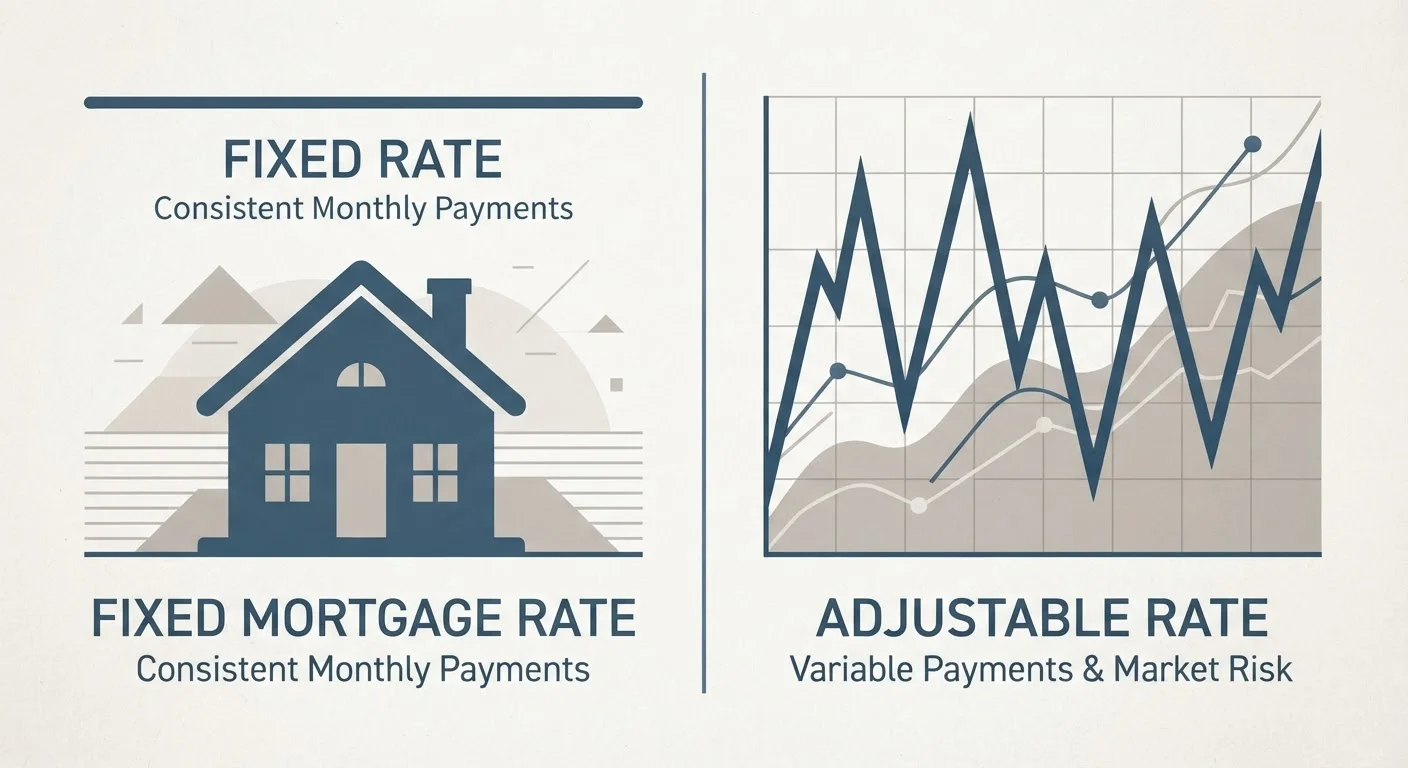
Photo: InDepthReads.com | Streamlining Learning For All editorial
Key Takeaways
- Fixed-rate mortgages lock in your interest rate for the entire loan term, keeping principal and interest payments identical every month.
- Adjustable-rate mortgages start with a fixed introductory period, then reset periodically based on a market index.
- ARMs typically offer lower initial rates but carry payment uncertainty after the introductory period ends.
- The right choice depends on how long you plan to stay in the home and your tolerance for payment variability.
- Both loan types have caps and protections, but understanding the fine print is essential before committing.
How a Fixed-Rate Mortgage Works
A fixed-rate mortgage locks your interest rate in place from the day you close until the final payment — typically 15 or 30 years later. Because the rate never changes, the portion of each payment covering principal and interest stays exactly the same throughout the loan term.
That predictability has a real budgeting value. Whether market interest rates rise sharply or fall significantly during your ownership, your payment is unaffected. For homeowners building a long-term household budget, that stability can reduce financial stress considerably. As we explain in our guide to fixed vs. variable expenses, knowing which costs are locked in is foundational to any budget that holds up over time.
The trade-off is that fixed-rate loans generally carry a slightly higher starting rate than comparable adjustable-rate products — you're paying a premium for certainty. If rates fall substantially after you close, you would need to refinance to access the lower rate, which involves closing costs and qualification requirements.
Factor in More Than Just the Rate
How an Adjustable-Rate Mortgage Works
An adjustable-rate mortgage (ARM) has two distinct phases. First comes an introductory fixed period — commonly expressed as the first number in labels like 5/1, 7/1, or 10/1 — during which the rate stays stable. After that period ends, the rate adjusts at regular intervals (the second number) based on a benchmark market index, plus a set margin determined by the lender.
The initial rate on an ARM is typically lower than a comparable fixed rate, which reduces the monthly payment during the introductory window. For a buyer planning to sell or refinance before the first adjustment, that savings can be genuinely useful. To understand the broader trade-offs between homeownership structures, see our renting vs. buying analysis.
After the introductory period, payments can rise or fall. Federal regulation requires ARMs to include rate caps — limits on how much the rate can change at each adjustment and over the life of the loan — but even with caps, monthly payments can shift materially. A borrower whose budget is already stretched should approach this uncertainty carefully.
Don't Budget Only for the Introductory Rate
Side-by-Side: Key Structural Differences
The comparison below covers the most consequential structural features. Note that specific numbers vary by lender, loan product, and market conditions — these represent general patterns, not guarantees.
| Fixed-Rate Mortgage | Adjustable-Rate Mortgage | |
|---|---|---|
| Interest Rate | Locked for full loan term | Fixed intro period, then adjusts periodically |
| Monthly Payment Stability | Principal & interest never change | May change after introductory period |
| Initial Rate Level | Typically higher than ARM intro rate | Typically lower during intro period |
| Rate Caps | N/A — rate is fixed | Periodic and lifetime caps required by law |
| Best Ownership Horizon | Long-term (10+ years) | Shorter-term or with planned refinance |
| Payment Risk After Year 1 | None from rate changes | Payments can rise at each adjustment |
| Refinancing to Benefit from Rate Drops | Requires new loan and closing costs | Rate may drop automatically at adjustment |
For a deeper look at how your payment is divided between interest and principal over time — regardless of which structure you choose — our mortgage amortization explainer walks through the mechanics in detail.
Which Structure Fits Your Situation
Neither mortgage type is universally better. The decision turns on two core factors: how long you expect to own the home and how much payment variability your budget can absorb.
- Long-term owners generally benefit from the rate certainty of a fixed mortgage. Over a 20- or 30-year horizon, the risk of significant rate increases on an ARM compounds meaningfully.
- Shorter-term buyers — those who plan to relocate, upsize, or refinance within the introductory ARM window — may find the lower initial rate advantageous, provided they have a realistic exit plan.
- Budget-sensitive households should weigh whether they could absorb a payment increase if the ARM adjusts upward. Run the numbers using the rate cap, not just the starting rate.
This decision also connects to your broader financial picture. Whether you're working toward specific financial goals or managing existing debt, understanding how your mortgage payment might change — or stay fixed — affects every other part of your plan. Our overview of fixed vs. adjustable-rate mortgages offers additional context on the structural trade-offs each type carries.
This article is for general informational and educational purposes only and does not constitute financial, mortgage, or legal advice. Mortgage products, rates, and terms vary by lender and market conditions. Consult a licensed mortgage professional or financial adviser before making any borrowing decision.
The content on this site is for informational purposes only and is not a substitute for professional advice. Always consult a qualified professional for guidance specific to your situation.