
Training a Rescue Dog Is Different—Here's Why

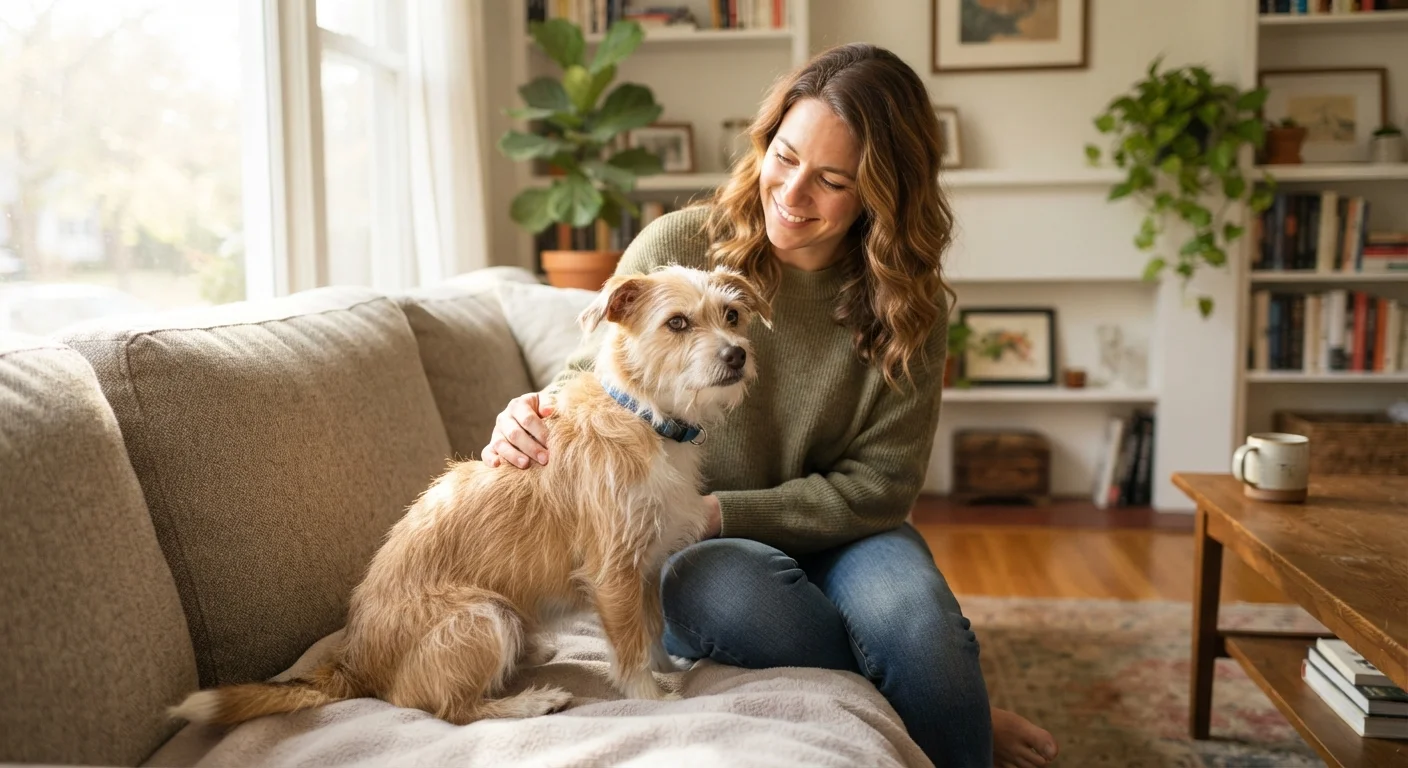
Photo: InDepthReads.com | Streamlining Learning For All editorial
Key Takeaways
- Rescue dogs carry prior conditioning that directly affects how they respond to training cues.
- Trust-building must come before formal skill training for most rescue dogs.
- Stress and fear suppress learning; a calm environment is a prerequisite, not a luxury.
- Progress may be slower or non-linear — this is normal and expected.
- Many rescue dog challenges are trainable, but some require professional support.
Why Rescue Dogs Aren't Starting From Scratch
When you adopt a rescue dog, you're not working with a blank slate. Every dog arrives carrying a history of learned associations — some formed deliberately through training, many formed incidentally through everyday experience. A dog who was startled by loud voices may now flinch when someone raises their hand to gesture. A dog who was never taught house rules may find routine expectations genuinely confusing, not defiant.
This matters for training because learning doesn't happen in a vacuum. As behavioral science explains, dogs build on prior associations when forming new ones. If a rescue dog has learned to associate leashes with anxiety, teaching loose-leash walking requires first addressing that underlying association before any mechanical skill can be practiced effectively.
The first weeks at home are a decompression period, not a training window. Many rescue dogs are in a state of low-grade stress upon arrival — even those who appear calm. Cortisol levels can remain elevated for days or weeks after a major environmental change, and stress directly suppresses the brain's capacity for new learning. Expecting quick compliance during this period often backfires.
Unknown Histories Are Common
The Role of Trust Before Training
Formal cue training — sit, stay, come — works best once a dog believes that its environment is safe and predictable. For rescue dogs, that sense of safety cannot be assumed; it has to be built. This is sometimes called the foundation phase, and it precedes everything else.
Building trust looks less like training sessions and more like daily routines: consistent feeding times, calm handling, predictable schedules, and low-pressure interactions. It means letting the dog approach on its own terms and avoiding forced contact in the early weeks. These aren't soft extras — they are the neurological groundwork for learning.
Consistency and clear communication are especially important for rescue dogs because inconsistency amplifies anxiety in animals who are already uncertain about their environment. A dog who doesn't know what to expect from its owner cannot fully relax — and a dog that cannot relax cannot learn well.
Let the Dog Set the Pace Early On
Adjusting Your Training Approach
Once the foundation of trust is in place, training can begin in earnest — but the approach may still need to look different than it would with a puppy. Shorter sessions, lower-distraction environments, and a higher rate of reinforcement are practical starting points. The goal is to make training feel safe and rewarding, not demanding.
Some rescue dogs show what looks like stubbornness but is actually learned helplessness — a pattern that can develop when a dog's prior attempts to avoid discomfort were repeatedly unsuccessful. These dogs may shut down or disengage during training. Recognizing this pattern changes the response: the solution isn't more pressure, it's more encouragement and clearer pathways to success.
Your first month sets important patterns, and it's worth approaching it with realistic expectations. Progress is rarely linear with rescue dogs. Regression under stress — a dog who had mastered a cue suddenly seeming to forget it — is common and does not mean training has failed. It means the dog is experiencing a challenge its nervous system hasn't yet fully adjusted to.
When progress stalls or confusion grows, revisiting the underlying factors behind the plateau is more productive than simply repeating the same approach. And for dogs with significant fear responses or behavioral complexity, choosing the right training environment — whether group or private — can make a meaningful difference in outcomes.
~3.1M
Dogs adopted from U.S. shelters annually
According to the ASPCA, approximately 3.1 million dogs enter U.S. animal shelters each year, with a significant proportion being adopted into new homes.
~40%
Shelter dogs showing fear-related behavior
Research published in veterinary behavioral journals suggests that fear and anxiety are among the most commonly observed behavioral traits in shelter dog populations.
This article is for general informational purposes only and does not constitute professional veterinary or behavioral advice. If your dog is showing signs of fear-based aggression, significant anxiety, or behavioral challenges that affect safety, consult a certified professional trainer or veterinary behaviorist.
Frequently Asked Questions
The content on this site is for informational purposes only and is not a substitute for professional advice. Always consult a qualified professional for guidance specific to your situation.